Author: Iola Goulton

Review: Ring of Secrets by Roseanna M White

Have you signed up for my Newsletter? If so, you’ll already have received my entirely biased list of 50 novels from my favourite Christian authors. If not, sign up on the right! Today I’m reviewing Ring of Secrets by Roseanna M White, one of my favourite historical romance novelists.

Introducing The Culper Ring …

Book CoverWinter Reeves’ pretty smile and vacant expression belie her intelligence. She’s a spy for the Culper Ring, collecting information in 1779 New York, a British stronghold. She must hide her true allegiance from everyone except Robbie Townsend, her childhood friend, and Freeman, a loyal family servant who is treated no better than a slave by her Loyalist grandparents.

Bennet Lane is a Yale professor sent to New York to try and find the source of the intelligence leaks. He meets Winter and is attracted to her—he believes that she is more than she appears. He also recognises that a courtship with the beauty will give him a reason for being in the company of New York’s elite, which should aid his quest.

Ring of Secrets is told in the third person from the viewpoints of Winter and Bennet, with occasional scenes from more minor characters (actually, I thought these were probably unnecessary). Winter and Bennet are both well-rounded and likeable characters. It is said that any character with an interesting secret has a good chance of coming alive, and this can certainly be said of both Winter and Robbie (her contact in the spy ring). There is also the added complication of Colonel Fairchild. Winter has cultivated a relationship with Fairchild in order to gain intelligence, but he wants a more permanent relationship.

Overall, I thought the romance was well-developed and the story excellent. I did find some of Winter’s prayers a bit long-winded (even for Christian fiction), and there were a couple of too-convenient coincidences towards the end.

I really enjoy historical fiction that is based on history, as Ring of Secrets is.

Even I, as a non-American, recognised some of the historical figures. A note at the end of the book enlightened me more about the founders of The Culper Ring, an organisation which may still exist—a rumour the CIA will neither confirm nor deny. Recommended.

Thanks to Harvest House and NetGalley for providing a free ebook for review. You can read the introduction to Ring of Secrets below:

My Two Top Travel Tips

It’s the time of year when a lot of writers think of going to writer’s conferences (and those of you in the northern hemisphere are planning your summer holidays). I’ve done a lot of travelling over the years, both alone (for writer’s conferences or business) or with my family.

Travel Tips

Here are a few travel tips I’ve picked up along the way:

1. Plan Ahead

You don’t want to get to the airport for the trip of a lifetime and discover your passport has expired (yes, I’ve seen that). Planning ahead can help avoid these little “issues”. I use lists.

Travel List

All travel documents and sundries, including:

  • Tickets
  • Passports (if required)
  • Booking confirmations (e.g transport, rental car, hotel/s, conference)
  • Travel Insurance information

Packing List

I have two lists: a family list, and individual lists for each child. I have these saved, so I just need to update the clothing items for the season and the number of nights we’re away.

Family List

The family list includes:

  • A family toilet bag
  • A basic first aid/medicine kit (because someone always catches something)
  • Kindle and phone, and their chargers (wall and car adaptor)
  • Any non-clothing items I need to remember (like books!)

I try and focus on the things that I either won’t be able to buy at my destination, or things that will be overpriced. Forget shampoo? No problem. Most hotels have shampoo in the room and you’ll always be able to buy something, even if it’s not your preferred brand. But if your children forget the charger to their favourite electronic device … that’s challenging.

The Individual Lists

I use packing lists for myself and for the children, and have since my son was about ten. He enjoys packing his own suitcase, and I enjoy not having to do it for him. But he’s a boy, and boys … let’s just say they have different priorities. So I give him a list, which includes minor items like hairbrush and toothbrush. I’ve found these are the items he “forgets” if he doesn’t get a list (even for an overnight stay).

Travel Light

This is the advice “everyone” always gives, but they don’t necessarily tell you how to achieve it (I have a couple of suggestions that work for me below). There are two reasons to pack light:

  • It’s easier to carry (or drag)
  • It gives you room to buy souvenirs

Packing light is especially important if you’re travelling with small children, who might not be entitled to their own luggage allowance but who require a lot of paraphernalia …

A lot of travel advice says not to check luggage if you don’t have to. Well, if you have small children, you have to check the luggage. There is no way you can navigate through an airport with one stroller, two sleeping children, and three dragalong cases, no matter how small. So check the cases and use a backpack or shoulder bag as your cabin baggage.

I packed light even before we had children. My husband and I once did a six-week trip through the Greek Islands, Egypt, Israel and Jordan. When we got on the plane at Heathrow, my backpack weighed 11 kgs (around 25 pounds). Yes, it did weigh a little (lot) more on the return trip, but at I could still carry it easily, and didn’t have to worry about it being overweight.

My top tips for travelling light are:

Save the sample sizes

You know how when you buy makeup or skincare there is sometimes a gift-with-purchase? I save those product samples and put them in my holiday toilet bag. Then I don’t need to carry full-sized bottles.

Watch the Shoes

Shoes are bulky. More to the point, they take a lot of space in your luggage. Sure, you can stuff things inside them, but better to take fewer pairs (and definitely don’t take the boxes).

When I go on holiday, I take as few pairs of shoes as possible, all in the same colour, or coordinating colours. For example, I took three pairs of shoes on that six-week holiday—good walking shoes (because I knew we were going to be doing a lot of walking), jandals (aka thongs or flip-flops), and a pair of nice sandals suitable for shopping or meals out. I then coordinate my entire travel wardrobe around those three or four pairs of shoes. Yes, it gets boring. But I can wear all my other nice things when I get home.

Plan Coordinating Outfits

This goes along with the shoes. I have two basic colour “themes” in my wardrobe: black and navy. When I go on holiday, I take one theme, and I make sure that I have at least two tops to go with every bottom (skirt, shorts or trousers), and at least two bottoms I can wear with every top. It adds variety, and helps me not get too bored with limited wardrobe choices on a long holiday.

Okay, those are my tips. What tips do you have to share? And do you have any exciting travel plans?

Book Review: The Heir by Lynne Stringer

Have you signed up for my Newsletter? If so, you’ll already have received my entirely biased list of 50 novels from my favourite Christian authors. If not, sign up on the right!

Today I’m reviewing The Heir, the debut novel from Australian author Lynne Stringer. The Heir is the first in her Verindon science fiction trilogy for young adults (and older adults). The must-read sequels are The Crown and The Regin.

The Heir by Lynne Stringer

Sarah is a normal American teenager.

Well, mostly normal.

She goes to a fancy private school where all the other kids are rich, her dad is an inventor who never quite seems to get it right, she’s being stalked at school by a creepy boy, and her English teacher is always picking her for class debates even though she hates them. Apart from that, she’s just a normal kid. She loves art, tries to survive high school and has a secret crush on Dan, her best friend’s kind-of boyfriend.

But things are not what they seem. When tragedy strikes and Sarah’s life changes overnight, things start to get even stranger. Melting tables, windows that don’t open, eyes in the bushes …

The story started slowly but there was a growing sense of foreboding and rising suspense. I soon realised this wasn’t the predictable Young Adult coming-of-age kind of story it started out as (but I’m not going to spoil the surprise by saying too much). Strange things started to happen and there were a few left-field comments from Sarah’s friends that made me think I was missing something. I was. So was Sarah. And when we got the big reveal it was both a huge surprise and not, because it answered all those niggles.

The Heir is told entirely in the first person, from Sarah’s point of view (which I know some readers don’t like). But she’s a strong character who can carry the story without being so perfect as to be annoying. She’s a realistic teen, with strong likes and dislikes, hopes and fears, a secret crush, and a secret history even she doesn’t know about…

I really enjoyed The Heir.

The Heir was well-plotted with good foreshadowing (but without making it obvious) and good characters. The ending was satisfying in the way it completed the current story, but left me wanting more.

An excellent debut novel. Recommended for those who like authors such as Kathy Tyers, or those who enjoy YA dystopian or science fiction.

Thanks to Wombat Books for providing a free ebook for review. You can find out more about Lynne Stringer at her website, or in this interview, and you can read the introduction to The Heir below:

9 Top Tips for Aspiring Authors

Last week I had a comment on a book review post asking for advice for new writers. Well, it might have been asking for advice for new writers, but it also had a link to a website advertising writing aids which seemed a little spammy so I didn’t approve the comment. (Well, it was on a book review post, so seemed more than a little off-topic).
9 Top Tips for Aspiring Writers
I’ve been writing fiction for a little over a year–not long, in the scheme of things. But that first novella manuscript won one small writing contest (Almost an Author), and is currently a finalist in the American Christian Fiction Writers Genesis contest, the flagship contest for unpublished Christian fiction writers. So my writing must have some merit.

But there is more to writing than just writing. At least, according to Stephen King:
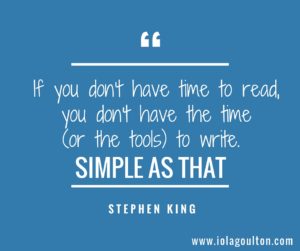
Stephen King quote
CES FB Quotes (2)

I’ve been reading Christian fiction for over twenty years.

I’ve seen trends come and trends go, which means I’ve got a good feel for the genre and have learned what publishers buy.

And I’ve been working as a freelance editor specialising in Christian fiction for the last five years, which means I’ve seen a lot of manuscripts, good and bad, and have learned something about the craft of writing from each one. I’ve attended conferences, undertaken online training, and completed a hands-on immersion course with international speaker and writing coach Margie Lawson.

I’ve also read dozens of books on writing craft and dozens more books on book marketing. Each has contributed to my understanding of how to write, edit, publish and market books in this new world. A world where aspiring authors don’t need an agent and a big-name publisher. A world where authors can self-publish without the stigma of ‘vanity’ publishing.

I’ve learned a thing or two.

So I’m going to give my answer to the question my commenter initially asked. I hope it helps him or her and anyone else who is thinking of writing a novel, who is in the middle of writing their first novel, or who has one or three or ten completed manuscripts buried in some virtual drawer.

So here are my top tips of what an aspiring fiction author needs to know and do:

1. Understand Genre

Publishers publish by genre, booksellers organise their stores by genre, and readers read by genre. Your book has a better chance of succeeding if you understand what genre it is, and meet the expectations of readers of that genre. For example, a romance novel has to have a happy ending in which the hero and heroine are together. If he dies at the end, it’s not a romance novel.

Yes, authors do can do genre mashups (Amish Zombies in Space springs to mind), but even that adheres to the expectations of each of the constituent genres (I think. I don’t read zombie novels, so don’t know how it stacks up against them).

Understand your genre, and write to the norms of that genre.

2. Write What You Love

If you love trashy romance, write romance novels. Don’t write highbrow literary fiction with beautiful language but where nothing much happens. Don’t write gung-ho action adventure novels in which the hero fights his way through innumerable blockages in order to reach his goal and get the girl. Conversely, if you read literary fiction, don’t write Amish romance because someone tells you that’s what sells.

Write what you love for two reasons. If you’re writing in a genre you love to read, you’ll know the conventions of the genre and what the reader is looking for. And your writing will flow better because it’s something you want to write (unlike so many of those creative writing assignments in school).

3. Read what you write

Read in your genre. Read outside your genre. Read old books. Read new books. Read novels which have won awards, and try to work out why they won. Read award-winning novels as judged by industry professionals (e.g. the Christy Awards), by writers (e.g. the Carol Awards) and by readers (e.g. the INSPY Awards). Read the Christian novels I recommend each month on this blog.

4. Study the Big Picture

The big picture element of writing is the relationship between plot and story and structure and characterisation. Most craft books focus on one or two of these aspects, but the more I read, the more I come to believe that you can’t look at any one of these in isolation. They all need to be considered together.

Here are some books I recommend which examine these big picture elements:

– Plot and Structure by James Scott Bell
– Plot versus Character by Jeff Gherke
– Characters and Viewpoint by Orson Scott Card
– Story Genius by Lisa Cron
– Structuring Your Novel by KM Weiland
– GMC: Goal, Motivation, Conflict by Debra Dixon

(See what I mean about the relationships?)

5. Study the Technical Craft of Fiction

You also need to understand the basics of modern fiction. Yes, Jane Austen and Charles Dickens were great writers, and you can look to them for insight into the big picture elements. But don’t try and emulate the way they wrote. Novel writing has changed a lot in the two hundred years since Austen was first published, and writing like Jane Austen won’t win you any fans today. Even novels from the 1990’s might be too old-fashioned in terms of style to be of benefit in terms of their technical writing craft. (Although they will still be of benefit in terms of the big picture elements.)

The modern writer needs to understand:

– Point of View
– Showing not telling
– Scene and sequel

For advice on these issues, try:

– Rivet Your Readers with Deep Point of View by Jill Elizabeth Nelson
– The Emotion Thesaurus by Angela Ackerman and Becca Puglasi
– Scene and Structure by Jack M Bickham

6. Understand the Mechanics of English

There is no point in knowing how to craft a great novel if you don’t have the technical writing skills to get it on the page so people can read and understand it. Christian editor (and founder of the Christian Proofreaders and Editors Network) calls this the PUGS: Punctuation, (word) Usage, Grammar and Spelling. There is nothing worse than picking up a novel which is hard to read because the author doesn’t understand how to order words in a sentence for maximum reader impact.

For advice on actual writing, I recommend:

– Eats, Shoots and Leaves by Lynne Truss
– The Elements of Style by Strunk and White

7. Join a Community

You’ll learn as much from your fellow writers as you will from books, so join a community of writers. This could be online (e.g. Facebook groups such as Australasian Christian Writers). It could be a formal organisation (e.g. Romance Writers of America or Australia or New Zealand, American Christian Fiction Writers or Omega Writers or New Zealand Christian Writers). It could be a Christian group or a general market group. It could be for fiction writers or all writers.

8. Write

You can study too much. It was true when Ecclesiastes was written and it is true today. Study, but ensure you get words down on paper as well. Or get pixels on a computer screen.

9. Learn to Self-Edit

Yes, I’m a freelance editor so you’d think I’d have a vested interest in people not editing their own work, to give me more to do. But correcting simple mistakes the author could have corrected for themselves isn’t much fun, and means I might get too focussed on correcting commas and hyphens at the expense of more fundamental questions of plot and style. And anyway, the cleaner the manuscript in terms of writing mechanics, the cheaper the edit.

Tools like Grammarly and ProWritingAid can help with the most technical side of this self-editing, identifying things like passive voice and overused words and commonly misused words.

But you need a human to pick up that your heroine’s hair colour changes three times without her ever visiting a hairdresser, or that there is headhopping in Chapter Four or that you have a nasty habit of structuring every sentence the same or that your mute minor character actually had a couple of lines before she miraculously started talking again.

For advice on how to self-edit your novel, I recommend:

– The Word Loss Diet by Rayne Hall
– Revision and Self-Editing for Fiction Writers by James Scott Bell
– Self-Editing for Fiction Writers by Renni Browne and Dave King

In Conclusion …

Everyone agrees I came into fiction writing the ‘wrong’ way. Most people write a manuscript first, then start looking for writing groups or publishers or advice on craft. I did it backwards: I spent several years learning the craft before I started writing. I don’t believe you have to spend years, but my relative success with that first fiction manuscript proves (to me, at least) that time spent studying craft isn’t wasted. And you’d do far worse than starting with the books I’ve recommended above.

Do you have any questions about writing? Ask in the comments.

Review: The Pounamu Prophecy by Cindy Williams

If you’ve signed up for my monthly Newsletter, you’ll already have received my entirely biased list of 50 novels from my favourite Christian authors. If you haven’t, sign up on the right!

Today I’m reviewing The Pounamu Prophecy, the debut novel from New Zealand author Cindy Williams. It’s a sensitive and compelling look at part of New Zealand history.

Cover image - The Pounamu Prophecy by Cindy Williams

A Compelling Debut

James and Helene are both too busy chasing their respective careers (as graphic designer and doctor, respectively) to have time for each other, and after five years, the spark has gone out of their marriage. Mere comes to stay, looking for a quiet place where she can write her memoir without interruption. Helene especially values Mere’s quiet advice, shared from a place of having come to terms with knowledge, suffering and forgiveness.

The Pounamu Prophecy is a split timeline story.

In the present, it’s the story of Brisbane couple James and Helene, their disintegrating marriage. And it’s the story of Mere, their visitor from New Zealand visitor, and the way Mere subtly encourages them to think with a different mindset. In the past, it’s Mere’s story, the story of a Ngati Whatua child growing up in Okahu Bay, Auckland, in the midst of the Maori land protests. It’s also the story of Mere working through her reactions to the age-old grievances.

I live in New Zealand.

I remember the Bastion Point protests. I was only a child and too young to understand what they were about—or how far back the grievances went. I’ve driven past Okahu Bay more times than I can remember. I’ve visited Kelly Tarlton’s Underwater World (now Kelly Tarlton’s SeaLife Aquarium), which is built in the old sewage tanks mentioned in The Pounamu Prophecy.

I enjoyed that combination of familiarity and new information, and I thought The Pounamu Prophecy was an outstanding novel. I liked the characters (well, I liked Mere better than Helene or James, who both needed a good talking to). I liked the way the two stories were integrated.

I especially liked the sensitive way the novel brings out the Maori culture and the injustices of the time—a combination of greed and perhaps patriarchal thinking. The injustice is plain. It seems the New Zealand Government of the time had a lot in common with the biblical Laban.

Overall, The Pounamu Prophecy is an excellent story of rising above difficult situations, and learning to forgive what some might think can’t be forgiven.

Recommended.

You can read the introduction to The Pounamu Prophecy here:

What Did You Read in July 2016?

It’s been a busy month. I’ve managed to produce almost 40,000 words of the first draft of my first novella (being the first in the series, not the first I’ve written). And I’ve read a few books …

Favourite Reads - July 2016

The best books I read in July 2016 were:

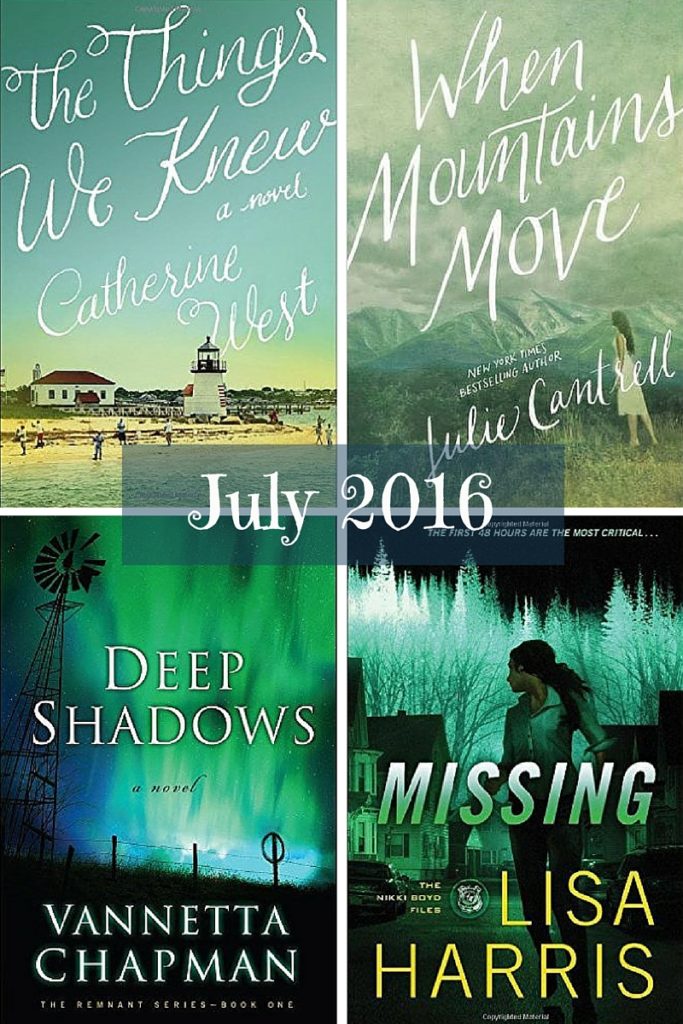
Missing by Lisa Harris, the newest thriller from this award-winning author (you can read my review here)

Deep Shadows by Vanetta Chapman, a thought-provoking near-future dystopian novel set in Texas (you can read my review here)

When Mountains Move by Julie Cantrell, the second novel from an author who took Christian fiction by storm with her debut (you can read my review here)

The Things We Knew by Catherine West, a poignant look at family and love (you can read my review here)

Book Review: Mistaken by Karen Barnett

If you’ve signed up for my monthly Newsletter, you’ll already have received my entirely biased list of 50 novels from my favourite Christian authors. If you haven’t, sign up on the right!

Today I’m reviewing Mistaken by Karen Barnett, an original historical romance with echoes of Pride and Prejudice.

Excellent Debut Novel

Cover image: Mistaken by Karen Barnett
Laurie’s brother is involved in a local gang running illegal booze from Canada during Prohibition, and the new man in town, Daniel Shepherd is involved as well. Laurie hates the business the effect alcohol has had on her family, and she hates the fact that all the men in her life seem to be controlled by alcohol.

Yet she finds herself attracted to Daniel.

Things get complicated when another new face arrives in town: Samuel Brown. Brown is a handsome federal agent working to eliminate the illegal trade in alcohol, and he’s also interested in Laurie. Although her head says Samuel is the better choice, her feelings are conflicted, not least because of her brother’s involvement in rum-running.

We get a hint of one of the main plot conflicts in Mistaken’s subtitle:

First Impressions Are Never What They Seem.

Literary buffs may recall that the original title of Pride and Prejudice was First Impressions, and there is something of the Lizzie Bennett in Laurie Burke (not merely the initials). Like Lizzie Bennett, Laurie is embarrassed by her family: in her case, by her alcoholic father. Her initial impressions of people are incorrect, and she makes other errors of character judgement in the same way as Lizzie did. I’ll let you figure out the other similarities yourself.

Mistaken is Karen Barnett’s debut novel, and it’s excellent.

I find that a lot of Christian fiction, especially historical fiction, starts to get repetitive in the themes, plots, characters and settings. Mistaken is set in a small coastal town about twenty miles south of the Canadian border. It’s set during the Prohibition era, so alcohol plays a major role in the story. It’s an original time setting, and an original plot, and I liked that.

And the author doesn’t shy away from the problems alcohol causes and the effect it has on family members. Her writing is more challenging than most Christian fiction, as Laurie has to negotiate some difficult moral choices with no black and white answers. The characters are real, facing problems in a world where the right thing to do isn’t the easy thing to do. And while this is Christian fiction and Laurie’s faith ultimately helps her in finding the answer to her conundrum, the Christian aspect is very understated.

Recommended.

Thanks to Abingdon Press and NetGalley for providing a free ebook for review. You can find out more about Karen Barnett at her website, and you can read the introduction to Mistaken below:

2016 RITA, Grace and ICR Award Winners

Three more sets of writing awards have been announced this week … so I’m here to share the winners with you.

2016 Rita Grace Awards

The 2016 RITA® Award Winners

The RITA® Awards are run by Romance Writers of America, and are named after the organisation’s first president, Rita Clay Estrada. The Awards are specifically for romance novels, in a range of sub-genres (including Inspirational) and lengths (including long, short and novella).

Inspirational Romance

A Noble Masquerade by Kristi Ann Hunter

Historical Romance – Long

Tiffany Girl by Deeanne Gist (Howard Books)

The 2016 Grace Award Winners

The Grace Awards were established in 2010 to “expand the tent pegs of Christian fiction”. They allow traditionally published and self-published novels, and make no distinction between paper or digital formats: anyone can enter, as long as the book is Christian Fiction. The 2016 winners were:

Womens Fiction/General Fiction

Annabelle’s Ruth by Betty Thomason Owens

Romance/Historical Romance

Bridge Of Faith by Catherine West

Mystery/Romantic Suspense/Thriller/Historic Suspense

Trial By Twelve by Heather Day Gilbert

Speculative Fiction

Storming by K. M. Weiland

Action-Adventure/Western/Epic Fiction

Saving Eric by Joan Deneve

Young Adult

To Get To You by Joanne Bischof

2016 Inspirational Reader’s Choice Award Winners

The IRCA is run by the Faith, Hope and Love Chapter of Romance Writers of America.

Long Contemporary

Together With You by Victoria Bylin

Long Historical

To Win Her Favor by Tamera Alexander

Short Contemporary

Second Chance Reunion by Merrillee Whren

Short Historical

Out of the Ashes by Sandi Rog

Romantic Suspense

Gone Without a Trace by Patricia Bradley

Women’s Fiction

Ties That Bind by Cindy Woodsmall

Novella

Daughters of the Wind by DiAnn Mills

Congratulations to all these authors! And a huge thank you to the contest organisers and judges. It’s a big job.

Book Review: Illusion by Frank Peretti

If you’ve signed up for my monthly Newsletter, you’ll already have receive my entirely biased list of 50 novels from my favourite Christian authors. If you haven’t, sign up on the right!

Today I’m reviewing Illusion by Frank Peretti, who practically invented the modern Christian speculative fiction genre with This Present Darkness.

Illusion

Mandy’s death in a car accident means the end of her forty-year career in magic.

Or does it? Because Mandy is not dead. She’s nineteen again, but nineteen in 2010, not the 1970 she remembers. Mandy struggles to adjust to modern life, trying to practice her father’s advice: when life hands you lemons, make lemonade. Meanwhile, husband Dane is struggling to adjust to life without his wife … until one day he sees a young magician who reminds him of a young version of Mandy.

As is typical of a Peretti novel, nothing is what it seems. Characters that appeared harmless at first then appear to have some ulterior motive. There is Mandy’s new manager, who helps her get a valid social security number. There is also the mysterious Mr Stone and Mr Mortimer, who appear at Mandy’s funeral, then follow Dane to his new home in northern Idaho to spy on him.

And underneath, there is the mystery of how a dead woman has suddenly appeared again, forty years younger. It’s like there is more than one Mandy, but she is real because she eats and sleeps and talks. And other people talk to her, so it’s not like she’s a ghost – just a teenager in 2010 who only knows the sixties songs and slang.

I try not to read other people’s reviews before I read a book for review, because I don’t want to be influenced by someone else’s ideas. But I did happen to glimpse a couple of reviews before starting to read Illusion, and one commented that they found the beginning of the book confusing.

Well, yes, it was. But I think that was the intention.

Just imagine it. One moment you’re nineteen and enjoying the County Fair with your friends. You sit down to eat lunch, and the next thing you know, the Fair has vanished, everything that is familiar is gone, and people are talking into small plastic boxes and telling you it is 2010 when you know it is 1970. What’s not to be confused about?

So, yes, Illusion was confusing.

It was also engaging and intriguing and I wavered between trying to work out who was who and exactly what was happening, and just wanting to read more and read faster so I could find out for myself. And weird things keep happening. Illusionis not a spiritual warfare novel like Peretti’s early Darkness novels, but it is a fast-paced thriller with a touch of science fiction, albeit from a Christian point of view. I was reading at night and found it hard to keep my eyes open, but even harder to stop reading. Recommended.

Thanks to Simon & Schuster and NetGalley for providing a free ebook for review.

Movie Review: Hunt for the Wilderpeople

We spent a family night at the movies a couple of weeks back, seeing the latest New Zealand blockbuster, Hunt for the Wilderpeople. I thought we were the last people in the country to see it, because it’s already been playing cinemas for three months, so I was a little surprised to see the cinema was almost full.

Okay, so it only sat 70 people, but still …

Ricky Baker is a foster child, a kid who has grown up in the system and earned himself a reputation as a real bad egg. His placement with Aunt Bella is his last stop before juvie. So when the unthinkable happens he does what any normal teen would do: fakes his own death and runs off into the bush. Uncle Hector (aka Heck) is obliged to follow, because no responsible adult is going to leave a town kid lost in the bush. Especially not after he’s shown the level of bushcraft Ricky has shown.

One thing leads to another, and soon Ricky and Heck are on the run from the social worker, the police, the armed offenders squad (I suspect all of the armed offenders squad), intrepid hunters, a nutty conspiracy theorist, and some wild pigs.

It’s a toss-up as to who is the most dangerous, but I think Ricky wins. Or maybe the pigs.

Underneath the comedy and bluster and farce, Hunter for the Wilderpeople a tale of family. It’s based on a novel Wild Pork and Watercress by Barry Crump, and stars Sam Neill, Rhys Darby and Julian Dennison.

Those of us who were alive in the eighties and remember Crumpy’s TV ads for Toyota enjoyed the vintage Toyota ute in the film, and the cameo from Scotty, Crumpy’s townie offsider.

Yes, he’s looking a bit older 🙂

It is one of those movies where the extended trailer tells you most of the story. Here it is:

Yes, the New Zealand bush really looks like that.

Yes, the prison at the end of the movie is a real prison.

No, we don’t all have guns. Although if we were all going to meet pigs like that, we’d need them.

No, the New Zealand police don’t usually carry weapons.

Although some highway patrols do, in case they come across escaped sheep endangering traffic. I found this out on last week’s episode of Highway Patrol.

And with that, I think I’ve given you enough of a picture of the “real” New Zealand for one week.