Author: Iola Goulton

L&P: World Famous in New Zealand

L&P: World Famous in New Zealand

My husband and I spent ten years living in London, and the one of the things I missed most about New Zealand (after family!) was my favourite soft drink, L&P. You’ve probably never heard of it unless you’re a Kiwi or have lived here, but let me assure you: L&P is World Famous in New Zealand (yes, that’s their tagline. It’s certainly memorable, and no one dares disagree with it).

L&P – Lemon and Paeroa

L&P was originally a mineral drink made with natural spring water from the town of Paeroa, mixed with lemon (and, I guess, a lot of sugar). It’s light brown in colour, and I don’t know how to describe the taste—it’s unique. I guess my best comparison is that it tastes like a less sweet version of Pink Lemonade (which is one soft drink you can’t get in New Zealand, and one my kids lap up when we visit Australia or the United States). But it’s nothing like the clear 7-Up or Sprite, or Schweppes Lemonade (which is a cloudy yellow colour).

The mineral spa has been known of for generations, and the early Maori recognised the water for its medicinal benefits. It was first bottled in 1907, and marketed as Paeroa and Lemon by the Paeroa Natural Mineral Water Company. By 1947 it was known as Lemon and Paeroa, which was later shortened to L&P (around the time when Kentucky Fried Chicken was shortened to KFC). It was bottled in Paeroa until 1980, when the bottling was transferred to Auckland (where it is now bottled by the Coca-Cola company). To find out more, click here to visit the Paeroa town website.

L&P has become a Kiwi classic.

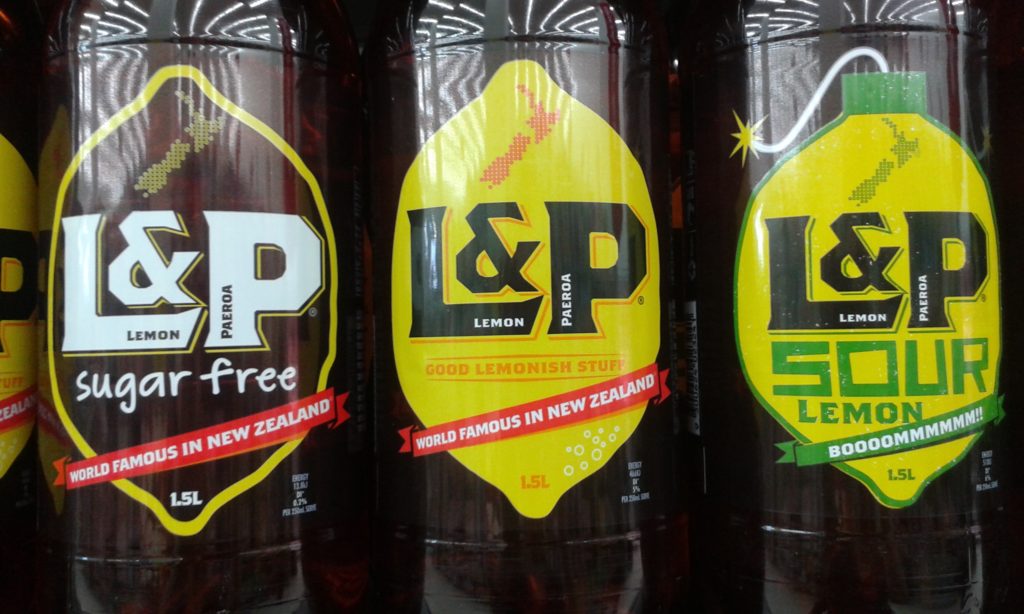
It’s currently available in three flavours: original, Sweet As (the diet version, which is my poison of choice), and Sharp As (a sour version that has just as much sugar as the original). It used to be available in Dry, but that has been discontinued—perhaps because it didn’t sell well, or perhaps because they couldn’t come up with a cool name for it. Dry As would have worked.

If nothing else, Dry As describes a lot of Kiwi humour.

The town of Paeroa has embraced its contribution to New Zealand culture.

Many L&P Bottle, Paeroa, New Zealandshops on the main street are decorated in L&P colours of yellow and brown, especially the dairies. (In New Zealand, dairies are corner shops selling milk, soft drinks, lollies, ice cream in a cone, milk shakes, and a range of overpriced household necessities.)

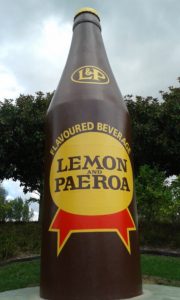
They also have the giant L&P bottle, a compulsory tourist stop that begs for a photo, and a visitor centre and café where you can buy L&P ice cream. Personally, I prefer the liquid version.

Have you ever tried L&P?

What did you think? Do you have local produce or drinks that aren’t available elsewhere?

Wellington Museum, and Word Stories from World War One

When my family last visited Wellington, we visited the World War One exhibition at the National Art Gallery and Wellington Museum, and the ANZAC memorial outside.

2015-12-26-13-56-30
This history buff in me thought it was an excellent exhibition—as well as giving the full history of the origins of World War one and the war itself, it also contained dozens of newly colourised photographs from the war. They were both eye-opening and horrific. We’ve all seen photos of World War One … in black and white. These photos are an education, a reminder that those who fought in World War One, the Great War, the War to End All Wars, saw it in unglorious colour: brown and khaki and red.

A lot of red.

For today, I’d like to share something a little different that the word-nerd inside me found fascinating: the phrases from World War One which have become part of our everyday language. Okay, that might depend on where you live and what kind of family you grew up in!

Souvenir

While this is a French word, Australians and New Zealanders only began using it during World War One. Prior to this, we would have said ‘keepsake’.

Bumf

My parents and grandparents often used this word to describe advertising brochures (aka junk mail), but it was originally used to refer to the masses of (unwanted?) official correspondence from headquarters … often used as toilet paper (needs must, I suppose). Yes, bumf is short for b** fodder.

Strife

Strife is taken from German, where strafe means to punish. It’s used to describe various forms of trouble

Blood bath

From a German description of the Somme in 1916. My great-grandfather was decorated for his service on the Somme, but he never talked about it. I guess this tells me why.

Tanks

When Armoured Landships were originally under development in 1915, they were given the code name of ‘water tank’, because of their box-like structure. The name stuck, and we still call them tanks.

Break new ground

A phrase we often use without thinking of the difficult origins. It now refers to something that hasn’t been done before, but the original meaning was to dig a new trench.

Bangers

If you’re American, you might not know about the food staple of bangers and mash (sausages and mashed potato). The sausages were called bangers because of their tendency to explode if the casing wasn’t pricked.

What word stories do you have?

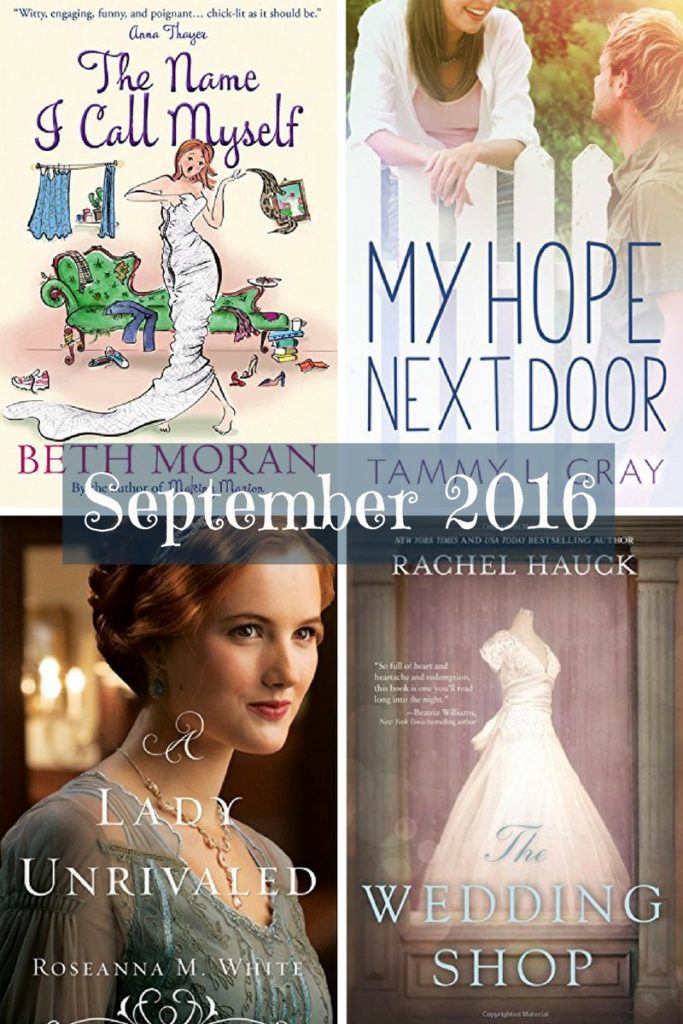
Book Review: The Name I Call Myself by Beth Moran

Beth Moran Gets Better and Better

Amazon DescriptionCover image: The Name I Call Myself

All Faith Harp wants is a quiet life – to take care of her troubled brother, Sam, earn enough money to stop the wolves snapping at her heels, and to keep her past buried as deep as possible. And after years of upheaval, she might have just about managed it: she’s engaged to the gorgeous and successful Perry is holding down a job, and Sam’s latest treatment seems to actually be working this time.

But, for Faith, things never seem to stay simple for long. Her domineering mother-in-law-to-be is planning a nightmare wedding, including the wedding dress from hell. And the man who killed her mother is released from prison, sending her brother tumbling back into mental illness.

When secretly planning the wedding she really wants, Faith stumbles across a church choir that challenges far more than her ability to hold a tune. She ends up joining the choir, led by the fierce choir-mistress, Hester, who is determined to do whatever it takes to turn the motley crew of women into something spectacular. She also meets Dylan, the church’s vicar, who is different to any man she has ever met before.

My Review

Beth Moran is an English Christian author. The Name I Call Myself is her third novel, following Making Marion and I Hope You Dance. If you’ve read either of those and didn’t like them for any reason, then I doubt you’ll enjoy The Name I Call Myself, so you can skip this review. But if you liked them or haven’t read them, read on.

I will admit I found The Name I Call Myself a little difficult to get in to. It had a lot of similarities to her previous novels, in that it centres around a young woman discovering her true self. This isn’t helped by some early scenes which reminded me of Bridget Jones at her least intelligent. Faith isn’t an easy character to get to know (even though the book is written in first person). But once we get past the awkwardness that is Faith’s engagement party, the novel really picked up both pace and interest.

Faith is a complex character.

She was raised by her grandmother (now dead) and her older brother, Sam, after their mother was murdered by her partner … as Sam watched. That experience drove the teenage Sam down a trail of alcohol, drugs and mental illness. And he’s never recovered. It left Faith with … well, ‘issues’ almost begins to describe it. She is a very private person, and it takes a long time before I understood enough of her history to really understand the reason she didn’t share a lot.

The Name I Call Myself is about Faith’s relationships. Her with relationship with Perry, her fiance. Her relationship with her brother and his new girlfriend. And her non-relationship with her future mother-in-law (who takes controlling passive-aggressive to new levels). Then there is her relationship with the Grace choir, including Hester the bully conductor. And her almost-relationship with Dylan, the pastor. It’s in her relationships with these supporting characters that we get to know the real Faith …

The Faith perhaps not even Faith knows.

Yes, there are touches of romance, of comedy and of suspense. But The Name I Call Myself is really about Faith’s search for love, acceptance and identity, a search many of us can relate to.

Recommended for fans of contemporary Christian fiction with an edge.

Thanks to Lion Fiction and NetGalley for providing a free ebook for review.

What Did You Read in August 2016?

Well, the writing hasn’t gone so well in August 2016 in terms of word count, but I’ve attended the fantastic Romance Writers of New Zealand Conference, and read some outstanding novels:

Book Cover Images

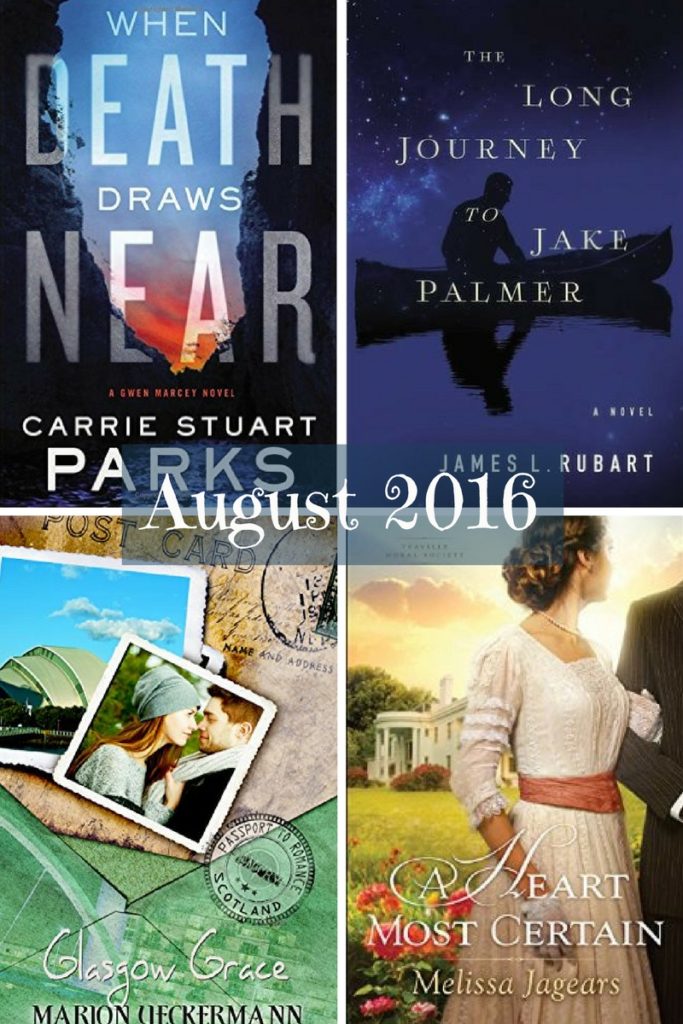
The best books I read in August 2016 were:

When Death Draws Near, the third in the Gwen Marcy thriller series from Carrie Stuart Parks (you can read my review here)

Glasgow Grace by Marion Ueckermann, a short fun romance read (you can read my review here)

A Heart Most Certain by Melissa Jagears, a historical romance with a difference (you can read my review here)

The Long Journey to Jake Palmer by award-winning author James L Rubart. It’s mind-bending and thought-provoking (you can read my review here)


What’s the best book you read this month? And what are you planning to read next month?


Book Review | Lizzie & Jane by Katherine Reay

Excellent Foodie Fiction

Book coverElizabeth is the head chef at Feast, a chic New York restaurant. But she’s losing her touch, and when her boss brings in a celebrity chef/marketing expert to restore Feast’s reputation, Elizabeth decides it’s time for a break. She heads to Seattle, Washington, to a home and a father she’s barely seen since she left sixteen years ago. And home to an older sister who’s undergoing treatment for breast cancer, the same cancer that killed their mother.

Katherine Reay’s debut novel, Dear Mr. Knightley, was nominated for a Christy Award, nominated for two Carol Awards, and won the 2014 INSPY Award for a Debut novel. I read it. While I thought the writing and characterisation was excellent, I did wish Reay had written an original story. (Dear Mr. Knightley is a contemporary retelling of the Jean Webster classic, Daddy Long Legs—one of the first romance novels I ever read.)

Like Dear Mr. KnightleyLizzy & Jane has links to Austen, in that sisters Jane and Elizabeth are named for the heroines of their mother’s favourite novel. Unlike Dear Mr. Knightley, Lizzy and Jane is a fresh story, not a retelling of a classic (or if it is, the retelling is unobtrusive enough that I couldn’t see what was coming in the way I did with Dear Mr. Knightley. As a result, I enjoyed it a lot more. It wasn’t that I didn’t enjoy Dear Mr. Knightley, more that I always found the ending of Daddy Long Legs a little contrived, and the ending of Dear Mr. Knightley was even more so.

Lizzy & Jane was different, in a good way.

It had all the strong writing and characterisation of Dear Mr. Knightley, with the added bonus of an original and compelling plot. Elizabeth has some deep-seated resentment towards Jane, who was never around while their mother was dying. While Elizabeth is in Seattle helping Jane face her health crisis, Elizabeth is also facing her own personal crisis, a crisis of identity and self-belief around her cooking. It’s the one thing she’s always excelled at, yet even that talent seems to be failing her.

There are touches of romance and an underlying Christian theme.

But Lizzy & Jane is very much women’s fiction, Lizzy’s story of personal, professional (and spiritual) rediscovery. Recommended.

Thanks to Thomas Nelson and NetGalley for providing a free ebook for review. You can find out more about Katherine Reay at her website, and you can read the introduction to Lizzy and Jane below:

I Won a 2016 Genesis Award!

Yes, I know this week was meant to be my book recommendations for August, but I’ve got exciting news to share and I couldn’t wait a whole week.

I won a 2016 Genesis Award!

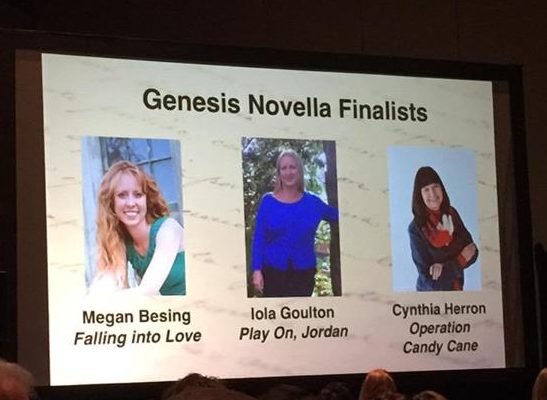
Play On, Jordan won the 2016 Genesis Award for unpublished authors from American Christian Fiction Writers in the Novella category!

The results were announced on Saturday night at the ACFW Conference in Nashville, Tennessee. I couldn’t be there, so Wellington author Kara Isaac kindly agreed to collect the award on my behalf (which you can see on YouTube at 29:45).

Novella Finalists

My win was unexpected—I only prepared an acceptance speech because Kara asked me to. I didn’t think she’d need to actually read it!

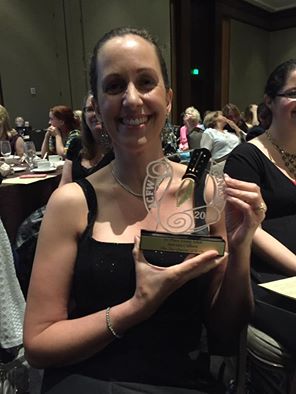
Jebraun Clifford, who currently lives in Rotorua (about an hour from me) won the Young Adult category. Here she is with her plaque:

Jebraun Clifford

You can find the official list of 2016 Genesis Award winners at the ACFW website.

2016 Carol Award Winners

ACFW also announced the winners of the 2016 Carol Awards, for the best in published fiction across a range of genres. The winners were:

Contemporary:

The Art of Losing Yourself by Katie Ganshert, Waterbrook/Multnomah (Random House)

Historical:

Secrets She Kept by Cathy Gohlke

Historical Romance:

A Worthy Pursuit by Karen Witemeyer

Mystery/Suspense/Thriller:

The Aleppo Code by Terry Brennan

Novella:

A Bride for Bear from The Convenient Bride Collection by Erica Vetsch

Romance:

Crazy Little Thing Called Love by Beth K. Vogt

Romantic Suspense:

No Place to Hide by Lynette Eason

Short Novel:

Covert Justice by Lynn Huggins Blackburn

Speculative:

The Five Times I Met Myself by James L. Rubart

Young Adult:

Dauntless by Dina L. Sleiman, Bethany House

Debut:

The Calling of Ella McFarland by Linda Brooks Davis


More books to add to my to-read pile!

2016 CALEB Prize Finalists

Closer to home, Omega Writers have announced the finalists in the 2016 CALEB Prize. Omega Writers are a group of Australian and New Zealand Christian writers, and I’m a member.

Children’s Picture Books

Same – Katrina Roe
The Word War – Mark Hadley
Fearlessly Madison – Penny Reeve
Hey! Is That How God Made Animals? – Penny Morrison
Jesus Walks on Water – Shan Joseph

Published Adult

Zenna Dare – Rosanne Hawke
The Pounamu Prophecy – Cindy Williams
Too Pretty – Andrea Grigg
Invincible – Cecily Paterson
Empires Children – Patricia Weerakoon

Unpublished Manuscripts

The Peacock Stone – Nick Hawkes
The Boy in the Blue Hoodie – Cate McKeowan
Jurisdiction – Joye Alit
The Fraught Ambitions of Man – Rebecca Hayman
10 Things I Hate About God – Susan Barnes

The winners will be announced at the 2016 Omega Writers Conference to be held in Sydney in October 2016. I’m looking forward to attending and cheering for the winners.

Book Review: Shattered by Dani Pettrey

Shattered by Dani Pettrey

I recently purchased Dani Pettrey’s first book, Submerged, from Amazon. I really enjoyed it, so I was very pleased to find a review copy of Shattered, the second in the Alaskan Courage series. I really enjoy Christian Romantic Suspense, and think the Alaskan Courage series is as good as anything else available today.

The books deal with the McKenna siblings from the (fictional) small town of Yancey, Alaska. Submerged was the story of Cole, the oldest McKenna brother, and Bailey Craig, an expert in Russian history and antiques who returns to the island after her aunt is murdered. Shattered follows Piper McKenna as she works to prove that Reef, the youngest brother, is innocent of murder.

Things aren’t looking good for Reef.

There are two witnesses who saw him holding the knife over the victim, and the District Attorney has a particular grudge against the McKenna family. Piper is determined Reef is innocent. So she drags Deputy Sheriff and long-time family friend, Landon Grainger, into her investigation. Landon isn’t so sure about Reef’s innocence … and is struggling to come to terms with his changing feelings for Piper.

I really liked the way the Shattered followed on so well from Submerged in terms of taking the Landon/Piper subplot and turning it into the main plot. I can also see how Shattered has set up future books in the series, which I will certainly want to read. The novel was well-written, with a fast-paced and exciting murder plot, a sweet romance subplot, and a cast of interesting characters.

I was particularly impressed (especially in Submerged, but also in Shattered) with the way the Christian elements were integrated into the plot. These characters face the same questions and temptations as we face in real life, and they respond in realistic (if sometimes flawed) ways.

Shattered can be read as a standalone novel, but readers will enjoy it more if they read Submerged first. Recommended for fans of Dee Henderson, Irene Hannon, Diann Mills, Susan Page Davis and Susan May Warren.

Thanks to Bethany House and NetGalley for providing a free ebook for review. You can find out more about Dani Pettrey at her website, and you can read the introduction to Shattered below:


Identity and Essence and Writing. And God.

I’ve recently returned from a three-day Romance Writers of New Zealand conference. Although it wasn’t a Christian conference, it was excellent, both for the content and for connecting with other local writers.

Identity and Essence and Writing. And God.

One thing which surprised me (but perhaps shouldn’t have) was the number of Christian attendees. The thing which surprised me more was that many of them had never read or even heard of Christian fiction and Christian romance. It didn’t surprise me that the non-Christians didn’t know, but the Christians? Yes, that surprised me. It seems I’m not alone in this: Ginger Solomon has recently made similar observations.

It was great to connect with other Christian writers, including the lovely Rebekah Orr—who won the 2016 Pacific Hearts Award (for unpublished manuscripts).

Rebekah Orr

But the highlight for me were the sessions with Hollywood scriptwriting consultant Michael Hauge. I thought he was going to be talking about the technical side of plot and structure. But his main message was actually more about characterisation, because our number one goal as writers (especially romance writers) is about our characters:

Your #1 goal is to elicit emotion.

We must take our character on a personal journey, a journey that will create an emotional response in the reader.

Hauge’s basic premise of character development is that the character starts with an identity: believing something about themselves or the world around them that isn’t actually true. The character believes this lie because of some kind of internal wound. (Authors Angela Ackerman and Becky Puglasi have spent months examining various character wounds on their blog, Writers Helping Writers.)

There is also the essence: who the character really is. The novel therefore shows the character moving from identity to essence as the story moves forward. In a novel, we expect the hero or heroine to achieve this essence by the end of the story. The romance novels of today typically take place over a relatively short timeframe: months, if not weeks. Yet we know from personal experience this isn’t how life works. Our lives are more like the epic novels of the past, which often covered decades.

It struck me that this is basically how our lives run as Christians:

  • We start in our identity, the person we think we are, a view that has been formed by all our life experience.
  • There comes a time when we, as characters in our own stories, experience what Hauge calls the turning point: that moment of change, when we become a Christian.
  • From then on we are working through our fears to move wholly into our essence: our identity in Christ. And as we know, this is a continual process.

It is easier said than done. Hauge took us each through a series of questions designed to examine our long-term and short-term personal goals (which wasn’t too difficult). But we then had to move into the harder questions: what is stopping us reaching those goals? What false beliefs or fears have we embraced that stop us moving forward? Are those beliefs real … or just logical? And—most importantly—are we prepared to move beyond that fear into our essence? It was a challenging session as we were all forced to confront some long-held beliefs and see them for the lies they are.

As Christians, we know our Christian walk, our journey to become more like Jesus, to become the person He created us to be is a lifelong journey. During that journey we will experience victories and setbacks (just like in a novel or movie). We will fight self (identity) in our struggle to reach our essence (identity in Christ). And that is how we become the hero (or heroine) in our own story.

I’m trying to do that. To be the star of my own story. To discover and pursue my essence, to become the person God meant me to be.

Will you?

Book Review: A Plain Death by Amanda Flower

From USA Today Bestselling Author Amanda Flower aka Isabella Allan

Chloe Humphrey is a twenty-four-year old Masters graduate, a computer geek with a pet cat called Gigabyte. She counts two suitcases full of obsolete computer parts among her most precious possessions. She is moving from Cleveland to Appleseed Creek, Ohio, to take a two-year job as Director of Computer Services. As she is driving to her new home , she picks up an Amish woman who is being harassed by two men.

Nineteen-year-old Becky has recently left home, following an argument over her artistic desires. Chloe finds herself with an unexpected boarder who places her in the middle of a family argument.

Things get even more untidy when Becky borrows Chloe’s car without permission, and has an accident which kills the Amish Bishop. But what appears be a simple car accident turns into a murder investigation. Chloe works with Becky’s handsome older brother, Timothy, to determine the likely victim and investigate the accident.

I really enjoyed A Plain Death. It is a cozy mystery set in an area with significant Amish and Mennonite populations, and involves both Plain and Englisher characters. I find this more interesting than a story centred solely around the Amish. There was a good level of suspense, and a little romance as well.

All that was missing was … um, no. That would be a spoiler. I look forward to reading more about Chloe, Timothy and Appleseed Creek in future books.

Thanks to B&H Books and NetGalley for providing a free ebook for review. You can find out more about Amanda Flower at her website, and you can read the introduction to A Plain Death below:

On Truth and Lies and Fiction and Life

I’m sure many of you can quote John 10:10:

John 10:10 (NIV)

Our preacher spoke about this at church a couple of weeks ago, but he focused on the first half of the scripture. The preacher asked:

What is satan* trying to steal?

Our identity. The devil is trying to steal our identity in Christ, that internal spirit that produces our external ability to do God’s work.

As an author, that concept struck home with me. Writing instructors will talk about how our characters need to have a GMC:

Goal:

The character has to want something

Motivation:

They have to want that something for a reason

Conflict:

But something is stopping them getting what they want

GMC will be both external and internal, with the external being outside circumstances and events, and the internal being the beliefs and misbeliefs of the main character. If you think about the best novels you’ve read, you’ll notice the best books have characters with both an internal and an external GMC, and there will be a relationship between them. Often a character won’t be able to beat the external conflict until they’ve beaten the internal conflict.

This holds true in real life.

If we believe we’re no good and that God can’t use us … then He can’t. Because we’re not making ourselves available to be used, and He won’t force us (it’s that whole concept of free will).

Instead, we’ve got to remember we can do all things through Christ who strengthens us, we can complete the race set before us, we can fulfil God’s plan for our lives. We can’t let satan steal our hopes or kill our dreams or destroy our God-given destiny. Instead, we to reach out to Jesus and claim the life He promises us, this full and abundant life.

Some people don’t read fiction, claiming it’s a lie and they only want to read books that are true. Yet Jesus told stories—parables—using stories as a lie that demonstrates the Truth. In the same way, good fiction can be a lie that shows the way to the truth.

And the Truth.

And that’s what I want to write.


*satan is lowercased because his name is not worthy of being capitalised. At least, that’s the approach taken by the evangelist I worked with before he was promoted to Glory. I’ve adopted it because I like it, even though I know it breaks all the ‘rules’.