Author: Iola Goulton

Book Review: God’s Daughter by Heather Day Gilbert

If you’ve signed up for my monthly Newsletter, you’ll already have receive my entirely biased list of 50 novels from my favourite Christian authors. If you haven’t, sign up on the right!

Today I’m reviewing God’s Daughter by debut author Heather Day Gilbert. This review was previously published on my blog, Iola’s Christian Reads.

4.5 Stars for a Unique Historical Novel

It is 1000 AD, and Gudrid is one of the few women on a Viking expedition to upper North America, to rediscover Vineland and bring great wealth back to Leif Eiriksson, their chieftain. She is the wife of Thorfinn Karlsefni, the expedition leader, mother to Snorri, the unofficial leader of the small band of women on the expedition—and the unwilling object of the affections of several of the men.

Gudrid stopped worshipping Thor when she was a child and the capricious god demanded her mother as a sacrifice to guarantee a good harvest. As an adult in Iceland, she learned of the one true God from the monks, and she now follows Him.

God’s Daughter is a character-driven family saga, told entirely in first person from Gudrid’s point of view, and in the present tense—an interesting choice for a story set 1,000 years in the past, but one that’s strangely effective. Her voice is understated, deliberately downplaying the everyday struggles for survival in Viking society, a culture that still worships Thor and where life includes many pagan rituals.

It is obvious that a huge amount of research has gone into God’s Daughter, and while that research comes out in the depth of the narrative around the people, culture and lifestyle, it’s never overbearing and it never gets in the way of the story (although the names were a little difficult at times, because they were so unfamiliar).

The distance of time makes it impossible for us to really know what life was like in the Viking camp of Straumsfjord or the village of Brattahlid in Greenland, but the majesty and the savagery both come alive in the excellent writing. I came away feeling I had a real understanding of Viking life (certainly more than enough to be thankful I live now!).

God’s Daughter is recommended for readers who enjoy well-researched historical fiction set in less well-known times and places, from author such as Iris Anthony (aka Siri Mitchell) or Sharon Penman.

Thanks to the author for providing a free ebook for review. You can find out more about Heather Day Gilbert at her website, and can read the opening of God’s Daughter below:
Achieving Our Goals

How do we achieve our goals?

One of the questions I’ve been asked several times over the last few months is how do we go about achieving our writing goals. How do we actually get those words on paper?

It’s something I’ve been struggling with recently, perhaps because I have a huge list of things I want to achieve and I want to achieve them all now. Or yesterday.

I know that’s not reasonable. But if I look at my goals for the year, they are all achievable. Not all achievable in January, sure. Or even February. But they’re annual goals, and I have to remind myself I have a whole year to achieve them (well, nine months now).

Have a Plan

One of my 2016 goals is to complete a Read-The-Bible-In-A-Year challenge. I’ve done this for the last two years, and have found the easiest way is to pick a plan that has seven readings for each week, then (wait for it!) read one each day. Not an original concept, sure, but one that works.

Other goals include declutter the house (I’ve taken about five carloads of stuff to the dump, the recycle centre, and the Salvation Army), deep-clean the house (easier after it’s been decluttered) and lose weight (moving right along . . .).

Step by Step

I’ve taken the Bible-in-a-Year approach and set up a plan. Each Saturday, I plan to declutter a drawer or a shelf. Not too much. Baby steps. But it’s only April, and I’m more than halfway through the house.

What else do I want to achieve this year? Read some books, of course. Including a whole bunch of novels off my to-read pile. (One year I also pledged not to buy new books until I’d got to the bottom of the to-read pile, but that was a recipe for failure.)

I’m sure you all know this already, but step by step holds true for all goals. It’s like how to eat the elephant: one bite at a time (although why would anyone want to eat an elephant?).

To-Do Lists

I like lists, so I find it helpful to have my household tasks, work tasks, and daily writing goal each set as recurring Tasks in my Outlook To-Do list. It gives me immense pleasure to check each task off, as each task represents a step towards my longer-term goals (as an added bonus, this post is 2,000 words, so I can tick my 1,000 word daily target off twice, and give myself a day off sometime.).

Ticking a list might not be your idea of a reward, but it works for me (I’d prefer to give myself chocolate, but that would be inconsistent with that “lose weight” goal). If ticking a list works for you, great. Do it. If it doesn’t, find something that does. Perhaps reward yourself with a new Christian novel from my list of recommendations?

What rewards motivate you?

It’s generally agreed that it’s a good idea to give yourself something for completing tasks or achieving a goal, because that will incentivise and motivate you to keep going. And when you achieve a bigger goal (e.g. cleaning the house, getting to your target weight, or finishing the book), you can have a bigger reward.

I also have to allow myself to forgive failure and move on. Unexpected things come up, and if there’s a family member in hospital, a friend in need, or a funeral to attend, do that and don’t feel guilty about getting behind on your tasks for a day, a week, a month.

But don’t let a temporary roadblock become a permanent blockade.

Take Paul’s approach: forget the past and move forward.

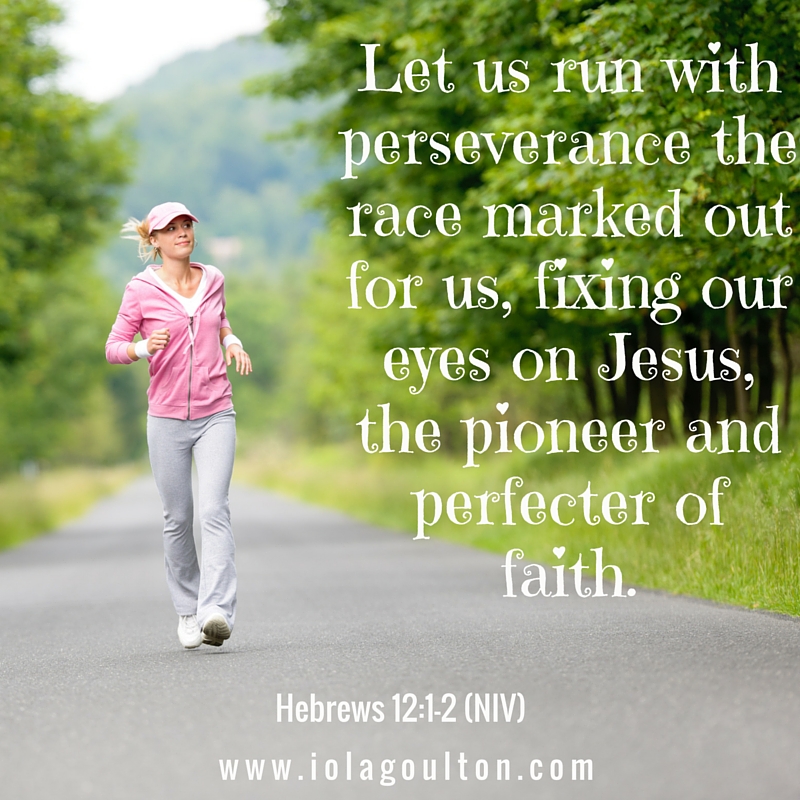
Hebrews 12:1-2

What are your hints and tips to getting things done and achieving your goals?

Book Review: Gone to Ground by Brandilyn Collins

If you’ve signed up for my monthly Newsletter, you’ll already have receive my entirely biased list of 50 novels from my favourite Christian authors. If you haven’t, sign up on the right!
Today I’m reviewing Invisible by award-winning suspense author Brandilyn Collins.

Amazon Description

Amaryllis, Mississippi is a scrappy little town of strong backbone and southern hospitality. A brick-paved Main Street, a park, and a legendary ghost in the local cemetery are all part of its heritage. Everybody knows everybody in Amaryllis, and gossip wafts on the breeze. Its people are friendly, its families tight. On the surface Amaryllis seems much like the bright and lovely flower for which it’s named.

But the Amaryllis flower is poisonous.

In the past three years five unsolved murders have occurred within the town. All the victims were women, and all were killed in similar fashion in their own homes. And just two nights ago—a sixth murder.

Clearly a killer lives among the good citizens of Amaryllis. And now three terrified women are sure they know who he is—someone they love. None is aware of the others’ suspicions. And each must make the heartrending choice to bring the killer down.

But each woman suspects a different man.

My Review

The Closet Killings have claimed five victims in three years in the town of Amaryllis (pop. 1700). All middle-aged women who lived alone. All killed in their beds, then stuffed in the bedroom closet. Now there is a sixth victim… young widow Erika Hollinger.

Gone to Ground is told from three different points of view, three women who are sure they know who the murderer is, and who have reason to want to hide that knowledge. Cleaner Cherrie Mae Devine knows the murderer is the mayor. Pregnant Tully Phillips knows it is her husband. And hairdresser Deena Ruckland knows it is her simple-minded younger brother. Who is right? Or are these simply red herrings, designed to distract us from the real murderer? The story is interspersed with articles from local Pulitzer Prize-winning journalist Trent Williams, and these give background information about the town and the personalities involved in the investigation.

This is an excellent who-dun-it, with plenty of twists and turns to keep the investigators (and the reader) guessing. The three narrators were well-developed characters, with each woman having her own distinct voice, which makes it easy to understand the changing points of view. I liked each of them (although Cherrie Mae’s use of the word ‘police’ got old quickly – if the emphasis had to be included, I think I would have found ‘po-lice’ less intrusive).

While Cherrie Mae is a Christian and she prays with the other narrators, it is not clear whether or not they are Christians, nor is it relevant. Although Gone to Ground is not an overtly Christian novel, this is less of an issue to me in a mystery or thriller than it would being a romance, where it is vital that the hero and heroine share a relationship with God. Overall, Gone to Ground is well worth reading if you like mysteries. Recommended.

Thanks to B&H Publishing and NetGalley for providing a free ebook for review. You can find out more about Brandilyn Collins and her trademark Seatbelt Suspense at her website, and read the introduction to Gone to Ground below:

Dear Seth Godin

[For those who don’t know, Seth Godin is a marketing guru who writes short but thought-provoking blog posts.]

Dear Seth Godin

I probably should have written this post before now. It’s my response to a post about how you learned the clarinet for eight years, but you never actually played it—well, not the way it could be played. You said we often opt for more instead of better, where we should focus on better.

I agree. We should work towards better, not more.

But not always. We live in an individualistic culture, and it’s easy to forget that we’re not all called to be an individual, to work in a vacuum. Sometimes we’re called to be part of a team, to be part of a group where the sum of the whole is more than the sum of the parts.

Sometimes we're called to be part of a team. Share on X

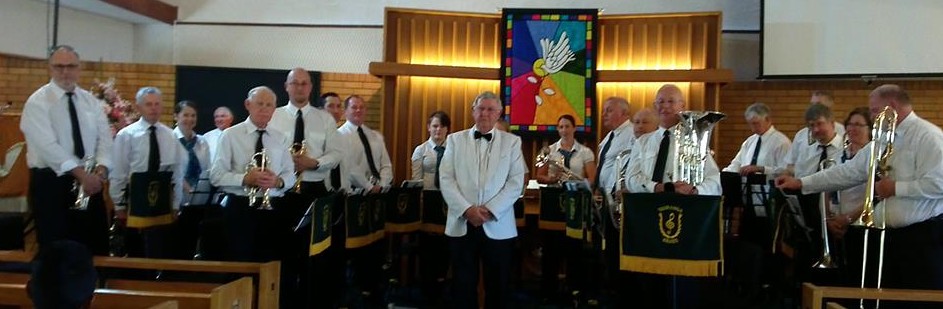
Tauranga Brass Band

I’m a member of the local brass band. We practice together once a week, and we play in public several times a year. Some of our players are outstanding—they’ve been playing for decades, and they practice every day. Others are relatively new to music and bands, but are diligent in attending practice and trying. Many are competent but not outstanding, people who love music and playing, and embrace the opportunity the band provides.

I’m a mediocre player at best, but I still play.

I play because I enjoy it. But mostly I play because if I didn’t, there would be something missing. We’re a small band. Only one person plays each part. No matter how humble I might think my part is, how mediocre I am as a player, the band is better for me being there. It doesn’t matter that I’m not soloist material. My part is important. The band wouldn’t be complete without me. The sum of the whole is more than the sum of the parts.

As I mentioned a couple of weeks ago, we play at the Dawn Service on ANZAC Day, to commemorate the servicemen who died in the battle at Gallipoli in World War One. We play at the Battle of Britain Day service, commemorating all those who died in that epic battle over the skies of England.

We play at the Merchant Seamen’s Memorial Day, commemorating all those who died in while serving on merchant ships, transporting food and vital supplies to the front. And we play at the Battle of Crete Memorial Service, where we commemorate those who gave their lives in defence of Crete in World War Two, an act which has made our soldiers legends in Crete.

We play at community events.

We undertake an annual charity concert, usually in conjunction with a local choir, to raise money for causes as diverse as establishing a local church playgroup and freeing sex slaves in India. We play carols in a local shopping centre at Christmas. We play in the park on a Sunday afternoon, and small children dance to our music. One looks at us in wonder—has she ever seen music performed live before?

Does she even know those sounds on the radio or TV are made by real people playing real instruments?

Every time we play, someone stops to tell us how beautiful it sounds, how much they like our music. We remind them of their father, their brother, their husband, their son, their loved one who played in a brass band or a concert band or an orchestra. We bring back memories of happy times.

So you’re wrong, Seth Godin.

But you’re also right. You said we should focus on the things we care about. And while I might not be an expert brass soloist, I’m a very good brass band member, and I do care. I’m part of a team who work together, and bring people joy.

And for me, that’s more than enough.


Book Review: Invisible by Ginny Yttrup

If you’ve signed up for my monthly Newsletter, you’ll already have receive my entirely biased list of 50 novels from my favourite Christian authors. If you haven’t, sign up on the right!
Today I’m reviewing Invisible by award-winning author Ginny Yttrup. And if you think Invisible sounds good, it is—but Words is even better.

Invisible

Ellyn De Mossmid is in her forties, and is the owner and chef of her own restaurant. Sabina Jackson is a counsellor on leave with stress issues and mild depression. Dr Miles Becker is a healer recovering from the truth that he couldn’t heal his own wife, and Twila Boaz is a recovering anorexic who works in her mother’s health food store while waiting to see where God leads her.

Miles describes Ellyn as witty, intelligent and beautiful. Her voice certainly comes across as witty and intelligent, whereas Miles is more distant, his formality no doubt a product of his grief–and perhaps his guilt. Sabrina tries to be upbeat and professional, but there is something there that might be a lie, while Twila has a wisdom beyond her years. They form an unlikely group of friends, each learning from the others… and there might even be a little romance in there somewhere…

Ginny Yttrup’s first novel, Words, was a finalist for two Christy awards and winner of one, and after just three chapters of Invisible I could see why. I am in awe of her writing. What is even more amazing is that the writing is unobtrusive. I wasn’t reading it and thinking ‘oh, this is great writing’. I was totally engaged in her characters and the story she was telling. It was only as I paused to reflect on the story that I saw how good the writing is, how she has managed to write four quite different characters all in the first person (and in present tense, no less), each with their own unique voice.

Invisible is about finding beauty in God’s creation, including ourselves, and understanding that God’s standard for beauty is not the commercialised and sexualised standard we see in contemporary media. It’s a beautifully written reminder that we are created in the image of our mighty God. Recommended.

Thanks to and NetGalley for providing a free ebook for review. You can find out more about Ginny Yttrup on her website, and you can read the beginning of Invisible here:

What Did You Read in May 2016?

My picks of the top Christian fiction for May 2016

What Christian fiction have you been reading over the last month? And what are you planning to read in June? Here are my top Christian fiction picks for May 2016, and a quick look at some of the books I’m planning to read and review in June.

Recommended Christian fiction reads

The best novels I’ve read over the last month were:

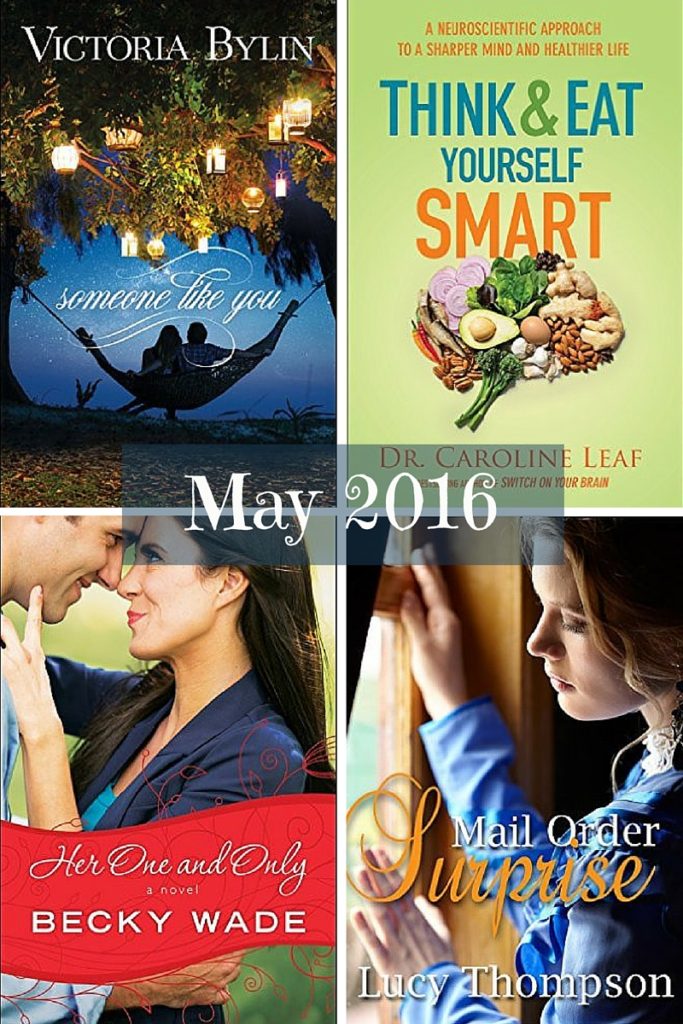
Her One and Only by Becky Wade (click here to read my review)

Someone Like You by Victoria Bylin (click here to read my review)

Think and Eat Yourself Smart by Dr Caroline Leaf (click here to read my review)

Mail Order Surprise by Lucy Thompson (click here to read my review)

I’m looking forward to my June reads.

I’m especially looking forward to An Elegant Facade by Kristi Ann Hunter. Her debut novel has been shortlisted for several awards, so I’m expecting great things.

I’m also looking forward to From this Moment by Elizabeth Camden (one of my favourite Christian historical romance authors), and Medical Judgement (a contemporary medical thriller from Dr Richard Mabry).

What were the best novels you read in May? And what are you planning to read in June?

Book Review: Swimming Through Clouds by Rajdeep Paulus

Book Review: Swimming Through Clouds by Rajdeep Paulus

Book Cover - Swimming Through Clouds by Rajdeep PaulusIf you’ve signed up for my monthly Newsletter, you’ll already have receive my entirely biased list of 50 novels from my favourite Christian authors. If you haven’t . . . sign up on the right!

Today I’m reviewing Swimming Through Clouds, the debut novel from author Rajdeep Paulus. It’s the first in a trilogy, and you’ll want to read them all.

Edgy YA Contemporary Fiction

Talia Grace Vanderbilt is the strange girl at school, the one all the lids call ‘emo’. She’s not. She’s just hiding a home life where her every move is controlled by her father, immigration lawyer Gerard Vanderbilt, and where there consequences for not meeting expectations. She is responsible for caring for her younger brother, Jesse, as their mother is dead.

The whole book is written in first person, from Talia’s point of view.

This means we don’t always get to see or understand the motivations of some of the other characters, like Jesse, Lagan and Gerard. What we do see is filtered through Talia’s understanding, and while she is an intelligent high school senior, her insular upbringing means she is naïve in some respects.
Logan is an equally interesting character. He goes out of his way to befriend Talia, allowing the relationship to develop slowly and almost entirely on her terms. Logan sticks by her, and it’s only late in the book when we begin to get an idea of why.
Gerard, Talia’s father, is an equally interesting character, although in totally the opposite respect. He is, without a doubt, one of the most chilling antagonists I’ve come across is fiction. His entire life is a secret from his family, so we find out very little about him. But what we are shown gives the plot a string of tension that kept me turning the page, even though I was afraid to find out what might be coming. It’s outstanding writing, both compelling and repulsive.

I was particularly impressed by the way backstory was handled.

A lot of writers don’t understand the need to layer it through the story. Swimming Through Clouds dropped hints, so that when when we finally found out about a particular incident from Talia’s past, we wanted to know the details. The author also managed to write some of these scenes so the reader ends up understanding the incident better then Talia does, which is impressive.
This is the first book in a series, and while it had a sense of closure in itself, there were several unanswered questions as well, leaving plenty to cover in the sequel. Swimming Through Clouds isn’t a Christian novel per se, in that God, Jesus and Christianity aren’t mentioned. However, a Christian reader will find Jesus in the story.

Recommended for fans of gritty YA fiction and authors such as Theresa Santy, Trudy Adams and Michelle Dennis Evans. Thanks to the author for providing a free ebook for review. You can find out more about Rajdeep Paulus at her website, and you can read the opening here:

2016 Christy and INSPY Award Finalists

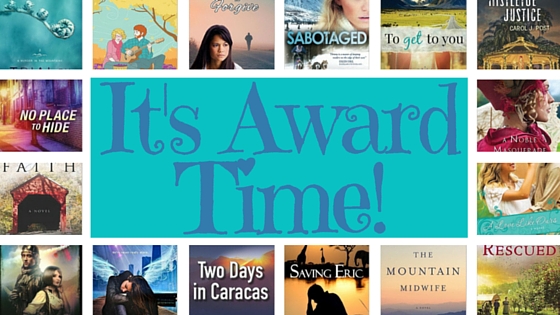
It’s Award Time!

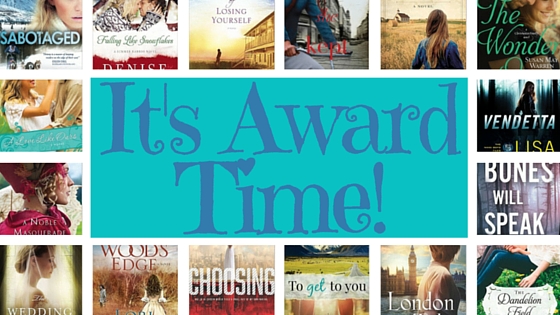
Over the last two weeks I’ve introduced you to my six favourite awards for Christian novels (I’d love to be on any of these lists one day!). Today I’m back with the Christy Award finalists, and the INSPY Award shortlists. Lots more books for the to-read pile!

2016 INSPY Award shortlist and 2016 Christy Award finalists

The 2016 Christy Award Finalists

Contemporary

The Art of Losing Yourself by Katie Ganshert (WaterBrook Press)

As Waters Gone By by Cynthia Ruchti (Abingdon Press)

The Sea Keeper’s Daughters by Lisa Wingate (Tyndale House Publishers)

Contemporary Romance/Suspense

Falling Like Snowflakes by Denise Hunter (Thomas Nelson

Sabotaged by Dani Pettrey (Bethany House Publishers)

The Wedding Chapel by Rachel Hauck (Zondervan

Contemporary Series

Anna’s Healing by Vannetta Chapman (Harvest House Publishers)

Come Rain or Come Shine by Jan Karon (G.P. Putnam’s Sons)

Crazy Little Thing Called Love by Beth K. Vogt (Howard Books)

First Novel

The Choosing by Rachelle Dekker (Tyndale House Publishers)

Irish Meadows by Susan Anne Mason (Bethany House Publishers)

A Noble Masquerade by Kristi Ann Hunter (Bethany House Publishers)

Historical

The Girl from the Train by Irma Joubert (Thomas Nelson)

Secrets She Kept by Cathy Gohlke (Tyndale House Publishers)

The Wood’s Edge by Lori Benton (WaterBrook Press)

Historical Romance

Beyond All Dreams by Elizabeth Camden (Bethany House Publishers)

The Lost Heiress by Roseanna M. White (Bethany House Publishers)

Luther and Katharina by Jody Hedlund (WaterBrook Press)

To Win Her Favor by Tamera Alexander (Zondervan)

Suspense

The Bones Will Speak by Carrie Stuart Parks (Thomas Nelson)

Twisted Innocence by Terri Blackstock (Zondervan)
Vendetta by Lisa Harris (Revell)

Visionary

The Five Times I Met Myself by James L. Rubart (Thomas Nelson)

A Time to Speak by Nadine Brandes (Enclave Publishing)

Waking Beauty by Sarah E. Morin (Enclave Publishing)

Young Adult

The Choosing by Rachelle Dekker (Tyndale House Publishers)

Rebel by R.J. Anderson (Enclave Publishing)

To Get to You by Joanne Bischof (Independently Published)


Winners will be announced the last week in June.

The 2016 INSPY Award Finalists

Debut

The Thorn Bearer by Pepper D. Basham (Vinspire Publishing)

Jaded by Varina Denman (David C. Cook)

A Noble Masquerade by Kristi Ann Hunter (Bethany House)

Love’s Rescue by Christine Johnson (Revell)

Irish Meadows by Susan Anne Mason (Bethany House)

General Fiction

A Cup of Dust by Susie Finkbeiner (Kregel)

The Art of Losing Yourself by Katie Ganshert (Waterbrook)

Secrets She Kept by Cathy Gohlke (Tyndale)

Water From My Heart by Charles Martin (Center Street)

The Bronte Plot by Katherine Reay (Thomas Nelson)

Contemporary Romance/Romantic Suspense

London Tides by Carla Laureano (David C. Cook)

The Dandelion Field by Kathryn Springer (Zondervan)

Crazy Little Thing Called Love by Beth K. Vogt (Howard)

A Love Like Ours by Becky Wade (Bethany House)

The Wonder of You by Susan May Warren (Tyndale)

Historical Romance

The Wood’s Edge by Lori Benton (Waterbrook)

Not by Sight by Kate Breslin (Bethany House)

The Mistress of Tall Acre by Laura Frantz (Revell)

Luther and Katharina by Jody Hedlund (Waterbrook)

Through Waters Deep by Sarah Sundin (Revell)

Speculative Fiction

The Methuselah Project by Rick Barry (Kregel)

Heir of Hope by Morgan L. Busse (Enclave Publishing)

The Shock of Night by Patrick W. Carr (Bethany House)

The Curse of Crow Hollow by Billy Coffey (Thomas Nelson)

Embers by Ronie Kendig (Enclave Publishing)

Mystery and Thriller

The Last Con by Zachary Bartels (Thomas Nelson)

A.D. 33 by Ted Dekker (Center Street/Hachette)

Vendetta by Lisa Harris (Revell)

Falcon by Ronie Kendig (Shiloh Run Press/Barbour)

The Bones Will Speak by Carrie Stuart Parks (Thomas Nelson)

Literature for Young Adults

Season of Fire by Lisa T. Bergren (Blink/Zondervan)

Shades of Doon by Carey Corp and Lorie Langdon (Blink/Zondervan)

The Choosing by Rachelle Dekker (Tyndale)

An Uncertain Choice by Jody Hedlund (Zondervan)

Siren’s Fury by Mary Weber (Thomas Nelson)


Winners will be announced on 28 June 2016.

Book Review: Feast for Thieves by Marcus Brotherton

If you’ve signed up for my monthly Newsletter, you’ll already have receive my entirely biased list of 50 novels from my favourite Christian authors. If you haven’t . . . sign up on the right! Today I’m reviewing Feast for Thieves, the debut novel from author Marcus Brotherton. It’s historical fiction with a definite masculine tone—a departure from my romance recommendations—but it’s got an excellent plot, and the writing is fabulous.

This review first appeared at Australasian Christian Writers.

I was asked to review Feast for Thieves months ago, and for some reason never got around to reading it. I was reminded of it again when I saw it was a finalist for the 2015 Christy Awards in the First Novel category, so thought I’d better open it up and see what I was missing.
I was hooked from the first page. And I don’t say that often.

Feast for Thieves begins with Crazy Ake and Rowdy Slater robbing the bank in the small town of Cut Eye, Texas, in the spring of 1946. It’s written in the first person, from Rowdy’s point of view, and right from that first line two things are evident. Marcus Brotherton can write. And Rowdy Slater isn’t your typical Christian fiction hero. After a near escape from death by drowning, Rowdy sees a vision …

Now, I’ve read other books with fantastic opening hooks which simply fizzled out after that one fast-paced and original scene. But Feast for Thieves just kept going. Rowdy decides to return the money, which causes the Sheriff of Cut Eye a few problems. Sure, it’s good that he solves the crime, but the expense of a trial is sure going to put a dent in the county budget, and his chances of re-election. And he’s got another problem: the town needs a preacher. So the Sheriff delivers Rowdy an ultimatum: spend a year as Cut Eye’s minister, or go to jail.

Rowdy knows nothing about God, preaching or running a church, but he knows enough about jail not to want to go back there. Besides, he’s got other problems, and he’s going to need a paying job to fix them. It’s an excellent plot, with lots of twists, yet all making perfect sense, and tied together with a cast of true characters.

Rowdy is an especially fascinating character. He’s a likable rogue, with a little too much rogue to make a good minister. But he has his own unique way of dealing with problems—serving in the Army during some of the toughest battles means he probably knows more about human nature than many preachers.

But what really made Feast for Thieves stand out from the opening line was the voice. Rowdy isn’t an educated man, and his language is earthy (but stops short of being vulgar). What makes him unique is his vocabulary and way of speaking—I could hear every word in that Texan accent, yet there wasn’t a single misspelled word to indicate accent.

There was an Author’s Note at the end in which Brotherton explained how he developed Rowdy’s voice, and it took extensive research and a deep knowledge of the time and place. It took a lot of effort to make Rowdy’s voice seem this easy and this authentic. Writers, if you are ever looking for a way of expressing dialect without apostrophes and misspellings, read Feast for Thieves.

Men, if you’ve been bemoaning the fact that too many Christian novels are sappy romances (especially Amish romances!), read Feast for Thieves. While I’m not a betting man (well, I’m not a man at all, not that you could tell based on the spam email I receive), I’d say even your non-Christian friends would enjoy this one.

But it’s not all manly stuff. There is a solid and real Christian message in here, and even whispers) a little romance. I can absolutely see why Feast for Thieves was nominated for a Christy Award. Recommended.

Thanks to River North fiction for providing a free ebook for review. You can find out more about Marcus Brotherton at his website (and make sure to read his article on why men need to read more fiction). You can read the first chapter here:

2016 Grace and RITA® Award Finalists

It’s Award Time!

Last week I introduced the six awards I look to in the Christian publishing industry. Today I’m bringing you the finalists for two of these awards: The Grace Awards, and the RITA Awards. Next week I’ll be back with the INSPY Award and Christy Award finalists.

Finalists for the 2016 Grace Awards and Christian romance finalists for the 2016 RITA Awards

The Grace Awards

The finalists for the 2016 Grace Awards are:

Womens Fiction/General Fiction:

(Serious women’s/men’s issues, can have humor and suspense elements)

Freed To Forgive by Julie B. Cosgrove (Prism Book Group)

Waters Of Separation by Carol Mcclain (Desert Breeze Publishing)

Annabelle’s Ruth by Betty Thomason Owens

Romance/Historical Romance

(Primary element is love/courtship/marriage, be it set now or then)

The Thornbearer by Pepper Basham (Vinspire Publishing)

Plum Upside Down by Valerie Comer (Greenwords Media)

Bridge Of Faith by Catherine West (Amazon Digital Services)

Mystery/Romantic Suspense/Thriller/Historic Suspense

(Crime fiction, probably a body)

No Place To Hide by Lynette Eason (Amazon Digital Services)

Trial By Twelve by Heather Day Gilbert (Woodhaven Press)

Sabotaged by Dani Pettrey (Bethany House)

Speculative Fiction

(Science Fiction, Fantasy, Horror, Etc.)

Storming by K. M. Weiland (PenForaAword Publishing)

Angelhood by A.J. Cattapan (Vinspire Publishing)

A New Threat by Aaron Demott (Altwit Press)

Action-Adventure/Western/Epic Fiction

(Exploits, quest, daring, expansive)

Saving Eric by Joan Deneve (Write Integrity Press)

Two Days In Caracas by Luana Ehrlich (Potter’s Word Press)

A Lady For The Lawman by Jewell Tweedt (Prism Book Group)

Young Adult

(Including Middle Grade And New Adult)

To Get To You by Joanne Bischof (Mason Jar Books)

Roped by Diane Gates (Prism Book Group)

Stone And Snow by Sibella Giorello (Running Girl Productions)


Winners Will Be Announced On 31 May 2016.


The RITA® Awards

The RITA® Awards are run by Romance Writers of America, and are named after the organisation’s first president, Rita Clay Estrada. The Awards are specifically for romance novels, in a range of sub-genres (including Inspirational) and lengths (including long, short and novella).

The 2016 RITA finalists in Inspirational Romance are:

A Love Like Ours by Becky Wade (Bethany House)

Mistletoe Justice by Carol J. Post (Love Inspired Suspense)

The Mountain Midwife by Laurie Alice Eakes (Zondervan)

A Noble Masquerade by Kristi Ann Hunter (Bethany House)

The Rescued by Marta Perry (Berkley)

Note that while the RITA® rules say that Inspirational can include any religious or spiritual belief system, it’s rare to see a finalist that isn’t Christian fiction.

Some Christian novels have also been named as finalists in other categories:

Best First Book

A Noble Masquerade by Kristi Ann Hunter (Bethany House)

Historical Romance – Long

Tiffany Girl by Deeanne Gist (Howard Books)

(I reviewed Tiffany Girl, and was disappointed at the lack of Christian content. I guess this nomination confirms that Gist is now focused squarely on the general market. Readers checking out her earlier books will find them a little different.)

Romance Novella

Toward the Sunrise by Elizabeth Camden (Bethany House)

Winners will be announced on 16 July.