Category: Bookish Question

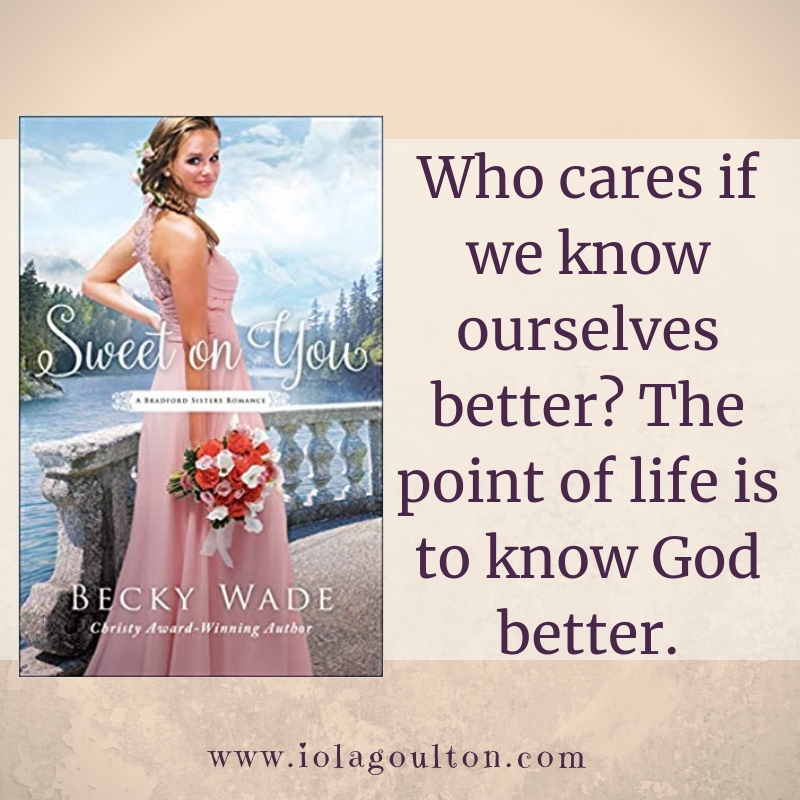
Who cares if we know ourselves better? The point of life is to know God better.

Bookish Question #102 | What was the last book you’ve read that you recommend?

I’m a book reviewer, so you can find reviews of the books I read and recommend on my website.

Monday is a review of a new or recent release I’ve enjoyed. Thursday is a review of an older book. This is usually a Throwback Thursday post, where I repost my review of an older book I’ve enjoyed, but sometimes it’s a new review of a book I’ve been slow to read and review.

So you can look at my Book Review page to see the most recent books I’ve read and recommended.

But one of the benefits of being a reviewer is that I get to read advance copies of books. That means my most recent reviews aren’t always the book I’ve most recently read. I’ve been known to read books as much as six months in advance of the release date (and that’s not counting the books I edit).

So what is the last book I read that I’d recommend?

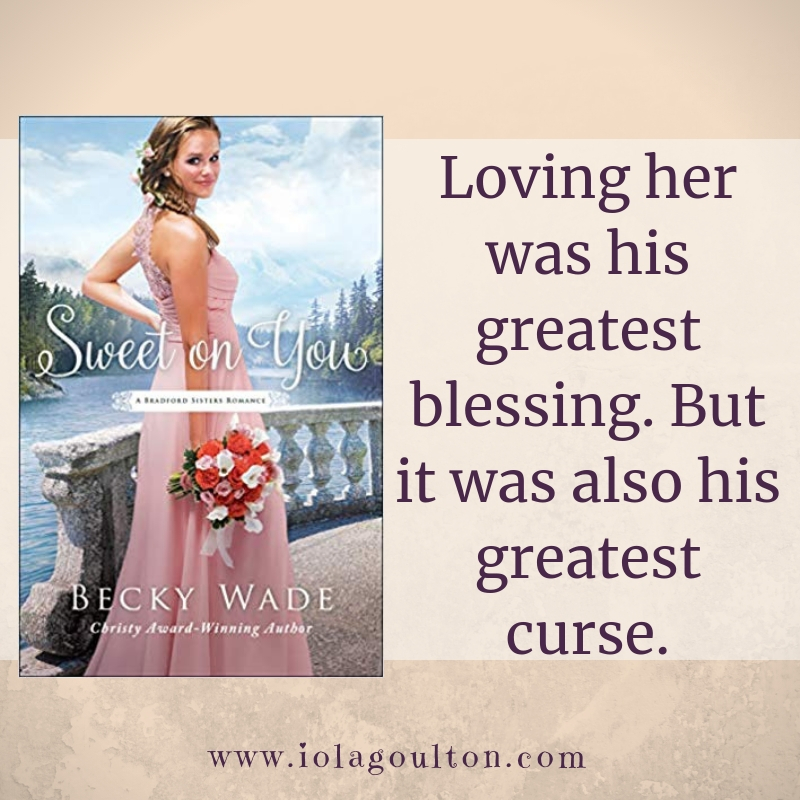
Sweet on You by Becky Wade. I’ve already featured it in a First Line Friday post, and my review is scheduled for 29 April, the day before it officially releases. I may even read it again before that …

Why? Because Sweet on You is everything I love about Christian romance. It’s got a romance (obviously). The thing with a romance novel is that we know before we start who is going to end up with whom. In this case, it was signposted in the first book in the series, True to You, which was published two years ago. So we’re reading for the journey.

And the journey was great. Sweet on You had an underlying suspense thread, and I especially love romantic suspense. But what made it special was the way Becky Wade wove Christian truths into the novel, with lines like this:
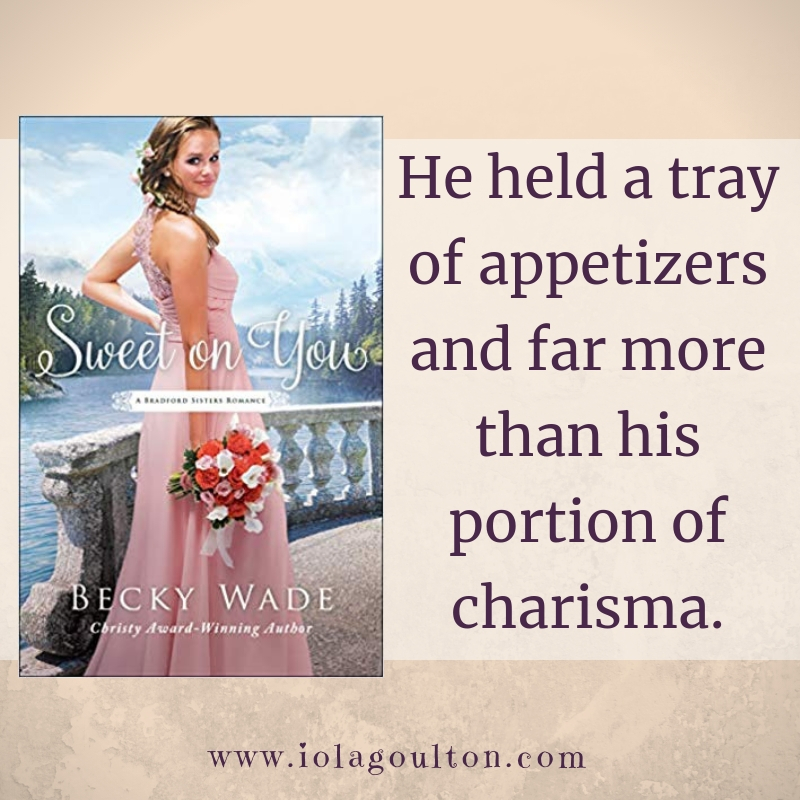
He held a tray of appetizers and far more than his portion of charisma.

And this:

Loving her was his greatest blessing. But it was also his greatest curse.

Sweet on You is a multi-layered romance, and I definitely recommend it!

What about you? What was the last book you’ve read that you’d recommend, and why?

Completely out of control. But less out of control than it was three months ago :) I discussed my to-read pile in the first post of this year, when we were discussing book challenges. One of my personal challenges was to read 48 books off my to-read pile, and another was to cut a similar number from my Goodreads Currently Reading shelf. How am I going? I've cut 16 books off my to-read pile, which means I'm on target to cut 48 this year. No, I haven't read all 16. Some I read. Others I started reading and realised I didn't care for and would never finish—which is enough to take them off the pile. One I've decided not to read after reading an online rant by the author (it appears she's one of that small group of authors who say they want honest reviews, but also believes reviewers shouldn't post critical reviews because they "hurt" authors. Fine. I'll do her the favour of not reviewing her books. Or reading them. Or buying them). I started the year with 54 books on my Goodreads Currently Reading shelf. That's now down to five. How? Most of the books had been automatically added to my Currently Reading shelf when I bought them on Kindle and opened them. I went through the list on Goodreads and moved every book I wasn't actually reading to my To Read shelf, or deleted the ones I know I'm not interested in reading. What about you? How out of control is your to-read pile?

Bookish Question #101 | How out of control is your to-read pile?

Completely out of control.

But less out of control than it was three months ago 🙂

I discussed my to-read pile in the first post of this year, when we were discussing book challenges. One of my personal challenges was to read 48 books off my to-read pile, and another was to cut a similar number from my Goodreads Currently Reading shelf.

How am I going?

I’ve cut 16 books off my to-read pile, which means I’m on target to cut 48 this year.

No, I haven’t read all 16. Some I read. Others I started reading and realised I didn’t care for and would never finish—which is enough to take them off the pile. One I’ve decided not to read after reading an online rant by the author (it appears she’s one of that small group of authors who say they want honest reviews, but also believes reviewers shouldn’t post critical reviews because they “hurt” authors. Fine. I’ll do her the favour of not reviewing her books. Or reading them. Or buying them).

I started the year with 54 books on my Goodreads Currently Reading shelf.

That’s now down to five. How? Most of the books had been automatically added to my Currently Reading shelf when I bought them on Kindle and opened them. I went through the list on Goodreads and moved every book I wasn’t actually reading to my To Read shelf, or deleted the ones I know I’m not interested in reading.

What about you? How out of control is your to-read pile?

What makes you buy or read a book from a new-to-you author?

Bookish Question #100 | What makes you buy or read a book from a new-to-you author?

One of my reading resolutions this year was to try to read more books from new-to-me authors.

Why? Well, I want to support new authors by recommending them to my readers.

And I want to understand trends in Christian fiction, especially when it comes to debut authors from the major publishers. What are they buying? Is there a new direction in terms of genre or location or time setting? Are there trends in writing or editing standards? This helps me give my freelance editing clients better advice.

But how do I find these new-to-me authors?

I often find new authors from traditional publishers through NetGalley. I follow all the major Christian publishers, and am always on the lookout for new names.

Many authors approach me for reviews. If the book is Christian fiction and appears well-written and well-edited, then I’m usually keen to read it.

I also find new-to-me authors through other book blogs, especially through the weekly First Line Friday meme. That usually gives me plenty of ideas for my weekend reading …

The one thing that holds me back from reading more new-to-me authors is that an author can only be a new-to-me author once 🙂

And I love many of the stories I read by new-to-me authors, and want to either read their entire backlist, or (if they’re a debut author) read all their new releases. And I can’t—not unless my existing must-read authors stop writing books (and that would be a tragedy).

What about you? Do you read books from new-to-you authors? What makes you buy or read a title from a new-to-you author?

What is your favourite setting to read about?

Bookish Question #99 | What is your favourite setting to read about?

Setting can be a big part of a novel.

It usually refers to the novel’s geographical setting (place), but can also mean the time setting.

Contemporary Christian fiction currently seems to favour small-town settings.

These can be fun, but they’re not consistent with my own childhood experience of living in a small town in New Zealand. Well, I guess it’s fiction so they make things up, right?

Some Christian fiction is set in big US cities.

Honestly, these all feel the same to me, because I’m not intimately familiar with any of the cities. Sure, I’ve visited many of them, but as a tourist. Tourist LA or Denver is very different from resident LA or Denver. (LA in novels is a lot like LA in the TV series “24”—no one ever gets caught in traffic jams on the 101 freeway.)

While I love reading contemporary Christian romance, I’m almost always reading for the story rather than the setting.

When it comes to setting, I prefer historical settings: Regency London (most of which still exists in real life), or the American West (home to all those mail order brides). In these stories, the setting is vital—almost as though it’s another character. I think my analytical brain prefers these settings because I have no idea if they’re accurate or not, so I can settle in and enjoy the story without thinking about the setting. At the same time, the setting plays a part and adds to the story.

What about you? What’s your favourite setting to read about?

Do you like to read about characters from another race or nationality?

Bookish Question #98 | Do you like to read about characters from another nationality?

I’m from New Zealand, so pretty much every Christian novel I pick up is about characters from another nationality!

I have always enjoyed reading books about other countries—I’ve been an armchair traveller my entire life. I’ve also enjoyed visiting places in real life that I’ve first visited in fiction. (Although it’s a little disappointing to look out for a certain landmark and find that was an area where the author took poetic licence.)

I’ve learned a lot about history from reading historical fiction.

It might not be about people from a different race or nationality, but it often feels like it because their culture and ideas are very different from ours. That can show the good in our culture, and can also highlight the less good.

Diverse fiction—fiction about other people of other races—is harder to find.

I’m a British Kiwi, so my racial background is very much Anglo-Saxon. I’d love to read more fiction about people of other races, but I’d also like it to read more fiction by people of other races (or, at least, by someone with an in-depth understanding about the race they’re writing about). I’d want the stories to be authentic and true to life, not a whitewashed Anglo-Saxon view of someone from another race.

What do you think? Do you like to read about characters from another race or nationality? Do you have any diverse fiction authors you recommend?

What novel has influenced you the most, and why?

Bookish Question #97 | What novel has influenced you the most, and why?

Novels are stories. But novelists can use fiction to illustrate eternal truths, just as Jesus did with the parables. The best novels are those where those eternal truths are woven in so well that we remember them, and they positively influence the way we live our future lives.

So what novel has influenced me the most, and why?

There are many. This Present Darkness by Frank Peretti opened my eyes to the reality of spiritual warfare.

Redeeming Love by Francine Rivers exposed the human cost of lust and greed, and showed the everlasting love of God.

And the Shofar Blew by Francine Rivers showed the danger of putting spiritual leaders on a pedestal. This was written during the excesses of the 1980s teleevangelists, but needs to be reread in the light of our social media and reality TV culture.

Marcus’s mother in An Echo in the Darkness by Francine Rivers showed me how we all have a purpose in live, no matter our situation.

Confessions of a Teenage Hermaphrodite by Lianne Simon reminded me life isn’t always black or white, right or wrong, male or female.

Grace in Strange Disguise by Christine Dillon reminded me that Christianity isn’t a free pass to an easy life.

Sweetbriar Cottage by Denise Hunter showed for the illustration of God’s sacrificial love.

The list could co on …

Novel? You mean I was only supposed to pick one? Not happening.

What about you? What novel has most influenced your life, and why?

What plotline or trope would you be happy to never read again?

Bookish Question #96 | What plotline or trope would you be happy to never read again?

First, let’s define a trope.

A trope is a common plotline used in genre fiction. For example, romance has the mail-order bride trope. These are usually set in the American West in the late 1800s, and feature a woman travelling (often alone) across the country to marry a man she’s met only through letters. They meet and marry, then fall in love after overcoming whatever difficulties the author has lined up for them.

Some people love these stories—as evidenced by the number of mail order bride stories on Amazon. Others loathe them. I’m somewhere in the middle—I enjoy reading them, but I’m not the target reader for the box set of twenty.

There are dozens of other romance tropes: billionaire, rock star, sports star. Brother’s best friend, friends to lovers, enemies to lovers. Secret baby, second chance at love, finding love again.

And that’s the one I get tired of in Christian fiction: Finding love again.

It’s not so bad now, but there was a time a few years back when it seemed every other romance novel I read featured a young widow finding love again. That’s sweet … but it means a lot of dead husbands.

Christian men, your twenties are a dangerous time.

If Christian romance is to be believed, you’re going to die. You might be murdered. You might be the victim of a drunk driver (or a texting driver). You might die for your country. But you’re gonna die, and leave your widow (and possibly one or more children) in a precarious financial state. Because it seems married Christian men in their twenties don’t have life insurance.

But that’s okay, because all those guys who didn’t marry young apparently spent their twenties doing something productive so now they’re financially stable and emotionally available. They are ready and willing to marry your wife. They never have any emotional baggage. No divorces (if they do, it’s because their wife was unfaithful). No problems. And they’re always Christians. Perfect.

Now we’re moving into a variation on the trope.

Instead of dead husbands, the women have loser ex-husbands (or ex-boyfriends), and a child. Sometimes the ex-husband is the father of the child. Sometimes the child is the result of an out-of-character one-night-stand. (It has to be out of character, because this is Christian fiction.) But it always results in an unplanned pregnancy and an unknown father. Charming.

Now I think about it, perhaps I preferred all the virtuous Christian husbands who died through no fault of their own. At least that was presenting a positive picture of modern manhood, not one-night-standers and serial philanderers.

What plotline or trope do you wish you’d never see again, and why?

Do you read "clean reads"? How do you define clean reads?

Bookish Question #95 | Do you read “clean reads”?

Let’s reverse the questions.

I see clean reads as Christian fiction without the Christian world view. Both clean reads and Christian fiction avoid nudity, sexual content, and bad language. Most also avoid violence. But Christian fiction has a Christian thread of some kind: Christian characters or Christian themes. Clean reads doesn’t.

Do I read clean reads?

Yes. Some of it is marketed as clean reads (Amazon has a clean and wholesome category). Some of it is marketed as Christian fiction, but has little or no Christian content. I’m finding an increasing number of novels from the big-name Christian publishers fall into this category, and it’s a trend I have mixed feelings about.

On one hand, I feel slightly disappointed when I pick up a novel expecting it to be Christian fiction, but find it’s “Christian lite”. On the other hand, I believe Christian authors and publishers need to consider how we reach the unchurched rather than preaching to the choir. Non-Christians aren’t shopping in Christian bookstores. They don’t visit the faith or inspirational section of major book chains. So how are we going to reach them?

Here’s an example.

Last year I read a review of The Secret to Hummingbird Cake by Celeste Fletcher McHale, published by Thomas Nelson. The review criticised the novel for not being sufficiently “Christian”. But one of the commenters said that same “not Christian” novel led her to Christ.

Wow.

She said her (Christian) neighbour loaned her the book, but she’d never have read it if it had been obviously Christian fiction.

That example shows me the importance of Christians writing clean reads—novels that often reflect Christian values even if there is no mention of God or Jesus or the Christian faith.

Maybe I should be reading more “clean reads”. What about you? Do you read clean reads? Can you recommend some good authors?

Which author would you like to have coffee with?

Bookish Question #94 | Which author would you like to have coffee with?

All of them? Is that a legitimate answer?

I have met a few authors already. I went to Wellington to visit my parents not long after Close to You released, and Kara Isaac was kind enough to meet a groupie reviewer for coffee so I could get my book autographed.

Candace Calvert called into my home port on her New Zealand cruise two years ago. Ellie Whyte (from Christian fiction site Soul Inspirationz) and Angela Bycroft drove up, and we all had coffee and a chat with Candace after she came back from her tour to Hobbiton.

I’ve also been able to take Australian writers Josephine-Anne Griffiths and Raylene Purtill for coffee (but didn’t get photo evidence).

Who else would I like to have coffee with? The obvious answer is Francine Rivers, but I’d probably be too nervous to talk.

Which author would you like to have coffee with? Or is picking one just too hard? #BookishQuestion #BookChat Share on X

What about you? Which author (or authors) would you like to have coffee with?

If you ever do a cruise around New Zealand and have a couple of hours to spare after your Hobbiton tour, let me know. I’d love to meet you for coffee.
Do you have a book budget? Do you stick to it?

Bookish Question #92 | Do you have a book budget? Do you stick to it?

No, I don’t have a book budget, although perhaps I should.

However, I don’t spend a lot on books because most of the books I buy are Kindle versions, especially when it comes to fiction (which is most of what I buy). The only novels I regularly buy in paperback are those I’ve edited (when the authors don’t gift them to me). I like owning the paperback when it’s something I’ve worked on!

I do buy non-fiction books in paperback or hardcover. They are reference books, and I find it’s easier to read and highlight paperbacks, or to search through physical copies of style manuals.

My enormous to-read pile means I try not to buy books (try!) because I already have so many I’ve bought and haven’t read. And it seems wrong to buy more books when I haven’t read the ones I already have.

What about you? Do you have a book budget? Do you stick to it?