Category: Bookish Question

Do you read book reviews? Where?

Bookish Question #112 | Do you read book reviews? Where?

Yes, but I’d probably read more if I wasn’t a book reviewer myself!

Why is that?

As I’ve mentioned before, I get a lot of my review copies from NetGalley. I can’t read reviews for these books because there aren’t any (yet). If the author, book cover, or book description are good enough to entice me to read the book, then I’ll download it.

If I enjoy the book, then I’ll review it and share my review for others to read. If not … I’ll probably still review it on NetGalley, but won’t share the review.

When I do read reviews, they tend to be reviews on blog sites.

I follow 20+ book blogs through Feedly, and will read reviews for books that catch my eye … but only books that aren’t on my own to-review pile. I don’t like to read reviews of books I know I’m going to read and review, as I don’t like others to influence me. However, I will sometimes read a review, decide I want to read the book, then find it’s still available on NetGalley.

The other main place I read reviews is Goodreads.

It’s kind of like Facebook, in that the latest updates from my friends are front and centre in my updates. I’ll usually skim the updates a few times a week, check out reviews, and add books to my to-read pile (aka Mount TBR).

I’ll also read Amazon reviews if I’m considering buying a book e.g. if I’ve seen the book advertised on BookBub or another online site. But I’ve usually made my buying decision before I get to Amazon—although sometimes I’ll choose not to buy (say, if the ebook is too expensive. I have too many paid-for books in my to-read pile already).
So yes, I do read book reviews, but not as many as I’d read if I wasn’t a reviewer with an overflowing to-read pile!

What about you? Do you read book reviews? If so, what are your favourite review sites?

Which Christian romance has the best first date scene?

Bookish Question #111 | Which Christian romance has the best first date scene?

This question puzzled me at first, because it took me a while to any Christian romances which had an official “first date” scene. Most seem to have the couple meet and spend time together in normal life, rather than in the context of an official date.

They may be thrown together by work, through another character (e.g. a child if one is a parent) or through a crime (especially in romantic suspense). They spend time together, and the relationship develops from there.

This seems more natural to me than the official “date”, which often feels contrived and doomed to failure. (A view which might be affected by the number of characters in Christian fiction who are dating the wrong person!)

But then I remembered True Devotion by Dee Henderson.

Here’s the Amazon description:
Kelly Jacobs has already paid the ultimate price of loving a warrior; she has the folded flag and the grateful thanks of a nation to prove it. Navy SEAL Joe “Bear” Baker can’t ask her to accept that risk again—even though he loves her. But the man responsible for her husband’s death is back; closer than either of them realize. Kelly is in danger, and Joe may not get there in time.

(That’s not the cover on my paperback version. I don’t much like my cover, but I like it better than this cover.)

True Devotion is a slow-build romance between long-time friends, and the first date doesn’t happen until around halfway through the book. But it’s worth waiting for: Joe wants to make it a memorable occasion, but only has three hours to organise the date. He calls a bunch of favours and gets a window table at the classiest restaurant in town, and even manages to buy Kelly flowers and a bear (which is a bit of a pun, as Joe’s SEAL nickname is Bear).

Kelly is suitably impressed, and it’s a great scene.

What’s your favourite first date scene in Christian romance?

Do you like it when a reviewer includes quotes from the book in their review?

Bookish Question #110 | Do you like seeing quotes in a book review?

I’m a reviewer, so my view may well be biased 🙂

I like to include quotes in my reviews. I think a pertinent quote helps break up the text of a review. More importantly, it gives the person reading the review a feel for the author’s writing style and the tone of the book.

I also like including quotes because they’re great for social media.

It only takes a few minutes to turn a quote into a pretty meme that can be shared on Facebook, Instagram, Pinterest and Twitter. I think it’s a win-win. I’m promoting the book and the author, but I’m also promoting my own website (because I always include my site address on my memes).

I like reading reviews with quotes for the same reason. It gives me a feel for the author’s writing style, and the choice of quote gives an insight into the mind of the reviewer. What made that line stick out for the reviewer? Does it resonate with me in the same way? If so, I’ll probably enjoy the book.

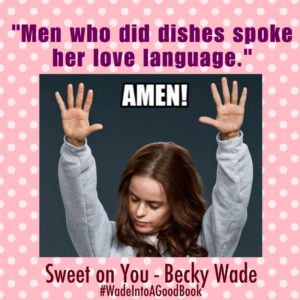
For example, here’s a quote from Sweet on You by Becky Wade from blogger DailyDoseofSon:
Men who did dishes spoke her love language
via @DailyDoseofSon

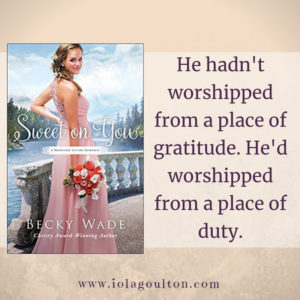
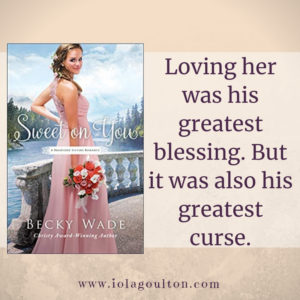
Housekeeping is not my spiritual gift, so this quote definitely got my attention and showed me the character could be someone I’d relate to. Here are a couple of my favourite from the same book:

He hadn't worshipped from a place of gratitude. He'd worshipped from a place of duty.

Loving her was his greatest blessing. But it was also his greatest curse.

As you can see, I like quotes to be short and to the point.

I don’t like reviews (or author blog posts) with long passages from the novel e.g. the first chapter. They can be hard to read in a blog post, and they don’t give any more information than someone could get from checking the book out on Amazon.

That’s my view as a reader and as a reviewer. I’d be interested to know what authors think—do they like seeing quotes from their books in reviews and on social media?

What about you? Do you like it when a reviewer includes (short) quotes in their review?

What's the one genre you can never read enough of?

Bookish Question #109 | What’s the one genre you can never read enough of?

Christian romance 🙂

On one hand, I love Christian romance and I’m always looking for my next great read, there are times when the stories can all start to feel a little samey, a little to formulaic.

Also, Christian romance is a broad genre—more than half of the Christian fiction published is romance in one from of another, from Biblical romance to Regency romance, from Amish romance to contemporary romantic suspense.

If I had to choose one subgenre, I’d have to say contemporary Christian romance.

Why? Because it’s always changing as the world around us changes. Twenty years ago, characters were just getting mobile phones and learning to text. Ten years ago, they got phones with cameras. Now everyone has a smartphone, complete with email and social media.

Online connection means a lot of the plots that used to work and that I used to enjoy (like the secret baby trope I mentioned last week) have fallen out of favour because they don’t work any more. Instead, we have dozens of billionaire romances (because apparently any guy with a six-pack can earn a cool billion by developing some cool new app. No matter that there are so many free apps that I’ve yet to pay for one).

What I like about a great contemporary Christian romance is that it reinforces the importance of real-life connection—with other people, and with God. Great contemporary Christian romance also features flawed Christian characters doing their best to live a godly life in an ungodly world.

And, of course, there’s the romance.

Christian romance is (or should be) focused on the meeting of minds and the development of a three-strand relationship, not on the physical attraction that categorises so many general market (and real-life) relationships. Finally, contemporary Christian romance models romantic relationships built on a firm foundation, and built to last.

And that’s a few reasons why I can never read enough Christian romance.

What about you? What’s the one genre (or subgenre) you can never read enough of?

What's your favourite romance trope?

Bookish Question #108 | What’s your favourite romance trope?

Romance is full of tropes, and this is probably because romance readers can be voracious. If we find a story we like, we want to read all the books by that author. Then we want to read all the books with similar plots—which means we want all the books with that romance trope.

First, what’s a trope?

Reedsy says:

Tropes are plot devices, characters, images, or themes that are incorporated so frequently in a genre that they’re seen as conventional.

For example, the mail order bride is currently a popular trope, especially in Christian fiction.

I’ve seen box sets of fifteen or twenty mail order bride stories for sale on Amazon. I’m a fan of mail order bride stories (e.g. the Escape to the West series by Nerys Leigh), but I don’t think I could manage a set of twenty!

Fortunately, there are dozens of popular romance tropes, including:

  • Friends to Lovers
  • Enemies to Lovers
  • Fake Romance
  • Love Triangle
  • Forbidden Love
  • Marriage of Convenience
  • Secret Royal/Billionaire
  • Secret Baby
  • Secret Romance
  • Second Chance Romance
  • Reunited Lovers
  • Trapped in an Elevator/Snowstorm
  • Mail Order Bride
  • Belated Love Epiphany
  • Opposites Attract
  • Soul Mate

I’m not a big fan of the love triangle.

It seems to me that a perfectly nice person ends up getting hurt. Mind you, that’s better than the alternative, where the guy thinks he’s in love with Woman A (who’s a real piece of work) but is also attracted to Woman B (the obvious best choice), but I’m left wishing he’d stick with Woman A because Woman B deserves someone with more depth.

That can also happen in reverse (and I can think of one far-too-long-running Christian romance series where the woman had the choice and chose who I think was the weaker man. One reviewer said that if the character was that shallow, then the second man was better off without her, and I had to agree (#TeamCody).

That’s the other problem with the love triangle: half your audience will be convinced the story ends with the wrong couple getting together.

I went through a phase of reading and enjoying secret baby romances, but then the improvements in technology and social media made it harder to believe that the woman couldn’t tell the father she’d had his baby. This meant she hadn’t, which meant she had to have a good reason for not telling him … and many didn’t. Also, secret baby is a more difficult trope to pull off in Christian fiction.

I’m also a big fan of friends-to-lovers (especially in novellas and short fiction—I’m a little wary of a novella where the couple go from first meeting to marriage in less than a hundred pages), and enjoy the occasional enemies to lovers (Maybe It’s You by Christy Hayes is a fun example).

And I enjoy most other tropes … in small doses.

So what’s your favourite trope, and what’s a great example of that trope in Christian romance?

Do you buy and/or read books from debut authors?

Bookish Question | Week 107 | Do you buy and/or read books from debut authors?

Yes—both.

I get a lot of books from debut authors from NetGalley. I’ve now been reviewing for several years, so some of these once-debut authors are now established writers who’ve been added to my must-read list—authors like Kara Isaac, Melissa Tagg, and Becky Wade.

I have also reviewed books for many debut indie (self-published) authors.

Some of my favourites are:

Grace in Strange Disguise by Christine Dillon
The Escape to the West series by Nerys Leigh
The Criss Cross series by CC Warrens
The Land Uncharted series by Keeley Brooke Keith

Here are some debut novels I’ve read this year that I recommend:

The White City by Grace Hitchcock
The Baggage Handler by David Rawlings
Northern Deception by Laurie Wood
Whose Waves are These by Amanda Dykes
Love and Other Mistakes by Jessica Kate

What about you? Do you buy or read books from debut authors?

What titles do you recommend?

Do you read more or less Christian fiction than five years ago?

Bookish Question 106 | Do you read more or less Christian fiction than five years ago?

Less. Or should that be fewer?

Whatever. I’ve been recording my books read on Goodreads since 2010, and have set (and achieved) my target number of books read each year since 2011. My target this year is 150 books, which is a lot less than the 201 books I read in 2014.

So, yes, I’m reading less Christian fiction than I did five years ago.

But that’s because I’m reading fewer books overall than five years ago, not because I’ve consciously moved away from reading Christian fiction. If anything, a larger proportion of my fiction reading is Christian fiction.

However, I am also making more of an effort to read books on writing craft or marketing this year. If I stick with that, it might further reduce the number of Christian novels I finish in 2019.

What about you? Do you read more or less Christian fiction than you did five years ago?

Do you prefer standalone novels, or a series?

Bookish Question #105 | Do you prefer standalone novels, or a series?

Both 🙂

Standalones …

When I read a good standalone novel, then I finish it and want to know more about those characters. I want there to be a sequel, and there isn’t. When I read a good standalone novel, I’ll generally read the next book from that author but might be a little disappointed it’s not a sequel, or it’s not as good as the previous novel.

Series …

When I read a good novel that’s part of a series, then I finish it and (wait for it!) want to know more about the characters. So I’m always pleased to know there is already a sequel available, or that a sequel is planned (even if I have to wait for it). It’s something I’ll watch out for and sign up to review, or buy on preorder. Because I really want to read that book.

When I read a less-good novel that’s a standalone, that doesn’t usually affect whether I want to read their next book. But when I read a less-good novel that’s the first book in a series, l’ll usually sit out the rest of the series. And then the author might fall off my radar, and I might not read the next series either …

So while I enjoy standalone novels, I much prefer reading a series I enjoy. But I’ll rather have a standalone than a series I don’t enjoy.

What about you? Do you prefer standalone novels, or a series?

How do you define Christian fiction?

Bookish Question #104 | How do you define Christian fiction?

I’ve actually written several longish blog posts on this. Rather than rehashing my entire train of thought, I’ll give you the highlights and link to my previous posts.

Fiction written by a Christian author may or may not be Christian fiction.

Christian authors may write for the general market, or for the Christian market. I don’t think you can classify fiction written for the general market as “Christian fiction” even if it’s written by a Christian and has underlying Christian values. That’s not what the market wants. Also, lots of books have underlying Christian values—even Star Wars. That doesn’t make Star Wars Christian fiction.

I’m sceptical of any “Christian fiction” that isn’t written by a Christian.

That, to me, is someone trying to cash in on a market segment, and I don’t think it’s honest. Yes, Christians can write general market fiction with underlying Christian values—that’s us being in the world but not of the world. But I don’t think non-Christians should be writing Christian fiction any more than I think Christians should be writing general market LGBTQIA erotica, or Islamic romance. It’s disrespectful and dishonest.

So I think Christian fiction is written by a Christian, and aimed at Christian readers.

It will reflect and reinforce mainstream Christian values and beliefs (e.g. the Apostle’s Creed). It won’t divide readers over doctrinal differences. And the content will be consistent with the Bible—it won’t gloss over sin, but it won’t be a how-to manual either. Great Christian fiction leaves the reader feeling they’ve learned an eternal truth about God or how we can know Him better.

How do you define Christian fiction? By the author? The publisher? The intended reader? The content? #BookishQuestion #ChristianFiction Share on X

Here are some blog posts which go into more detail:

What about you? How do you define Christian fiction?

Bookish Question: What's your view on grammatical errors in novels?

Bookish Question #103 | What’s your view on grammatical errors in novels?

I’m a freelance fiction editor, which means I spent hours each day hunting through my client’s manuscripts and correcting errors. That can make it hard to switch off and not notice errors when I read for pleasure.

But there are different kinds of errors.

I’m not bothered if an author uses US spelling or grammar vs. British English. I do get annoyed if they don’t seem to be consistent.

I can forgive the odd who/whom error—it’s something even editors look up.

It annoys me if an author doesn’t use the Oxford comma, but that’s not necessarily an error. It’s merely a difference of opinion.

I’m usually not bothered by errors in the books I review.

Usually. This is because I’m often reviewing ARCs. ARCs are advance review copies, which are sent out before the final proofreading is completed. If I find errors in these books, I assume it will be found and corrected before it goes to print. (I’m less forgiving if the author or publisher makes a point of saying they’ve sent me the final version.)

I’m also used to seeing a lot of formatting errors in the review copies.

That’s because my review copies are electronic. The publisher uploads a pdf file to NetGalley, and that’s automatically converted to a mobi file which NetGalley email to my Kindle. The automatic conversion process often introduces errors, like missing line or page breaks.

What I find more difficult are the errors which take me out of the story.

For example, I was recently reading a story where the spelling of one character’s name changed several times (e.g. Smith to Smyth and back to Smith). That confused me to the point I actually found myself flicking back through the book to find whether Smyth was a new character or not (he was not). That’s annoying, but it’s just a proofreading error. They happen.

Other times I’ll get distracted by the errors because the characters and story haven’t engaged me.

Those are the most annoying—when I start picking up on minor errors because that’s more interesting than reading what is happening to the characters. That’s often the sign of a story that’s been written and published too quickly, a story that hasn’t gone through enough critiquing and beta reading and editing.

These are the stories that end up on my did-not-finish pile. I’d persevere if the story was good (although I’d probably still mention the errors if I reviewed the book).

But I’ve come to realise life is too short to read bad books, so if the story and characters don’t engage me, then it’s a DNF.

What about you? What’s your view on grammatical errors in novels? Do you notice them? Do they bother you?