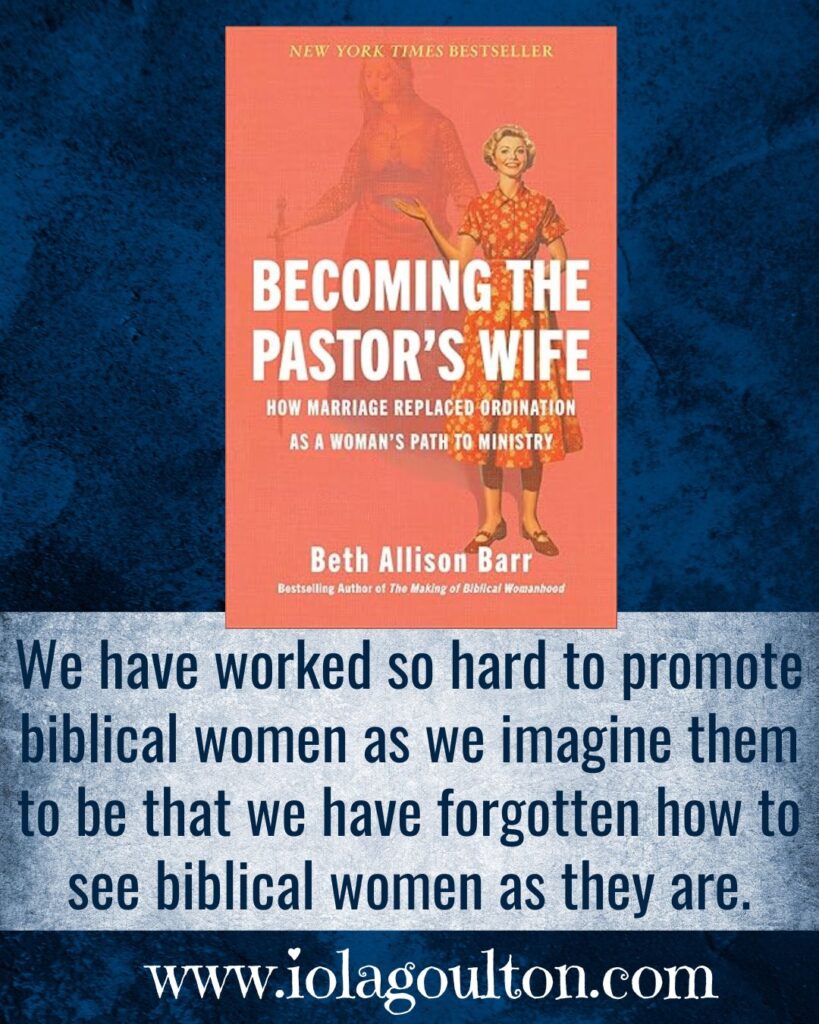
As the title suggests, Becoming the Pastor’s Wife is a discussion of the role of the pastor’s wife in modern Protestant churches, with an emphasis on evangelical churches in the US, where:
“the pastor’s role is by design a two-person job in which only one person receives a salary, title, and individual position.'”
It is also an academic exploration of the history of women’s ministry:
“Becoming the Pastor’s wife is the history of how Christian women gained a new and important leadership role. But it is also the history of how this gain came at a cost for women.”
First, Dr Barr reminds us that women have always had a place in ministry (despite what some church leaders would have us believe):
“The biblical text presents female prophets leading the people of God and proclaiming the word of God unremarkably, as part of the natural order of things.”
Barr reminds us that the New Testament shows us many women prophets, including Mary the mother of Jesus (Luke 1:46-55), Anna, and the four daughters of Philip (1 Cor 11). She shows us women serving alone (Junia) or alongside their husbands (Prisca and Aquilla). Perhaps more importantly, she shows men serving alone while their wives carry on with their own responsibilities. Yes, New Testament men didn’t need their wives to support their ministry by being on stage with them.
There were Dr. Barr points out that the modern church has elevated preaching over prayer and prophesy, contrary to the emphasis in the New Testament. We’ve then used Paul to justify not allowing women to teach. (Except even the most rigid complementarian allows and even encourages women to teach the children in Sunday School … not least because men rarely volunteer for that thankless task).
“Can you imagine what would happen to arguments excluding women from pastoral authority if we recentered our definition of pastoral authority from preaching to praying?”
So what happened?
Dr. Barr points to the Fourth Lateran Council of 1215 as prompting the change. From this point, only ordained priests could lead communion. And, or course, only men could be ordained … despite a long history of women leading nunneries, including some that had women and men in separate wings (for example, Milburga leading Wenlock Priory).
Isn’t it fascinating that the church allowed Christian women to minister for 60% of the time since Jesus?
This change was predicated on the (disturbing) underlying assuming that God therefore didn’t call women to serve as anything but nuns.
No doubt helped by the fact laypeople weren’t allowed to read the Bible for themselves. Instead, they had to trust the men leading them were true shepherds … and not out to fleece them.
The Reformation changed this somewhat, but also introduced the idea of a woman ministering alongside her husband. As such, a woman’s calling was tied up with her husband’s calling.
Which implies God either didn’t or couldn’t call women to minister in their own right.
Last week, when our pastor (yes, our female pastor) asked for volunteers to distribute communion, she remined us that we believe in the priesthood of all believers. It’s a phrase I’ve heard often and have never thought much about. But, after reading Dr. Barr’s book, I realise what a radical statement it is: it reminds us that we don’t have to be an ordained (male) priest to lead communion.
And if we don’t have to be ordained by the church to lead communion, that most sacred of sacraments, nor do we have to be ordained to preach or teach or prophesy or pray. Which makes sense, given women never had to be ordained to lead children’s church, prepare communion, type the notices, clean the church, or perform any number of menial ministry tasks that have been historically left for women.
It’s not all bad news. Dr. Barr does offer hope, saying the church could be different—specifically, the Southern Baptist Church, where Barr and her husband have served for years. She ends with a set of “what if” and “can you imagine” statements that could radically change our understanding of women’s ministry in church. It could also form a bridge to the younger generation, those who see the unbiblical patriarchy embedded in the modern church and who have therefore rejected the church … and God.
Recommended for any women who have ever wondered what God has called them for and to.
Thanks to Brazos Press and NetGalley for providing a free ebook for review.
About Beth Allison Barr
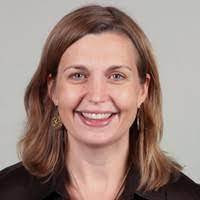 Beth Allison Barr is the U.S.A. Today’s bestselling author of The Making of Biblical Womanhood: How the Subjugation of Women Became Gospel Truth. An academic by training and a pastor’s wife by calling, Beth uses her unique voice to speak out on the relevance of medieval history to our modern world—especially concerning women in both medieval and modern Christianity. Her work is described as “smart,” “powerful,” and “a game changer” for women in modern evangelicalism.
Barr is currently the James Vardaman Professor of History at Baylor University, where she teaches both undergraduate and graduate courses, but she also speaks and writes as a public intellectual. She has been featured by NPR and The New Yorker, and her bylines include Religion News Service, The Washington Post, Christianity Today, The Dallas Morning News, Sojourners, and Baptist News Global. She also continues to write regularly on The Anxious Bench, a popular religious history blog on Patheos.
Find Beth Allison Barr online at:
Website | Facebook | Instagram | Substack
About Becoming the Pastor’s Wife
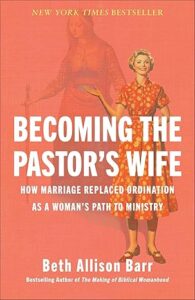 As a pastor’s wife for twenty-five years, Beth Allison Barr has lived with assumptions about what she should do and who she should be.
In Becoming the Pastor’s Wife, Barr draws on that experience and her academic expertise to trace the history of the role of the pastor’s wife, showing how it both helped and hurt women in conservative Protestant traditions. While they gained an important leadership role, it came at a deep cost: losing independent church leadership opportunities that existed throughout most of church history and strengthening a gender hierarchy that prioritized male careers.
Barr examines the connection between the decline of female ordination and the rise of the role of pastor’s wife in the evangelical church, tracing its patterns in the larger history (ancient, medieval, Reformation, and modern) of Christian women’s leadership. By expertly blending historical and personal narrative, she equips pastors’ wives to better advocate for themselves while helping the church understand the origins of the role as well as the historical reality of ordained women.

 Amy Lynn Green is a lifelong lover of books, history, and library cards. She worked in publishing for six years before writing her first historical fiction novel, based on the WWII home front of Minnesota, the state where she lives, works, and survives long winters. She has taught classes on marketing at writer’s conferences and regularly encourages established and aspiring authors in their publication journeys. In her novels (and her daily life), she loves exploring the intersection of faith and fiction and searches for answers to present-day questions by looking to the past.


 Liwen Y. Ho works as a chauffeur and referee by day (AKA being a stay at home mom) and an author by night. She writes sweet and inspirational contemporary romance infused with heart, humor, and a taste of home (her Asian roots).
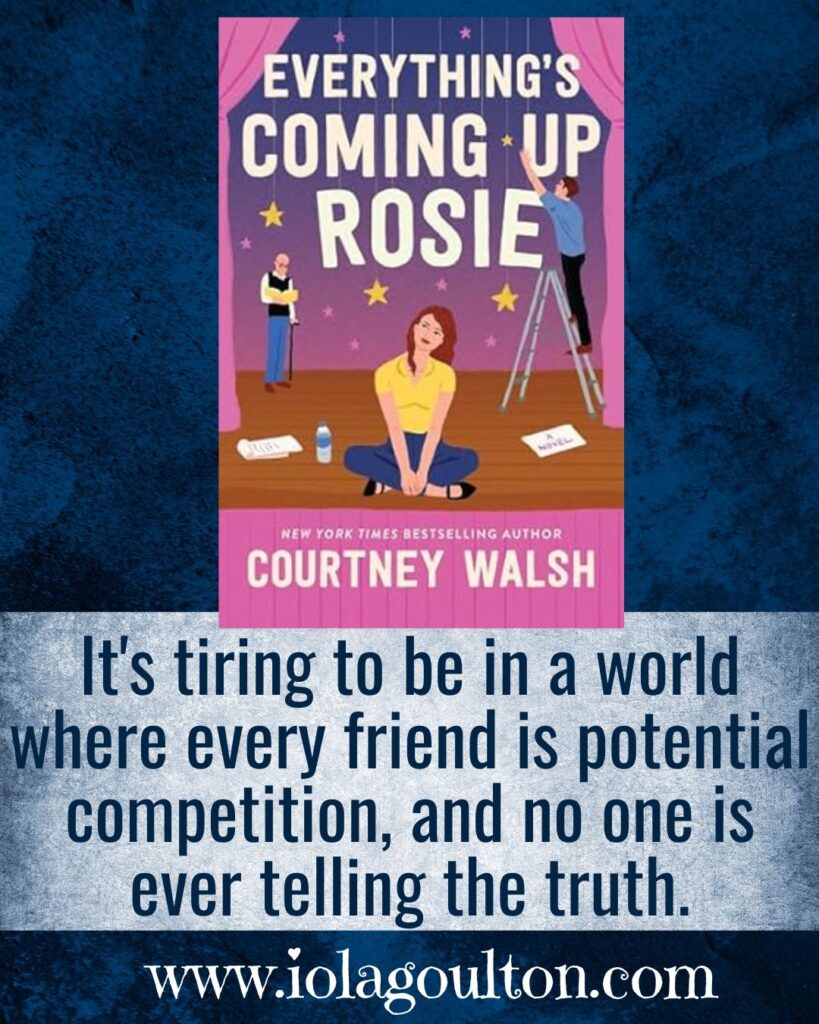
 Courtney Walsh is a novelist, theatre director, and playwright. She writes small town romance and women’s fiction while juggling the performing arts studio and youth theatre she owns with her husband. She is the author of thirteen novels. Her debut,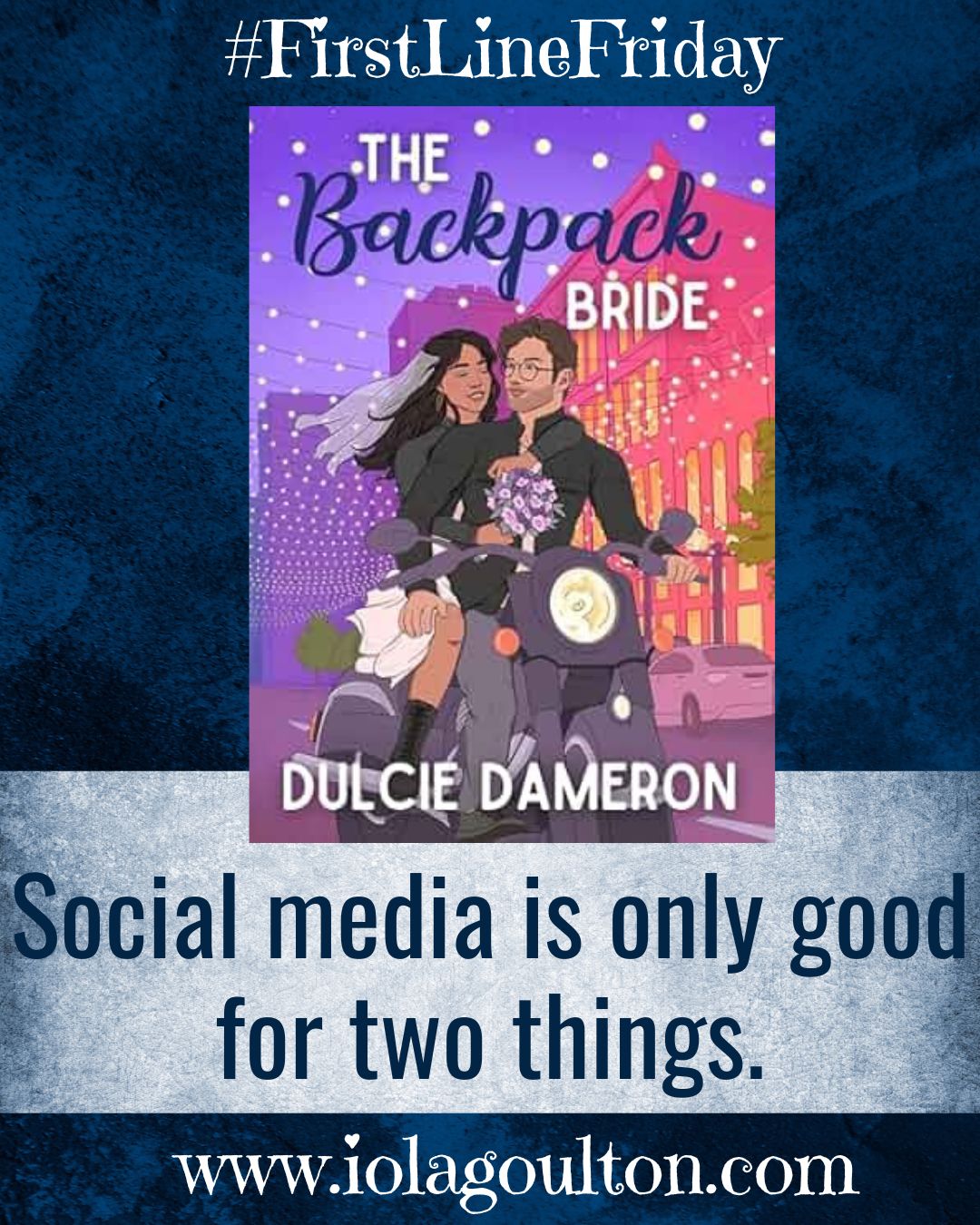
 Rev.
Rev. 
 Rachel Magee writes rom-coms and women’s fiction with relatable characters, witty dialogue, and plenty of happily-ever-afters. Her stories are usually set in fun, sunny locations where she doesn’t mind spending lots of time ‘researching’. When she’s not out scouting the setting of her next book, you can find her at home in The Woodlands, Texas with her amazing husband and their two adventurous kids.