Category: Book Review

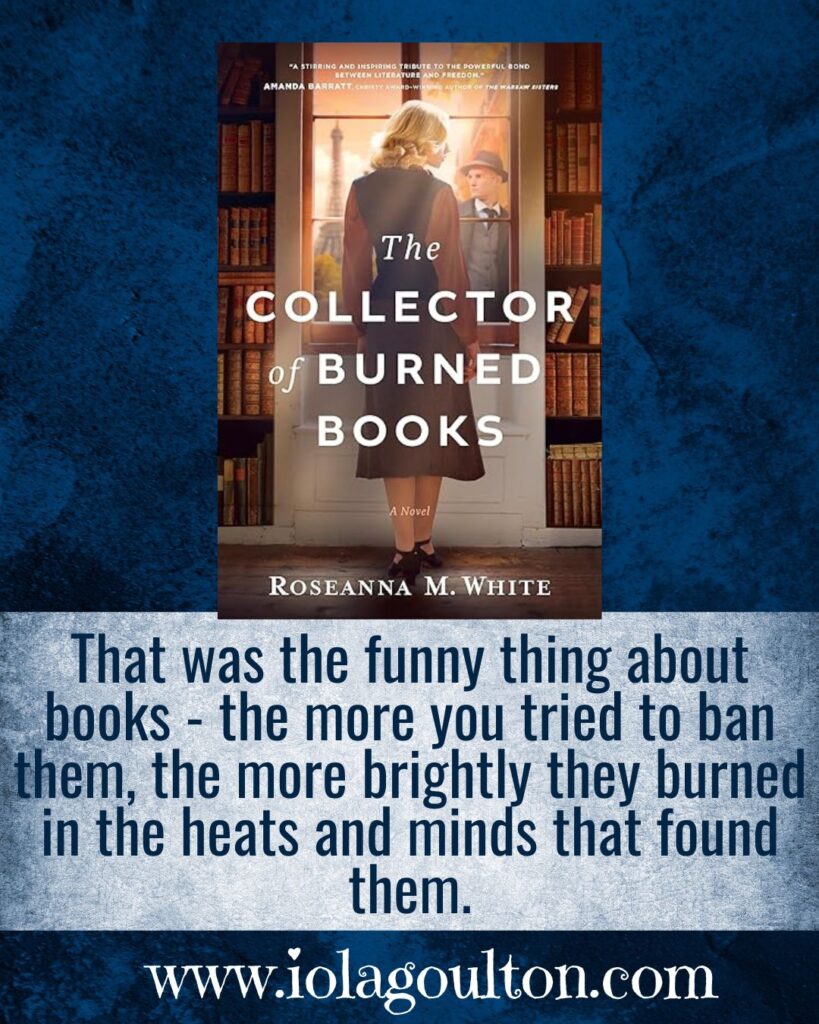
Book Review | The Collector of Burned Books by Roseanna M White

One of the things I love about great historical fiction is the power it has to shine a light on our own time. The Collector of Burned Books is an exemplary example of this principle, illustrating the importance of critical thinking, of being able to understand (and even argue) both sides of an argument in order to fully satisfy ourselves that we understand right and wrong … and how to spot the proverbial wolf in sheep’s clothing.

Anyway, that is getting off track.

The Collector of Burned Backs is set in Paris, France, in the German occupation of 1940. Corrine Bastin is a professor of German literature at the Sorbonne university … and a spy, hiding coded messages in the books in the Library of Banned Books next door to her apartment. Christian Bauer is a German officer, sent to Paris to catalogue and “relocate” the contents of Parisian libraries – especially the contents of the infamous Library of Burned Books.

It’s obvious from the beginning that Christian is a booklover who values ideas over politics. But he’s also booklover who wears a Nazi uniform, which makes him the enemy as far as Corrine is concerned.

It’s also obvious Christian will have to walk a fine line, appeasing his Nazi masters while still following his own conscience. (To be fair, Corrine and every other Parisian has the same problem – especially those who are secretly working against the Nazis, as Corrine is).

The story started solidly although perhaps a little slowly, although there was an underlying tension that kept me reading. I didn’t have to wait long. At around the one- third mark, we discover Christian’s secret, one that makes all his actions clear. From that point on, the book is simply un-put-downable as Christian and Corrine navigate occupied Paris.

The Collector of Burned Backs is compelling fiction. The characters are intelligent people with integrity, stuck in a difficult situation not of their own choosing. The writing took me straight to World War Two Paris. The plot and pacing is excellent, resulting in a thought-provoking and challenging story.

There’s also a fun link back to some of Roseanna M White’s previous novels.

The writing is a study in the importance of free thought vs indoctrination, and the perils of an education system that prioritises the latter in the name of “truth” which is not God’s truth. It’s a mirror on modern life as we consider how easy it can be to support the right ideas for the wrong reasons – or worse, supporting the wrong ideas for the right reasons.

Let him who has ears to hear …

Recommended for historical fiction lovers, especially those who appreciate robust debate about difficult issues.

Thanks to Tyndale and NetGalley for providing a free ebook for review.

About Roseanna M White
Roseanna M WhiteRoseanna M. White pens her novels beneath her Betsy Ross flag, with her Jane Austen action figure watching over her. When not writing fiction, she’s homeschooling her two children, editing and designing, and pretending her house will clean itself. Roseanna has a slew of historical novels available, ranging from biblical fiction to American-set romances to her new British series. She lives with her family in West Virginia.

Find Roseanna M White online at:

Website Facebook Instagram Pinterest | Twitter YouTube 

About The Collector of Burned Books

In this gripping World War II historical about the power of words, two people form an unlikely friendship amid the Nazi occupation in Paris and fight to preserve the truth that enemies of freedom long to destroy.
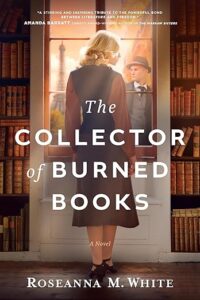
Paris, 1940. Ever since the Nazi Party began burning books, German writers exiled for their opinions or heritage have been taking up residence in Paris. There they opened a library meant to celebrate the freedom of ideas and gathered every book on the banned list . . . and even incognito versions of the forbidden books that were smuggled back into Germany.

For the last six years, Corinne Bastien has been reading those books and making that library a second home. But when the German army takes possession of Paris, she loses access to the library and all the secrets she’d hidden there. Secrets the Allies will need if they have any hope of liberating the city she calls home.

Christian Bauer may be German, but he never wanted anything to do with the Nazi Party—he is a professor, one who’s done his best to protect his family as well as the books that were a threat to Nazi ideals. But when Goebbels sends him to Paris to handle the “relocation” of France’s libraries, he’s forced into an army uniform and given a rank he doesn’t want. In Paris, he tries to protect whoever and whatever he can from the madness of the Party and preserve the ideas that Germans will need again when that madness is over, and maybe find a lost piece of his heart.
Find The Collector of Burned Books online at:

Amazon | BookBub | Goodreads

Don’t forget to click here to check out my Amazon shop for my top picks in Christian fiction!

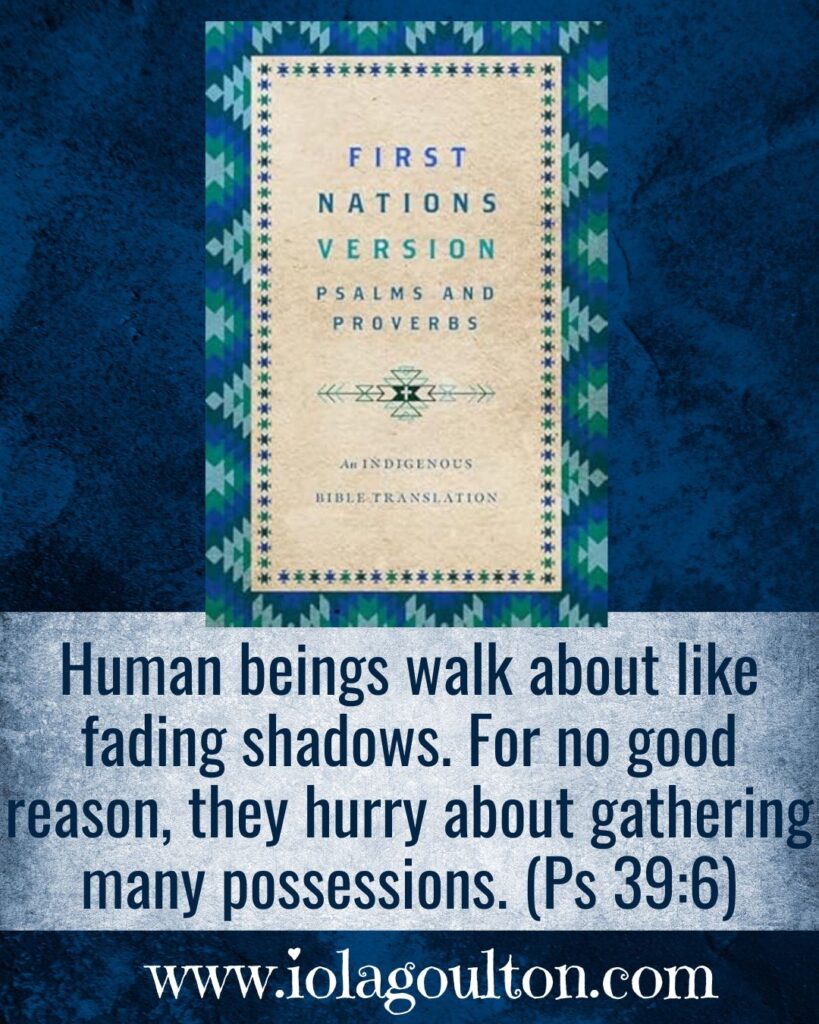
Human beings walk about like fading shadows. For no good reason, they hurry about gathering many possessions. (Ps 39:6)

Book Review | Psalms and Proverbs (First Nations Version)

I recently agreed to review the books of Psalms and Proverbs in the newly published First Nations Version of the Bible (in this context, First Nations being the first inhabitants of what is now the USA and Canada).

It’s written in English, not in any of the many First Nations languages, but it incorporates writing styles and terminology that will be familiar to First Nations peoples.

The FNV is a retelling of Creator’s story from the Hebrew and Greek Scriptures, attempting to follow the tradition of the storytellers of our oral culture.

I am not from the USA and do not have any family connection to any US First Nations tribes. But I welcome any translation that makes the Bible more accessible to people who need to hear the Good News (which, let’s face it, is everyone).

I also enjoy reading new and different Bible versions, which is why I asked to review this.

Psalm 23 in the First Nations version provides a good illustration of how reading a different version of the Bible can open our minds to seeing the text – and perhaps God – in new ways.

For example, the First Nations Version refers to God as grandfather. That’s a little jarring at first, as many of us will have heard the line about God having only children, not grandchildren. This is true, the way we think. First Nations use the term to refer to God as the honored elder … which perhaps reminds us that we don’t always give God the honor He is due.

Verse 1 then states:

My lodge will always have plenty

We are probably more used to reading:

I shall not want (King James version)

or

I lack nothing (New International Version)

The English versions use the pronoun “I”, which emphasize the individual – I will have plenty, but you might not.

In contrasts, the First Nations version uses “lodge”, which implies community – we will all have plenty.

Which translation is more consistent with how God would want us to act? What would it mean to the way we live if we truly saw ourselves as part of a greater whole, and that our role as Christians is to focus less on self and more on the wider community? I suspect it would make it obvious who was a Christian and who was not.

Verse 6 says:

Your goodness and love … will chase after me.

Chase? God will chase us? This feels a lot more active than what I read in the common English translations. The King James Version says:

Surely goodness and mercy shall follow me all the days of my life.

The New International Version is similar:

Surely your goodness and love will follow me all the days of my life.

Goodness and mercy following us implies we are leading … surely not? We should allow God to lead us. It also feels slow and reactive – especially if we’re going in the wrong direction?

Chasing, on the other hand, is fast and immediate and active, and suggests we might not be going the right way – which is one reason we’re being chased, to bring us back onto the right path.

Love, to me, goes both ways: God loves us and we love God. Mercy, on the other hand, is the result of a difference in power: God extends his mercy to us, but we don’t show mercy to God. How could we? Why would we?

As you can see, I am enjoying this new translation. For those who are interested, there is also a full New Testament available.

Thanks to IVP and NetGalley for providing a free ebook for review.

About First Nations Version | Psalms and Proverbs

Discover the rich tapestry of human emotion and divine wisdom with the First Nations Version Psalms and Proverbs. The latest volume from the critically acclaimed First Nations Version translation brings the ancient Sacred Songs and Wise Sayings of the Hebrew Scriptures to life through the vibrant, poetic imagery of Native American oral storytelling.

Discover Psalms and Proverbs Reimagined Through the Poetic Language of Native Storytellers:

Father Sky is telling us the story of the shining-greatness of the One Above Us All. The starry tent above us shows the beauty that Creator’s hands have made. Day after day, the story is told, and night after night, their wisdom fills the sky. Even though the skies above have no spoken words, all creation has heard their message. Psalm 19:1-3

From the strength of your heart, put all your trust in Grandfather, and do not hold yourself up with weak human thinking. As you walk the road of life, make every step a prayer. Grandfather will then make your eyes straight and your paths safe. Proverbs 3:5-6

Whether you’re seeking solace, strength, or spiritual insight, the First Nations Version Psalms and Proverbs will guide you with its profound expressions of praise and trust in the Creator. Step into the harmonious blend of ancient wisdom and indigenous tradition to discover a spiritual experience that speaks directly to your heart.

Find First Nations Version | Psalms and Proverbs online at:

Amazon | Goodreads


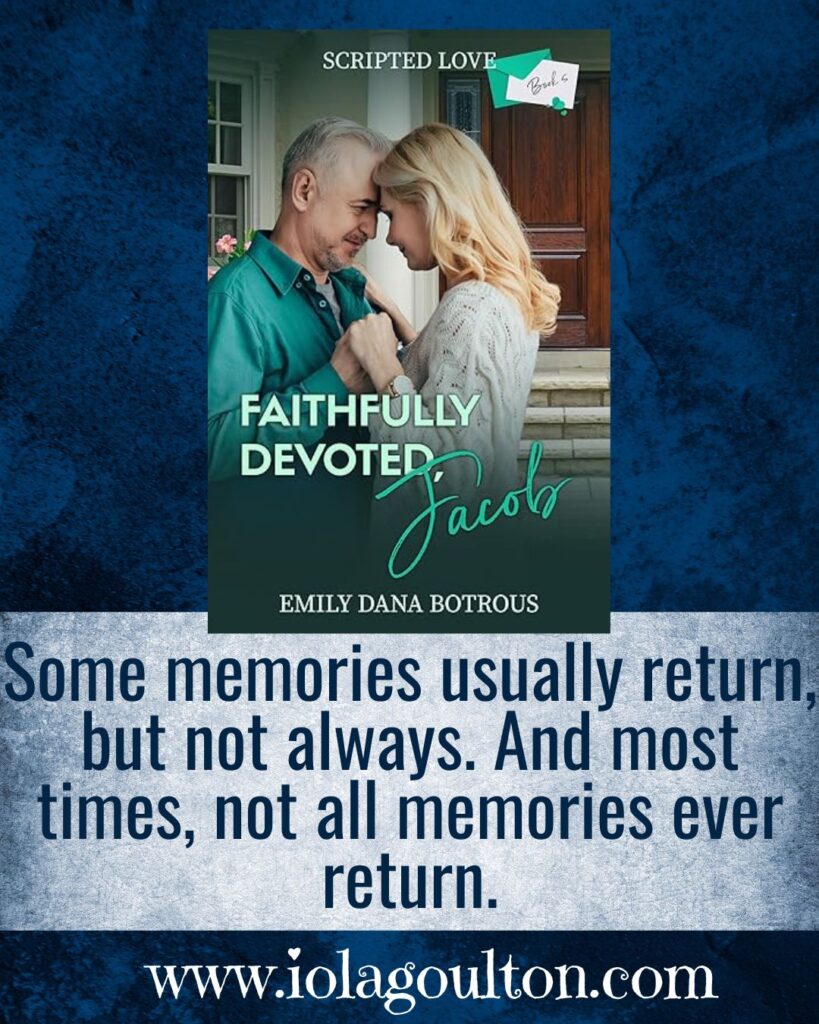
Some memories usually return, but not always. And most times, not all memories ever return.

Book Review | Faithfully Devoted, Jacob (Scripted Love #5) by Emily Dana Botrous

Jacob and Arlene have been happily married for over forty years and have raised five children together. When Jacob has a heart attack and wakes up with no memory of Arlene or his family, they both have to go back to the early days of dating to get to know each other again. Unfortunately, that means facing the issue that almost drove them apart all those years ago.

Faithfully Devoted, Jacob is the sixth (and probably final) book in the Scripted Love series by Emily Dana Botrous (probably final because the series has now covered Jacob and Arlene and each of their five children. Each book involves one or both of the main characters writing to the other, and the book titles are their signature sign-offs.

The story has a strong Christian element, as both Jacob and Arlene are both committed Christians. They both have to learn – twice – what Christian repentance and forgiveness truly means. It’s a challenging yet beautiful lesson.

Recommended for Christian romance readers who enjoy second-chance romance and romance featuring older couples (by which I mean over fifty, not over thirty).

Thanks to the author for providing a free ebook for review.

About Emily Dana Botrous

Emily Dana BotrousEmily Dana Botrous lives in San Diego, California with her husband and their four children. She lived in 10 states before she settled on the West Coast where she plans to stay for awhile. She started writing short stories at age 10 and studied English in college. The only thing she enjoys more than writing is motherhood.

While there are a lot of things that matter to Emily, nothing is more important to her than Jesus Christ. It is her goal to point anyone who reads her writing toward Him. When Emily isn’t writing, she enjoys cooking, long walks, music, and playing with her kids.

Find Emily Dana Botrous online at:

Website | Facebook | Instagram

About Faithfully Devoted, Jacob

He has no memories. She fears the things he can’t remember. Can a lost past become the key to their future?

Faithfully Devoted, JacobWhen Jacob Halverson wakes up in the hospital, he doesn’t know where he is. Worse yet, he doesn’t know who he is—or the woman claiming to be his wife of forty-two years. But when she’s at his side, he feels like everything will be okay.

Arlene Halverson never imagined her husband could forget her. Now she is tasked with filling in the blanks of an entire lifetime for Jacob, reminding him of their life together, the family they built, and the love they share.

With the help of old love letters, Arlene journeys through time at Jacob’s bedside, visiting memories both painful and poignant. Together they search to find the reason Jacob hid his illness from her while Arlene finds the courage to share her greatest mistake in hopes Jacob can forgive her a second time.

Will Jacob choose to trust God with an uncertain future? And can Arlene trust Jacob with the past—again

Find Faithfully Devoted, Jacob online at:

Amazon | BookBub | Goodreads

Don’t forget to click here to check out my Amazon shop for my top picks in Christian fiction!

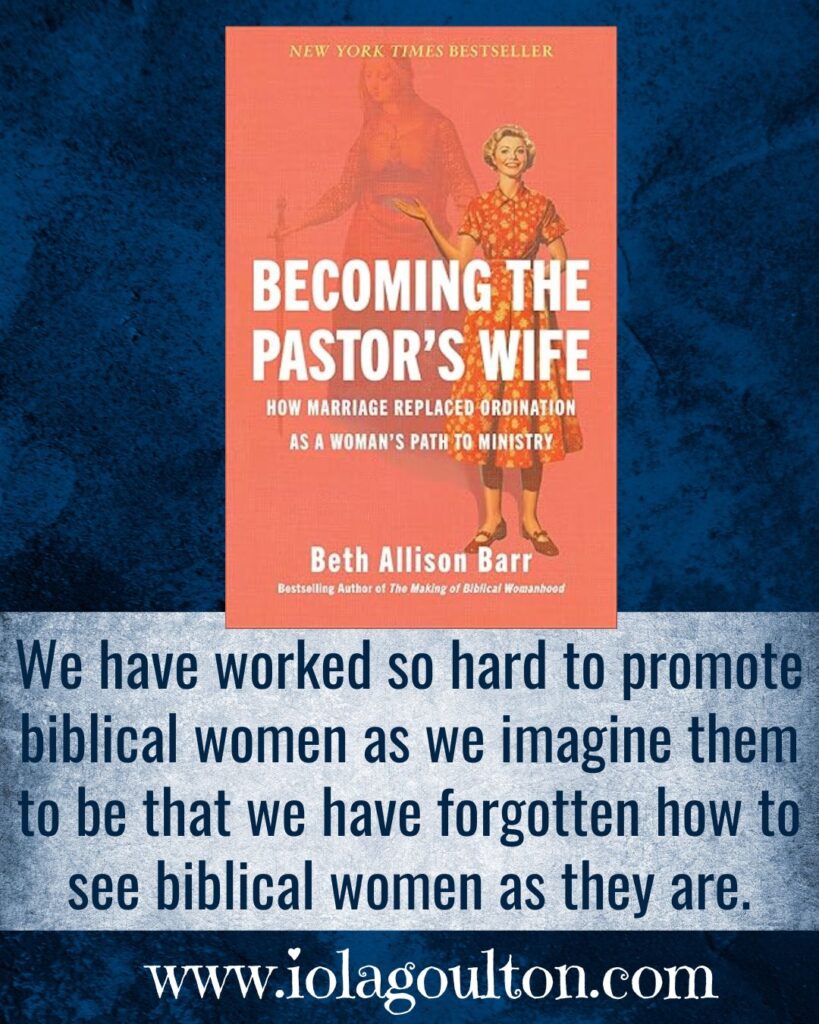
We have worked so hard to promote biblical women as we imagine them to be that we have forgotten how to see biblical women as they are.

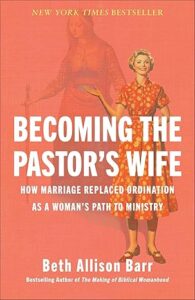
Book Review | Becoming the Pastor’s Wife by Beth Allison Barr

As the title suggests, Becoming the Pastor’s Wife is a discussion of the role of the pastor’s wife in modern Protestant churches, with an emphasis on evangelical churches in the US, where:

“the pastor’s role is by design a two-person job in which only one person receives a salary, title, and individual position.'”

It is also an academic exploration of the history of women’s ministry:

“Becoming the Pastor’s wife is the history of how Christian women gained a new and important leadership role. But it is also the history of how this gain came at a cost for women.”

First, Dr Barr reminds us that women have always had a place in ministry (despite what some church leaders would have us believe):

“The biblical text presents female prophets leading the people of God and proclaiming the word of God unremarkably, as part of the natural order of things.”

Barr reminds us that the New Testament shows us many women prophets, including Mary the mother of Jesus (Luke 1:46-55), Anna, and the four daughters of Philip (1 Cor 11). She shows us women serving alone (Junia) or alongside their husbands (Prisca and Aquilla). Perhaps more importantly, she shows men serving alone while their wives carry on with their own responsibilities. Yes, New Testament men didn’t need their wives to support their ministry by being on stage with them.

There were Dr. Barr points out that the modern church has elevated preaching over prayer and prophesy, contrary to the emphasis in the New Testament. We’ve then used Paul to justify not allowing women to teach. (Except even the most rigid complementarian allows and even encourages women to teach the children in Sunday School … not least because men rarely volunteer for that thankless task).

“Can you imagine what would happen to arguments excluding women from pastoral authority if we recentered our definition of pastoral authority from preaching to praying?”

So what happened?

Dr. Barr points to the Fourth Lateran Council of 1215 as prompting the change. From this point, only ordained priests could lead communion. And, or course, only men could be ordained … despite a long history of women leading nunneries, including some that had women and men in separate wings (for example, Milburga leading Wenlock Priory).

Isn’t it fascinating that the church allowed Christian women to minister for 60% of the time since Jesus?

This change was predicated on the (disturbing) underlying assuming that God therefore didn’t call women to serve as anything but nuns.

No doubt helped by the fact laypeople weren’t allowed to read the Bible for themselves. Instead, they had to trust the men leading them were true shepherds … and not out to fleece them.

The Reformation changed this somewhat, but also introduced the idea of a woman ministering alongside her husband. As such, a woman’s calling was tied up with her husband’s calling.

Which implies God either didn’t or couldn’t call women to minister in their own right.

Last week, when our pastor (yes, our female pastor) asked for volunteers to distribute communion, she remined us that we believe in the priesthood of all believers. It’s a phrase I’ve heard often and have never thought much about. But, after reading Dr. Barr’s book, I realise what a radical statement it is: it reminds us that we don’t have to be an ordained (male) priest to lead communion.

And if we don’t have to be ordained by the church to lead communion, that most sacred of sacraments, nor do we have to be ordained to preach or teach or prophesy or pray. Which makes sense, given women never had to be ordained to lead children’s church, prepare communion, type the notices, clean the church, or perform any number of menial ministry tasks that have been historically left for women.

It’s not all bad news. Dr. Barr does offer hope, saying the church could be different—specifically, the Southern Baptist Church, where Barr and her husband have served for years. She ends with a set of “what if” and “can you imagine” statements that could radically change our understanding of women’s ministry in church. It could also form a bridge to the younger generation, those who see the unbiblical patriarchy embedded in the modern church and who have therefore rejected the church … and God.

Recommended for any women who have ever wondered what God has called them for and to.

Thanks to Brazos Press and NetGalley for providing a free ebook for review.

About Beth Allison Barr

Beth Allison BarrBeth Allison Barr is the U.S.A. Today’s bestselling author of The Making of Biblical Womanhood: How the Subjugation of Women Became Gospel Truth. An academic by training and a pastor’s wife by calling, Beth uses her unique voice to speak out on the relevance of medieval history to our modern world—especially concerning women in both medieval and modern Christianity. Her work is described as “smart,” “powerful,” and “a game changer” for women in modern evangelicalism.

Barr is currently the James Vardaman Professor of History at Baylor University, where she teaches both undergraduate and graduate courses, but she also speaks and writes as a public intellectual. She has been featured by NPR and The New Yorker, and her bylines include Religion News Service, The Washington Post, Christianity Today, The Dallas Morning News, Sojourners, and Baptist News Global. She also continues to write regularly on The Anxious Bench, a popular religious history blog on Patheos.

Find Beth Allison Barr online at:

Website | Facebook | Instagram | Substack

About Becoming the Pastor’s Wife

Becoming the Pastor's WifeAs a pastor’s wife for twenty-five years, Beth Allison Barr has lived with assumptions about what she should do and who she should be.

In Becoming the Pastor’s Wife, Barr draws on that experience and her academic expertise to trace the history of the role of the pastor’s wife, showing how it both helped and hurt women in conservative Protestant traditions. While they gained an important leadership role, it came at a deep cost: losing independent church leadership opportunities that existed throughout most of church history and strengthening a gender hierarchy that prioritized male careers.

Barr examines the connection between the decline of female ordination and the rise of the role of pastor’s wife in the evangelical church, tracing its patterns in the larger history (ancient, medieval, Reformation, and modern) of Christian women’s leadership. By expertly blending historical and personal narrative, she equips pastors’ wives to better advocate for themselves while helping the church understand the origins of the role as well as the historical reality of ordained women.

Find Becoming the Pastor’s Wife online at:

Amazon | BookBub | Goodreads

Don’t forget to click here to check out my Amazon shop for my top picks in Christian fiction!

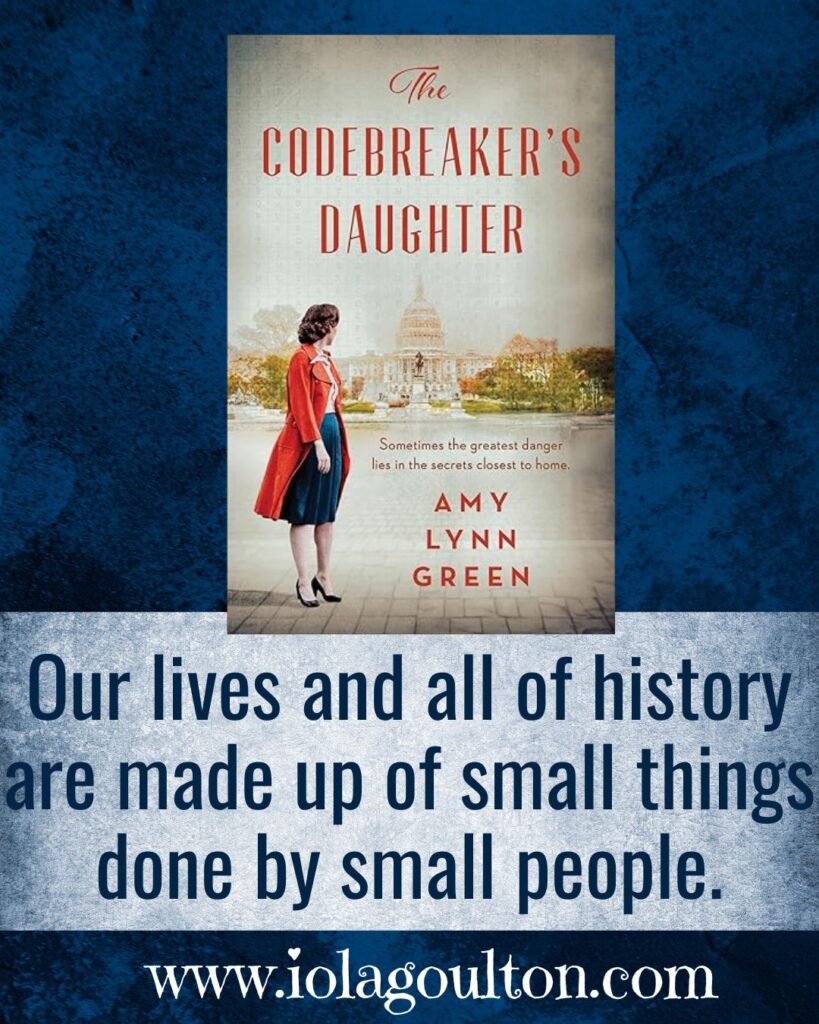
Our lives and all of history are made up of small things done by small people.

Book Review | The Codebreaker’s Daughter by Amy Lynn Green

My initial assumption, on reading the title of this novel, was that the codebreaker would be male. Please forgive me for that patriarchal assumption, because this is a mother-daughter story, and the codebreaker in question is Lillian, Dinah’s mother. The story takes place over two timelines–Dinah’s propaganda work with the Office of Strategic Services (OSS) in World War II, and Lily’s codebreaking work in World War I.

While the story is set 80 and 100 years ago, it deals with eternal questions about the relationships between mothers and daughters, and the question of how (especially as women) we find our purpose. Is it enough to be a wife and mother? This leads to other questions – what if we aren’t a wife, or if we can’t be a mother? Then where is our purpose?

Lily/Lillian is a viewpoint character in both timelines, so we see her struggle with letting her adult daughter go, and we see Dinah’s struggle to be the independent adult daughter. We also see the power of friendship.

The story is best encapsulated in the quote above. The Codebreaker’s Daughter isn’t like so many World War II stories, stories of ordinary people dong extraordinary things. It’s more a celebration of ordinary people doing ordinary things–the things they are called to do–and being satisfied with that.

It’s a quiet and slow story until almost the very end, but it is a story that raises and addresses some difficult universal (ordinary) questions.

Recommended for fans of World War II fiction from authors such as Jennifer Mistmorgan, or fans of fiction featuring codes and ciphers from authors such as Roseanna M White.

Thanks to Bethany House and NetGalley for providing a free ebook for review.

About Amy Lynn Green

Amy Lynn GreenAmy Lynn Green is a lifelong lover of books, history, and library cards. She worked in publishing for six years before writing her first historical fiction novel, based on the WWII home front of Minnesota, the state where she lives, works, and survives long winters. She has taught classes on marketing at writer’s conferences and regularly encourages established and aspiring authors in their publication journeys. In her novels (and her daily life), she loves exploring the intersection of faith and fiction and searches for answers to present-day questions by looking to the past.
If she had lived in the 1940s, you would have found her writing long letters to friends and family, daydreaming about creating an original radio drama, and drinking copious amounts of non-rationed tea. (Actually, these things are fairly accurate for her modern life as well.)

Find Amy Lynn Green online at:

Website | Facebook | Instagram

About The Codebreaker’s Daughter

The Codebreaker's Daughter

Lillian once cracked ciphers during WWI–now, her daughter, Dinah, is trapped doing clerical work for the WWII OSS. Though Lillian is hesitant to return to wartime work, she is drawn to Washington, DC, by an old acquaintance. As a web of intrigue grows ever wider, mother and daughter must confront secrets in DC before the impending D-Day is compromised.
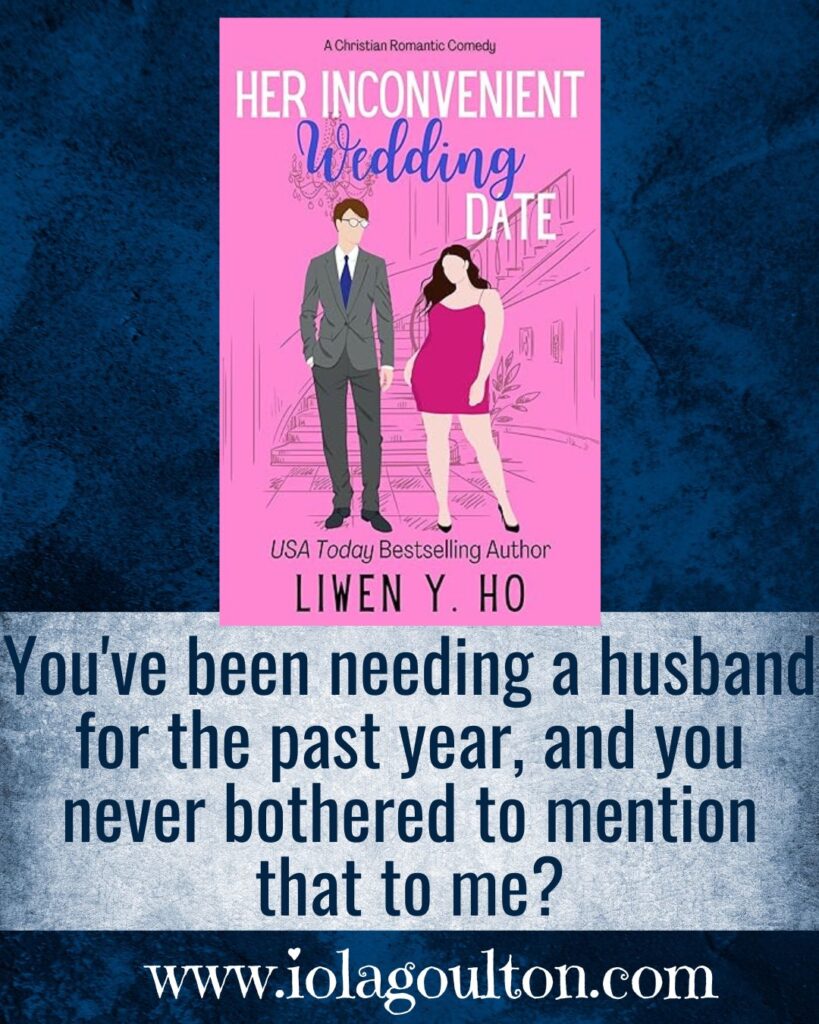
You've been needing a husband for the past year, and you never bothered to mention that to me?

Book Review | Her Inconvenient Wedding Date by Liwen Y Ho

I have been reading quite a few rom-coms recently, many of which use the marriage of convenience (or inconvenience) trope. Few have had any Christian content, and none have been overtly Christian.

Her Inconvenient Wedding Date is overtly Christian from the get-go.

And I loved that. Lily’s mother is looking for a son-in-law who meets the five C’s: Christian, career, condo (or house, cash … and Chinese. The family also has a traditional of the older siblings marrying before the younger, which is an issue for Lily as her five-years-younger sister, Jasmine, has been dating the same guy for years and is ready to get married.

So Lily decides to fake an engagement so her sister can get married. When her first blind date incorporates a PowerPoint presentation and an unexpected proposal, Lily accepts a surprise offer from Hunter, a work colleague who meets four of the five C’s.

If he were Chinese, he’d be perfect.

Hunter has been crushing on Lily since they met a year ago, so proposing marriage–even a short-term fake marriage–seems like a great idea. Who knows. If they’re living together and pretending to be married, maybe something will develop?

This is a romance, so we obviously know the answer. The fun is in the journey, and this journey is a lot of fun.

Each chapter starts with a quote from another author. I’m not usually a fan of epigraphs, but Her Inconvenient Wedding Date is the exception that proves the rule. Quotes like these only improve the book:

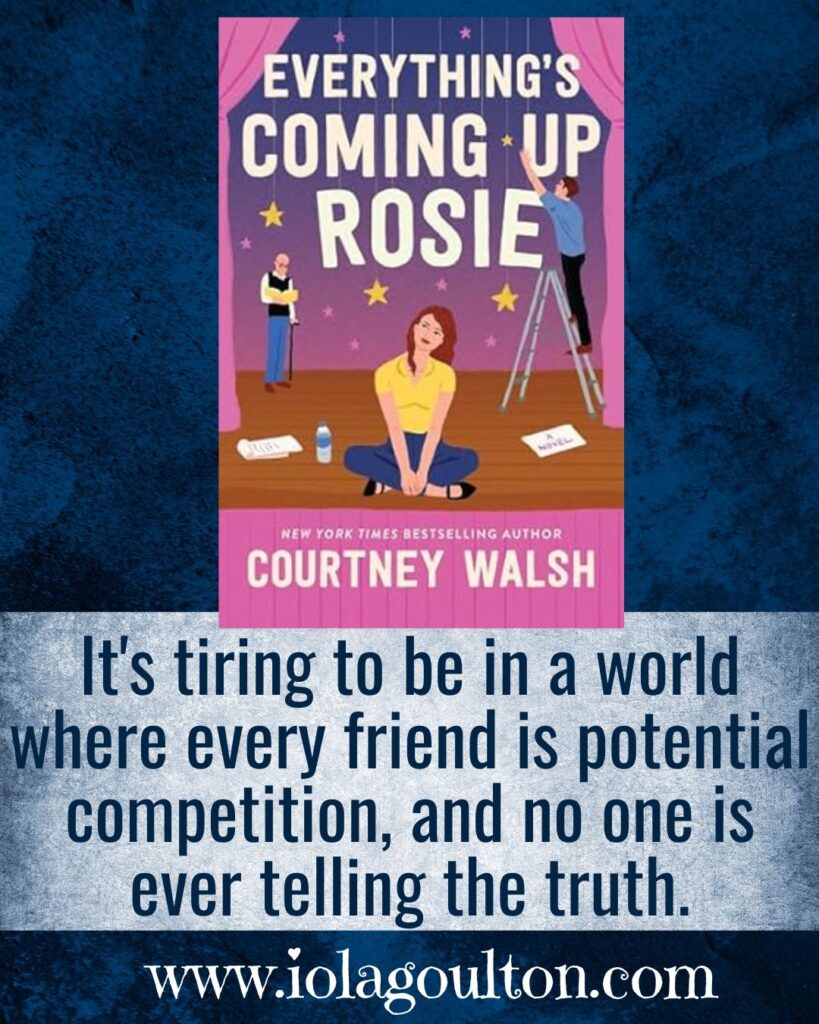
If I was serious about having a relationship with someone long-term, the last people I would introduce him to would be my family.

Quotes like these will mean I will remain not being a fan of epigraphs, because that is going to be hard to beat.

You know that tingly little feeling you get when you like someone? That is your common sense leaving your body?


Overall, I loved Her Inconvenient Wedding Date.

It’s a fun, quick read, with likeable characters and a believable relationship. Recommended for Christian rom-com fans.

Thanks to the author for providing a free ebook for review.

About Liwen Y Ho

Author Photo: Liwen HoLiwen Y. Ho works as a chauffeur and referee by day (AKA being a stay at home mom) and an author by night. She writes sweet and inspirational contemporary romance infused with heart, humor, and a taste of home (her Asian roots).
In her pre-author life, she received a Master’s degree in Marriage and Family Therapy from Western Seminary, and she loves makeovers of all kinds, especially those of the heart and mind. She lives in the San Francisco Bay Area with her techie husband and their two children, and blogs about her adventures as a recovering perfectionist

You can find Liwen Y Ho online at:

Website | Facebook | Twitter

About Her Inconvenient Wedding Date

I always thought I’d marry for love… not because of a family tradition.

Her Inconvenient Wedding DateAs the eldest daughter, my life’s basically one long checklist of responsibilities—especially when it comes to making sure my younger sister gets her happily ever after. And apparently, that means I need to tie the knot first.

Groan.

I’m an engineer by day, a beauty blogger by night, and a problem-solver 24/7. But even I wasn’t prepared for the solution to my marriage problem to show up in the form of Hunter Payne—my tall, charming, and goofy coworker who just so happened to save me from the world’s most awkward date.

Out of the kindness of his heart, he offers to marry me. For three months only. Just until the family pressure eases up. Totally platonic, totally practical.

Until it’s not.

Because three seconds into our union, a surprise kiss makes some very inconvenient emotions rise to the surface.

How am I going to survive this marriage without falling for the one guy I promised I wouldn’t catch feelings for?


Find Her Inconvenient Wedding Date online at:

Amazon | BookBub | Goodreads

Don’t forget to click here to check out my Amazon shop for my top picks in Christian fiction!

It's tiring to be in a world where every friend is potential competition, and no one is ever telling the truth.

Book Review | Everything’s Coming Up Rosie by Courtney Walsh

The last Courtney Walsh book I read was The Summer of Yes, which is one of the few books I read twice consecutively in recent years. It was always going to be a hard act to follow. Everything’s Coming Up Rosie, unfortunately, did not

Rosie is one of probably thousands of aspiring actors in New York who dreams of making it big but instead lives a subsistence existence, always seeking and never getting their big break. She’s a failure. Even worse, she can’t admit her failure to her family or friends, which makes her feel like a double failure when she visits her hometown, catches up with her school friends, and everyone wants to hear about her fabulous life in New York.

Eventually, we get to the actual start of the story: Rosie arrives at the Sunset Players theater, not realising she’s signed up to manage a production of Cinderella in a retirement community, not assist at the respected Sunset Playhouse.

That all takes the first ten chapters of the book, and I found I had to force myself to keep reading.

I actually stopped twice (completely the opposite of when I read The Summer of Yes), frustrated with Rosie’s attitude and her lack of self-awareness (made more frustrating by the fact the book is written in first person and Rosie is the sole narrator, so there was no break from her.) The only reason I kept reading is because I’ve enjoyed every other Courtney Walsh book I’ve ever read.

Courtney Walsh uses her own experience as the owner and director of a youth theatre in bringing Rosie’s directing to life. Once we get to the scenes in the theatre, the book comes alive. We meet Booker, the only male under the age of seventy which clearly establishes him as the love interest. We meet Daisy, Rosie’s peppy roommate, and Dylan, the withdrawn teenage girl spending the summer with her grandparents. And we meet the village residents, including Belinda, who thinks the director job should have been hers, and Arthur, the set man.

By the halfway point, I found it difficult to put the book down.

Rosie has finally looked outside herself and become a likeable character. The community residents are fabulous, and have plenty to teach Rosie … especially Arthur. Booker becomes the romantic hero we all want to see ( the old ladies agree – they spend far too much time ogling him).

In the end, Everything’s Coming Up Rosie becomes a delightful rom-com which addresses some serious questions about self-identity and emotion with a near-perfect ending. But it took a long time to get there, and it’s definitely contemporary romance rather than Christian romance.

Courtney Walsh fans will enjoy Everything’s Coming Up Rosie. If you haven’t read Courtney Walsh before, I suggest starting with The Summer of Yes.

Thanks to Thomas Nelson and NetGalley for providing a free ebook for review.

About the Author

Courtney WalshCourtney Walsh is a novelist, theatre director, and playwright. She writes small town romance and women’s fiction while juggling the performing arts studio and youth theatre she owns with her husband. She is the author of thirteen novels. Her debut, A Sweethaven Summer, hit the New York Times and USA TODAY bestseller lists and was a Carol Award finalist. Her novel Just Let Go won the Carol in 2019, and three of her novels have also been Christy-award finalists. A creative at heart, Courtney has also written three craft books and several musicals. She lives in Illinois with her husband and three children.
Find Courtney Walsh online at …

Website Facebook Instagram Pinterest Twitter Goodreads

About Everything’s Coming Up Rosie

Sometimes what you think you want and what you actually want turn out to be different things . . .

Rosie Waterman has one dream: to become a working actor. But lately, that hasn’t been working out. When she loses her apartment and her job on the same day, she does what she always does–puts herself out there, ready to find the next big thing. But a trip home makes her realize that while she’s been struggling to make this dream come true, all her friends have become real adults with careers and weddings and babies on the way. Rosie’s been at this for years, and she has nothing to show for it. But how does she simply let go of her dream?

When she’s offered a job as the director of a regional theatre’s production of Cinderella, she jumps at the chance–even though she’s only directed in college and the job is in Door County, Wisconsin, and not in New York. She has no other offers, and at least she’ll be getting paid to do something theatrical. But when she arrives, she quickly realizes that the “regional theatre” is actually in a retirement community, and the “actors” are actually senior citizens with no acting experience whatsoever.

Working on the show presents new challenges, forcing Rosie to learn how to step up and be the leader this fledgling theatre troupe needs. The more time she spends with her new cast, the more she begins to rethink what it means to dream big, especially when that big dream hasn’t turned out to be at all what she thought it would be. It’s not at all what she expected, but could it be exactly what she needs?

Find Everything’s Coming Up Rosie online at:

Amazon | BookBub | Goodreads

Don’t forget to click here to check out my Amazon shop for my top picks in Christian fiction!

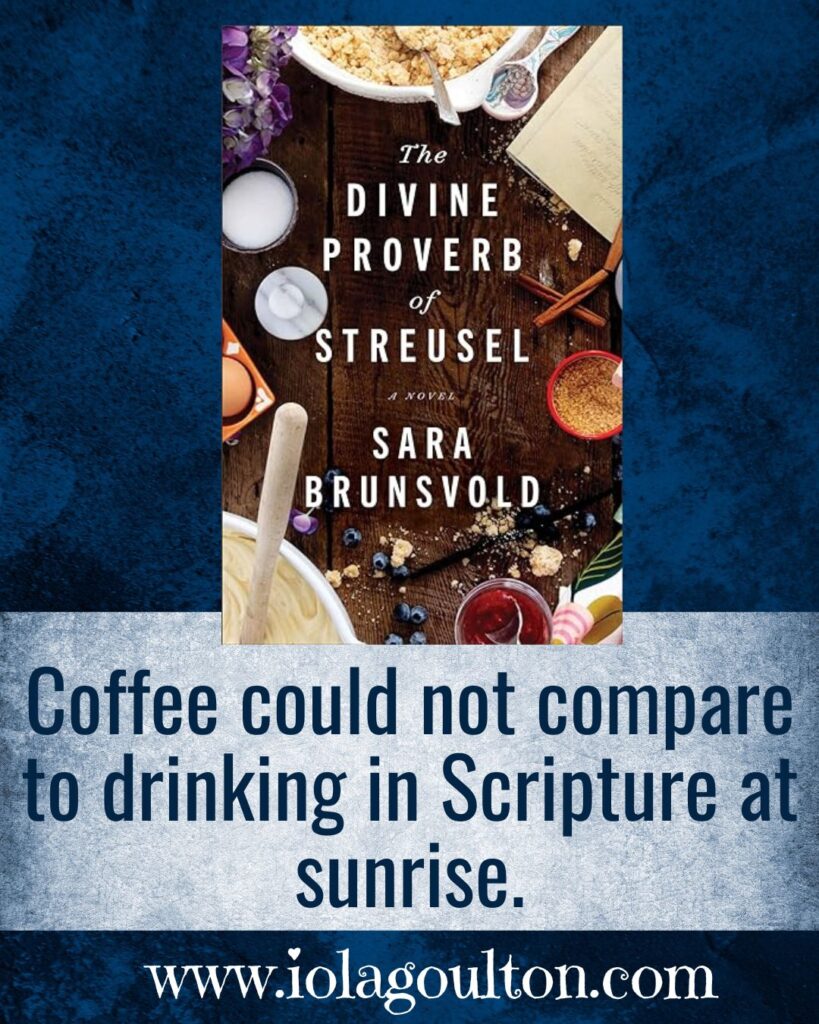
Coffee could not compare to drinking in Scripture at sunrise.

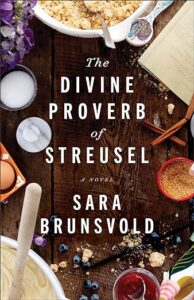
Book Review | The Divine Proverb of Streusel by Sara Brunsvold

Sara Brunsvold’s debut novel, The Extraordinary Deaths of Mrs. Kip, won a lot of praise … which meant I started reading The Divine Proverb of Streusel with a little hesitation. Would it be as good? Could it be as good?

In my view, it’s better.

Nikki Warner is broken. Four months ago, her father left her mother for another woman. Their divorce came through a month ago, and he married his mistress last weekend. As a teacher, Nikki has summer off, so she runs away to the Warner family farm, a place she hasn’t visited since she was twelve.

Wes Warner is Nikki’s uncle, a Christian, who has recently returned to the farm after decades in the army. He doesn’t know how to help the hurting Nikki except to make her welcome, give her a place to stay and something to do, and pray for her.

Nikki finds her grandmother’s old recipe books in the old family home. Although she’s no cook, she starts working her way through the traditional German recipes, finding herself again as she finds out more about her family.

The writing is very understated, with the messages coming through as a ripple rather than a roar. But that is what gives the writing power and makes for a compelling read. It’s easy to read, with characters it’s easy to sympathise with and root for.

Recommended for women’s fiction fans looking for something a little out of the ordinary that reminds us of the importance of connection to family and to God.

Thanks to Revell and NetGalley for providing a fee ebook for review.

About Sara Brunsvold

Sara Brunsvold creates stories that speak hope, truth, and life. Influenced by humble women of God who find His fingerprints in the everyday, she does the same in her life and her storytelling. Sara’s recognitions include the 2020 ACFW Genesis Award for Contemporary Fiction. She lives with her family in Kansas City, where she can often be spotted writing at a park or library.

Find Sara Brunsvold online at

WebsiteFacebook | Instagram

About The Divine Proverb of Streusel

The Divine Proverb of Streusel by Sara Brunsvold

Shaken by her parents’ divorce and discouraged by the growing chasm between herself and her serious boyfriend, Nikki Werner seeks solace at her uncle’s farm in a small Missouri hamlet. She’ll spend the summer there, picking up the pieces of her shattered present so she can plan a better future. But what awaits her at the ancestral farm is a past she barely knows.

Among her late grandmother’s belongings, Nikki finds an old notebook filled with handwritten German recipes and wise sayings pulled from the book of Proverbs. With each recipe she makes, she invites locals to the family table to hear their stories about the town’s history, her ancestors–and her estranged father.

What started as a cathartic way to connect to her heritage soon becomes the means through which she learns how the women before her endured–with the help of their cooking prowess. Nikki realizes how delicious streusel with a healthy dollop of faith can serve as a guide to heal wounds of the past.

You can find The Divine Proverb of Streusel online at:

Amazon | BookBub | Goodreads | Koorong

Click here to check out my Amazon shop for my top picks in Christian fiction!

Is there a location you would like to see in Christian fiction?

Bookish Question #387 | Is there a location you would like to see in Christian fiction?

This is a tough question!

(But not for the reason you might think.)

Most Christian fiction is set in the USA, so it stands to reason that I would look at locations outside the continental USA, or further afield.

So I started running through other places I’d like to see in Christian fiction … but I can actually think of books with those settings.

Let’s list a few:

Italy is the setting for at least some of the story in each of the books in the multi-author A Tuscan Legacy series.

Athens, Greece, is the setting for Athens Ambuscade by Kristen Joy Wilks. (Actually, check out the entire Passport to Romance series.)

Elizabeth Musser has set many of her novels in her adopted country of France, including This Promised Land and the upcoming From the Valley We Rise.

Michael Phillips is an older author, but set his Secret of the Rose in Poland and Germany.

Nadine Brandes set Romanov in pre-Revolution Russia.

Jeanette Windle set several books in South America, including Crossfire (Bolivia) and The DMZ (Colombia).

Kimberly Duffy has a Dreams of India trilogy set during the Raj.

Milla Holt has several international settings, including Uganda (Falling for the Foe) and her Seasons of Faith series, set in Norway.

Going Back Cold by Kelley Rose Waller is set in Antarctica!

And, of course, New Zealand features in Close to You by Kara Isaac.

The only location I can think of that I haven’t already read about is Iceland.

Jenny Erlingsson is from Iceland, so perhaps this is a location she can use as the setting for a future novel.

What about you? What location or locations would you like to read about in Christian fiction?

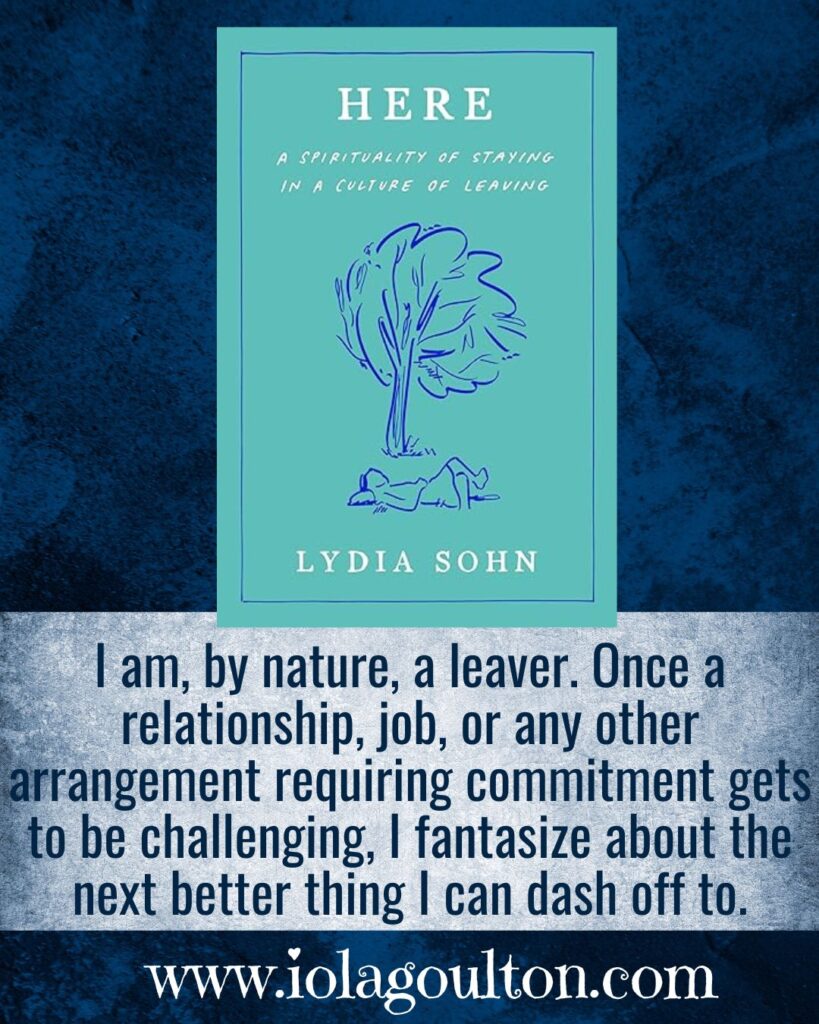
I am, by nature, a leaver. Once a relationship, job, or any other arrangement requiring commitment gets to be challenging, I fantasize about the next better thing I can dash off to.

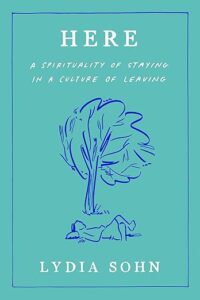
Book Review | Here by Lydia Sohn

Part self-help and part memoir, Here is a short but powerful lesson on moving through life and attaining our goals in a traditional but possibly counter-cultural way.

One of the features of reading nonfiction, especially Christian nonfiction, is discovering more about how other people think about faith and God and living the Christian life. Some of the authors are like me; some are not.  Some of their ideas are familiar; some are not. Some of their ideas gel with me; some do not. But there is always something to ponder and learn, even when I thnk I have little in common wiht the writer.

Here by Linda Sohn is one such book. We have some things in common: we are both Christian women, working mothers, wives, and first-generation immigrants. We have differences: she lives in Los Angeles; I live in New Zealand. She is a Methodist minister; I am an evangelical turned Baptist. She describes herself as a leaver; I do not.  Sohn says:

I am, by nature, a leaver. Once a relationship, job, or any other arrangement requiring commitment gets to be challenging, I fantasize about the next better thing.

That alone makes us very different. But it’s in that difference we can learn … and possibly change our beliefs and resulting actions to become more Christlike. Sohn suggest this is because we live in a world that values leaving over staying, pointing out that we have taken journeys to escape the present or move. There is a longstanding belief that leaving one’s hometown is a marker of success and moving up in the world. Sohn points out this restlessness, this desire to leave because of external satisfaction, is not unusual.

Sohn’s premise is than instead of wondering where we should go next when we get restless, we should ask different questions:

What is it within me leading to dissatisfaction?
What can I change within myself that will influence the larger situation?

Here is a statement of the power of staying where we are planted, the self-discipline that requires when all we want to do is leave, and an examination of a range of Christian spiritual disciplines. She also points out that these disciplines will lead to our transformation … so we can change even while remaining here (wherever “here” may be).

Here is a quiet yet compelling book, one that encourages us to explore a range of spiritual practices, including meditation and prayer, spending time in nature, expressing gratitude, spiritual contemplation (reading the Bible), self-reflection, and communal worship.

It’s a book that’s packed full of wisdom. Wisdom Sohn herself has gleaned over the years. Wisdom from spiritual giants of the past. Wisdom from not-so-spiritual giants of today. You won’t agree with everything she says, but it will make you think. And it could inspire you to decide to make a change for good.

Thanks to Convergent Books and NetGalley for providing a free ebook for review.

About Here

A Spirituality of Staying in a Culture of Leaving

A contemplative guide to finding satisfaction right where you are, by understanding what it is within us that leads to dissatisfaction and creating long-lasting fulfillment—inspired by the ancient Christian tradition of Benedictine stability.

Here: A Spirituality of Staying in a Culture of Leaving by Lydia SohnLydia Sohn was a serial burn-it-down-and-make-a-fresh-start girl until, when in her late twenties, she encountered the Rule of St. Benedict with its vow of stability, and her world was transformed. Sohn took a pause to consider what she wanted out of life—identity, purpose, community—and had a lightbulb moment: Everything she needed to live the life she desired was already within her reach.

Here
 pushes back against our age of constant reinvention and the cultural message that we should do whatever it takes to get wherever we want to go. Instead, Sohn’s message is the opposite: stay. Stay and cultivate the immense potential and beauty that currently lies dormant within your circumstances.

Sohn understands the allure of nomadism. A nomadic life would protect us from the stress of relational conflicts that inevitably arise when we’re caught in the intricate web of commitments. But the restlessness, FOMO, and disappointment we’re trying to escape always come along for the journey. That’s because they’re not the result of our circumstances; they reside within us.

Braiding personal narrative and spiritual reflection, Here inspires readers to both embrace and transform their circumstances through commitment and stability—in order that they might find true contentment right where they are.

Find Here online at:

Amazon | BookBub | Goodreads

About Lydia Sohn

Rev. Lydia Sohn is a United Methodist minister, currently serving as senior pastor of Walnut United Methodist Church, and a writer whose work has appeared in The New York TimesThe Atlantic, and The Christian Century, among other venues. She lives in Claremont, California with her husband and three children.

Find Lydia Sohn online at:

Website | Facebook | Instagram