Category: Bookish Question

Who is your favourite non-romance Christian author?

Bookish Question #31 | Who is your favourite non-romance Christian author?

Last week I asked who is your favourite Christian romance author … and gave a vague reply. I’m going to do the same this week.

Only this week, I’m asking who is your favourite non-romance Christian author.

In the last few months I’ve enjoyed books in a range of genres:

  • Legal thrillers, from authors such as Cara Putman and Rachel Dylan.
  • Medical thrillers from authors such as Lisa Harris and Lynne Gentry, and Richard Mabry.
  • Dystopian fiction from Vanetta Chapman and Sara Ella.
  • Science fiction from Adam David Collings.
  • Speculative fiction from James L Rubart.
  • Historical fiction from Lynn Austin.
  • Dual timeline fiction from Heidi Chiavaroli and Michele Phoenix.
  • Women’s fiction from authors such as Catherine West, Elizabeth Musser, Beth Troy, and Christine Dillon.

These are some of my favourite non-romance authors.

Because choosing a favourite depends on what genre I’m in the mood to read. And it’s like choosing a favourite child, or favourite flavour of Krispy Kreme donut. It can’t be done.

Who is your favourite non-romance Christian author?

Bookish Question #30: Who is your favourite Christian romance author?

Bookish Question #30 | Who is your favourite Christian romance author?

Yes, I know.

Asking you to name your favourite Christian romance author is like asking you to choose a favourite child or grandchild. It’s impossible.

If you’re anything like me, it depends on your mood at the time someone asks the question.

Sometimes I need to read something funny.

If so, I’m going to suggest authors like Kara Isaac, Beth Troy, Bethany Turner, Jen Turano, or Karen Witemeyer.

Other times, I’ll be in the mood for something with a little more depth. In that case, I might turn to Courtney Walsh, Carolyn Miller, or Denise Hunter.

Sometimes I’ll want a specific genre or trope: Regency romance (Kristi Ann Hunter), mail order bride (Nerys Leigh), speculative utopian (Keely Brooke Keith), or Victorian village (Julie Klassen).

And some days, if you ask me who my favourite Christian romance author is, it will be the author of whichever book I’ve just finished or reviewed (because writing the review reminds me of the book all over again). Ask me again in a week, and it will be someone else.

What about you? Who is your favourite Christian romance author?

What's your favourite Christian Fiction genre?

Bookish Question #29 | What’s your favourite Christian Fiction genre?

Christian fiction comes in a range of genres

I suspect there are Christian versions of most of the genres found in general market fiction (with the exception of erotica and gay romance, for obvious reasons).

Romance readers are especially well catered for in Christian fiction. The Christian fiction industry is dominated by romance and the endless variations thereof: Amish romance, contemporary romance, historical romance (especially western romance and mail order bride romance ), and romantic suspense. Romance also creeps in to other genres such as women’s fiction, mystery, thrillers, and speculative fiction.

Romance is my favourite genre.

Not Amish romance—I don’t see anything romantic in having a house full of children producing endless dirty laundry, and no hot water. Yes, I suffer from #FirstWorldProblems and #SuburbanMomProblems (I think I see a future blog post there). But most other genres of romance, contemporary or historical, first person or third person. Especially if they have a touch of humour.

I like romance because I like the happy-ever-after ending romance guarantees. It reminds me of the gospel: no matter what bad things happen, we know we’ll get our happy-ever-after in Jesus.

We have hope.

I also see Christian romance novels as an allegory of our relationship with Christ. We are His bride, so surely this is the ultimate romance?

Yes, my favourite genre is romance, but I read most genres of Christian fiction—it shares that underlying message of hope. And it’s why I tend not to like stories without a happy ending. They often have no hope, and that doesn’t reflect the Truth of the Bible.

What’s your favourite Christian fiction genre? Why?

What Christian novel do you recommend

Bookish Question #28 | What Christian novel do you recommend?

What Christian novel or author would you recommend to a non-Christian reader?

I’m finding an increasing number of the novels I’m reviewing from Christian fiction publishers are “Christian lite”. They have little or no mention of God or Jesus, none of the main characters are overtly Christian, and there is no faith journey. I know this bugs a lot of faithful Christian fiction readers.

Many of us read Christian fiction not just because we want a “clean” read, but because we want to vicariously experience the faith journey of a fictional character. So when a “Christian” novel isn’t, we can feel a little cheated. But I’ve been involved in many online discussions over the years that have shown me we need these novels.

Christian fiction can’t just preach to the choir.

Sometimes we have to crawl out of our comfortable pews and do our bit in fulfilling the Great Commission. We have to write books that will lead people closer to God.

This can come through the most unlikely of titles. One of my online friends has an Asian family in his church who became Christians after the father read The Da Vinci Code. The man had never heard of Jesus, and Dan Brown’s much maligned book prompted him to look into who Jesus was.

I’m not a betting woman, but I’m sure that leading people to Christ wasn’t on Dan Brown’s list of things to achieve with his story.

Closer to home, I recently read a Goodreads review of The Secret to Hummingbird Cake by Celeste Fletcher McHale. I haven’t read the book, and the reviewer was disappointed that it wasn’t overtly Christian. Another lady joined the discussion, saying she’d become a Christian as a result of reading the book.

Hallelujah!

The commenter went on to say she’d been loaned the book by a Christian neighbour, and she never would have agreed to read it if it had been overtly Christian. In fact, she’d written to the author to share her conversion story, and the author was suitably thrilled and humbled.

Isn’t that what it’s about? Drawing people closer to Jesus—Christian and non-Christian?

Last week, I was listening to the Smart Podcast, Trashy Books, and the reviewers were talking about which romance books they recommend to non-romance readers. One—who isn’t a Christian, as far as I know—said she often recommends books by Deeanne Gist to readers she doesn’t know well, because she knows there won’t be any rauchy content in them that might offend some people.

Yet Deeanne Gist is a Christian author—one who has switched from traditional Christian fiction for a CBA publisher to “Christian lite” romances for a general market publisher. Gist’s newer books are still written from a Christian world view, but don’t have an overt faith element. Yet here they are, being recommended on one of the biggest general market romance review sites.

That’s not preaching to the choir.

So here’s the tough question. If you were in the position to loan your non-Christian neighbour a Christian novel, what novel or author would you suggest they read?

Why do you read (or not read) Christian fiction?

Bookish Question #27 | Why do you read (or not read) Christian fiction?

Last week, I asked if you read Christian fiction. This post broke one of the so-called major rules of blogging: it asked a yes/no question. Apparently, blog posts are supposed to ask open-ended questions.

I’m now wondering about that rule, because when I shared the question and the post link on Facebook, Instagram, and Twitter, I got more responses than usual. That’s probably because it was an easy question … yes, or no (although some people said both, and some expanded on their answers).

So what did people say?

Most of my Facebook followers are Christians, and I know most are interested in and read Christian fiction.

One of my Facebook pages is called Iola’s Christian Reads, so that’s pretty much asking for followers to be Christian fiction readers. My other Facebook page is my author page, and my tagline is ‘Contemporary Christian Romance with a Kiwi twist’. That’s not something that’s going to appeal to general market fantasy readers.

Instagram is similar.

Most of my followers are people I follow, and most of the people I follow are Christian fiction writers, reviewers, or readers. So it’s no surprise that my Facebook and Instagram followers report that they do read Christian fiction.

Twitter was a little different.

My Twitter followers tend to be writers, and (while I haven’t asked) I expect that’s a mix of Christians and non-Christians. Generally, the people who answered my question on Twitter didn’t read Christian fiction, even though many of them said they were Christians.

The next obvious question is, why?

Why do you read Christian fiction?

While I mostly read and review Christian fiction, I also read some general market fiction. These tend to be bestsellers or novels that have been recommended to me as excellent.

But, given the choice, I’d rather read Christian fiction. Why? Several reasons …

General market fiction often has too much swearing, violence, or sex for my taste. Or all three. I read for entertainment, and I don’t find it entertaining to read about a character being raped or beaten up. It can linger in my brain for months or years (oddly enough, I’m a lot less sensitive when it comes to TV or movies—perhaps because they move on so fast that I’m not left to linger on the violence).

I like reading fiction that reflects my faith. I’m sure many non-Christians don’t read Christian fiction for the same reason—they also want to read fiction which reflects their values and beliefs.

I don’t like reading fiction where the characters spend their time angsting (that’s a word, right?) about #FirstWorldProblems that would be solved if they met Jesus.

I like reading fiction where something about God or about how we relate to God is woven into the story (I don’t like preachy fiction, where the author hits me over the head with his or her answers).

If you’re a Christian and you don’t read Christian fiction, why not?

This isn’t meant to be a challenge. It’s an honest enquiry. There are no wrong answers.

Is there an actual reason why you don’t read Christian fiction? Is it that you’re like my husband, who reads an average of one novel a year? Perhaps because you’re a diehard science fiction fan and there doesn’t seem to be any Christian sci-fi? Is it that you read some bestselling Christian novels years ago and didn’t enjoy them?

Or is it just that you don’t know it exists?

So why do you read (or why don’t you read) fiction?

Do You Read Christian Fiction?

Bookish Question #26 | Do You Read Christian Fiction?

Do you read Christian fiction, general market fiction, or both?

A lot of people who read general market fiction (including Christians) don’t realise Christian fiction is a thing. If that’s you, let me assure you Christian fiction is a thing. Here in New Zealand, it’s mostly sold in Christian bookshops, but I do sometimes see it in the big box stores.

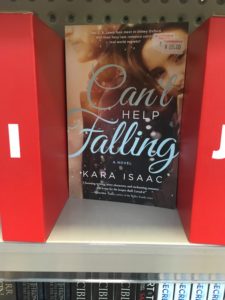
Can't Help Falling by Kara Isaac, spotted in The Warehouse Tauranga.
Can’t Help Falling by Kara Isaac, spotted in The Warehouse Tauranga.

In the US, it’s often found in major stores such as Walmart, Target, and in the religious section of Barnes & Noble (if you can find one). And you can find it online—Amazon has a huge selection.

I read both, but if you follow this blog or follow me on Goodreads, you’ll know I mostly read Christian fiction. But I do read some general market fiction as well … but the writing has to be good.

I prefer Christian fiction because it reflects my faith and values, and means I’m less likely to end up yelling at the characters for doing dumb things. I know Christians sometimes do dumb things, but not the same kind of dumb. I do have some issues with some Christian fiction … but I think that might be a different question.

Do you read Christian fiction?

What's your favourite tear-jerker novel?

Bookish Question #25 | What’s your favourite tear-jerker novel?

What’s your favourite tear-jerker novel?

As I said last week, I’m not a big fan of tear-jerker novels (and it seemed about half of you agreed with me, and the other half love them!)

I like happy endings … and novels that make me cry don’t always have happy endings. Some tear-jerkers do manage to have happy endings. More have emotionally satisfying endings—endings that feel right as a reader, even if the characters don’t get to live happily ever after.

Others have frustrating endings.

These might be the reason I avoid tear-jerkers—I’m afraid of the frustrating ending e.g. Me Before You by JoJo Moyes (which I haven’t read, but I know the ending because my daughter read it and got very cross and shouty when she finished it).

Contrast that with The Fault in Our Stars by John Green or My Sister’s Keeper by Jodi Picoult, where the endings were sad but felt right (although I heard they changed the ending of the movie, which would ruin it).

But the reviews of some novels are so good that I’m prepared to overcome my natural reluctance and give them a go. I have a few of these on my to-read pile, waiting for me to be in the right frame of mind to read them (whatever that is).

Two Christian novels come to mind as real tear-jerkers in a good way.

This first is Carry Me Home by Dorothy Adamek. I’ve had the privilege of staying with Dotti in her beautiful Melbourne home, and she shared with me her story of how she got into writing fiction. I knew I’d have to fight off the tears in reading Carry Me Home, and I mostly succeeded. But I don’t want to say more, because … spoilers. Click here to read my review of Carry Me Home.

The other book that comes to mind is a young adult novel, This Quiet Sky by Joanne Bischof. It’s probably more a novella than a full-length novel, but it manages to pack a lot of punch in that small package. I can’t remember who recommended it to me (Dorothy Adamek, perhaps?), but whoever it was didn’t warn me I’d need tissues. But I did. You have been warned. This is not the novel to download as an audiobook to listen to during your morning commute.

What about you? What’s your favourite Christian tear-jerker novel?

For those of you who do like tear-jerker novels, here are some of the suggestions from the ladies in Avid Readers:

A Fragile Hope by Cynthia Ruchti

Beneath a Southern Sky by Deborah Raney

Even Now by Karen Kingsbury

Freedom’s Ring by Heidi Chiavaroli (which I reviewed last week)

Hold the Light by April McGowan (which I’m currently reading)

Land of Silence by Tessa Afshar

Life After by Katie Ganshert

Long Way Gone by Charles Martin (click here to read my review)

Redeeming Love by Francine Rivers (a classic)

Safely Home by Randy Alcorn

Shattered Justice by Karen Ball

The Atonement Child by Francine Rivers (especially the Author’s Note at the end)

The Lady and the Lionheart by Joanne Bischof

The Mountain Between Us by Charles Martin

The Space Between Words by Michele Phoenix (which I’ve recently reviewed)

Do you read tear-jerker novels?

Bookish Question #24 | Do you read tear-jerker novels?

Today’s question comes from a recent question on the Avid Readers of Christian Fiction Facebook group. A reader was asking for recommendations for a “three-tissue tear-jerker”. There were over 100 comments on the post. Most were recommending books—some I’ve read, some I haven’t, and some that are on my to-read or to review pile.

But one commenter said she doesn’t read tear-jerker novels.

I can relate! I’m not a fan, in that while I sometimes read tear-jerker novelss, I don’t go deliberately out of my way to find them.

I think one of the reasons I tend to steer away from tear-jerker novels is because I like happy endings … and tear-jerker novels don’t always have happy endings. They’re often emotional and even emotionally satisfying, but happy? Not always.

When I do read a tear-jerker novel, it’s often because I’ve been taken by surprise.

It might be that I offered to review the book without realising it was going to be a tearjerker. For example, I’ve agreed to review Hold the Light by April McGovern … which one Avid Reader recommended as a three-tissue tearjerker. (I guess now I’m prepared.)

Less often, I choose a tearjerker because someone—or many someones—have recommended the book for the great story or great writing. Great writing often hits at the emotions, and that often means tearjerkers. I suspect The Lady and the Lionheart by Joanne Bischof will fall into this category (I’ve bought it … but I haven’t read it yet even though *everyone* tells me I must).

When I actually read a tearjerker I usually enjoy it—especially if it’s one of those books that’s been recommended to me because of the writing.

It’s hard to write strong emotion well.

Some authors fall back on the emotional equivalent of kicking a kitten to incite emotion. That incites emotion in me—frustration because the author is obviously trying to manipulate me.

I prefer my emotional manipulation to be more subtle, for the writing to draw me into the characters and the plot so deeply that I don’t realise when the tears start. That’s great writing. And that’s why these tearjerkers are often the novels that win awards.

What about you? Do you read tear-jerker novels?

How many books are on your Mt TBR

Bookish Question #23 | How Many Books are on Your To-Read Pile?

How many books are on your to-read list? What does your TBR (to be read) pile look like? How high is your Mt TBR?

If you’re anything like me, you have a never-ending pile of books to read. I think I have five. Five piles, not five books!

My piles (and lists) are:

1. Review Copies

I get most of my review copies through NetGalley, which provides free ebooks for review (for more information, click here to read my post at Australasian Christian Writers). I review one or two books a week, and there are currently 28 books in the To Review folder on my Kindle.

2. Ebooks I’ve Bought

Another folder on my Kindle is my 207 To Read folder. This is for books I’ve bought off Amazon since I got my Paperwhite in January this year. When I say “bought”, I mean “paid money for”. Yes, it would appear I buy more than one Kindle book a week … and don’t read them fast enough. There are currently 44 books in this folder.

3. Free Ebooks I’ve Downloaded

When I first got my Kindle I did what many new Kindle owners do: I downloaded dozens—okay, hundreds—of free ebooks. Most of them I’ve never read. There are 30 books in my 2017 Free Books folder on my Paperwhite, and I think there are over 1,000 on my previous Kindle Keyboard. Go on. Judge me. I have no impulse control.

4. Writing Craft Books

I buy and read a lot of writing craft books for my own writing and editing. Some are reference books I’ll never read from cover to cover (like dictionaries and style manuals). Others are books I do want to read. I’ve probably got ten physical books, plus a similar number of ebooks.

5. Physical novels I’ve bought and haven’t yet read.

This is the only physical stack of books—the rest are virtual. I never had unread book before I got my Kindle, and I wondered how people had stacks of unread books. Now know. I think I’ve got about 30 unread paperbacks. I think.

Some of these are books I’ve been given, and others are books I bought (often with my Koorong vouchers—for those of you who live in Australia or New Zealand, Koorong.com.au gives you a $10 voucher for every four reviews you write on their site, or every two video reviews. You can earn a maximum of $10 a month, and the vouchers are valid for three months. They can be used in store, or online.

What about you? How many unread books do you have? In how many stacks or piles or folders?

Bookish Question 21

Bookish Question #21 | Do you skip to the end?

This question came up in one of the Facebook groups I’m a member of.

Do you ever skip to the end of a book and read the final pages?

Some readers in the Facebook discussion were happy to admit they did. Others consider even the thought to be anathema.

I think I’m somewhere in the middle.

Many genres are designed for dipping and skipping. Non-fiction is one–many non-fiction books are designed to be dipped in to, depending on what topic you’re interested in. We often read poetry one poem at a time, and not necessarily in the order they appear in the book—even though that was (presumably) the in which order the poet intended us to read them.

And the Bible—even if we are using a sequential Bible reading plan, we probably dip in and out of other books as we look for guidance on specific subjects, or as we listen to Sunday’s preacher.

But novels are written to be read from beginning to end. It can feel like cheating to jump ahead.

But I have done it on occasion. Have you?

Sometimes I’ll skip to the end when I’m worried the story won’t end like I want it to. For instance, the hero and heroine have to end up together in a romance novel. We know that when we begin. We’re not reading for the ending, but for the journey. But there have been times when the author has got me worried and I want to be reassured the characters will get their happy ever after.

Other times I’ll check the ending when I’m not enjoying the novel. Then I’m skipping because I want to know the end, to decide if I’m going to make the effort to finish the book.

I do skip less often since getting my Kindle—perhaps because it makes a conscious effort to tell the machine to go to the last page. It’s not a simple flick the way it is with a paperback.

Do you ever skip to the end of a novel? Why? Or why not?