It’s another month gone (not sure where July went!).
More in-depth descriptions of these books can be found on the ACFW Fiction Finder website
Children’s Middle Grade
 Jack and the Red Giant by Amanda Cleary Eastep — Snowball wars are being waged against the Tree Street Kids, and Jack Finch is building his greatest invention yet–the Abominable Snowman-ator. But his biggest battle will be against his distrust of Buzz Rublatz, the neighborhood bully. (Children’s Middle Grade from Moody Publishers)
Children’s Picture Book
 Otto and Ollie by Penny Frost McGinnis and Hannah L Wickline — Otto and Ollie are best buddies. They live next door to each other and spend their days playing and pretending what they’ll be someday. When they have a disagreement, they discover it’s not what they’ll be, but who they’ll be that counts. (Children’s Picture Book from Mt. Zion Ridge Press)
Contemporary
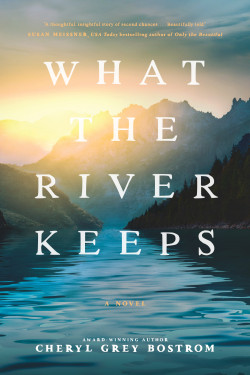 What the River Keeps by Cheryl Grey Bostrom — In the beautiful Pacific Northwest, a young woman’s discovery of her hidden past illuminates her present in this new novel from the award-winning author of Sugar Birds, “an engrossing tale” (Kirkus Reviews), and Leaning on Air, “an exquisitely nuanced love story” (BookTrib). (Contemporary General from Tyndale House)
Contemporary Romance
 A Montana-Sized Secret by Allie Pleiter — Returning to High Mountain pregnant is not the fresh start Carly Davis imagined—nor is telling Jack Peters he’s the father. And with Jack in the early stages of addiction recovery, she questions if he can handle being a parent.
But Jack is determined to show that he’s changed, and a chance to prove himself arises when they must care for a litter of rescued baby bunnies. Trust slowly builds between them again, but as unexpected news threatens their fragile bond, can they overcome the uncertainties to be the family they both need? (Contemporary Romance from Love Inspired [Harlequin])
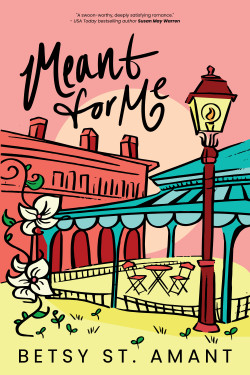 Meant For Me by Betsy St Amant — He was her best friend. Still is. But when her beloved beignet shop burns down, he’ll have to be more if she hopes to start over. But will friendship survive the dangers of a marriage of convenience? (Contemporary Romance from Sunrise Publishing)
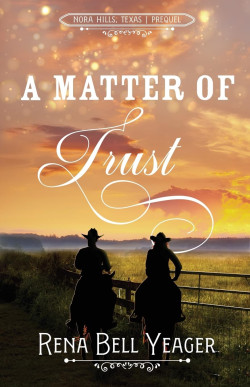 A Matter of Trust by Rena Bell Yeager — Rachel Wilson is a divorcee who has devoted her life to her daughter and her career. But when her employer is shut down by the FBI for fraud, she is encouraged by her daughter to take a long-overdue vacation to Texas.
Randall Hudson is a widowed resort ranch owner and corporate tycoon, as at home in his blue denim shirts as he is in the boardroom. When he meets Rachel, he is smitten. But when he begins manipulating things in her life to make her want to stay in Texas, her mistrust of men grows.
When Rachel’s ex shows up demanding money, she has no choice but to turn to Randall for help. But can she trust him? Will they find a way to overcome their obstacles and forge a new path together? (Contemporary Romance from Pixley Knob Press)
Historical Romance
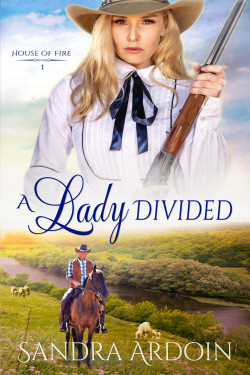 A Lady Divided by Sandra Ardoin — A bitter and unconventional southern widow joins forces with a former enemy to battle accusations of murder . . . twelve years after taking lives in the War Between the States. (Historical Romance, Independently Published)
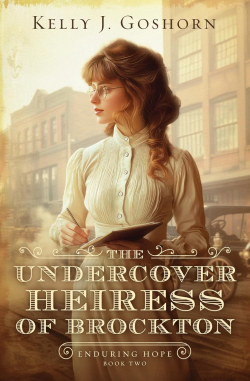
The Undercover Heiress of Brockton by Kelly J. Goshorn — Henrietta “Etta” Maxwell, heiress to the Maxwell fortune, is a hard-hitting investigative reporter for The Enterprise Daily. The catch? Etta must pen her columns under the nom de plume, Henry Mason—a fact that routinely puts a knot in her knickerbockers.
Leo Eriksson is a second-generation firefighter with a passion for rendering aid to those in need. When Leo discovers that Henry Mason is really Henrietta Maxwell, the fire department’s wealthy benefactress, he agrees to keep her identity secret.
After a sudden blast rocks the Grover Shoe Factory, Leo and Etta team up to determine if the explosion is related to a series of suspicious fires in the area. When an unnamed source reveals Etta’s secret identity to a rival reporter, she falsely accuses Leo of being the informant. As the truth comes to light, Etta must persuade Leo to give her a second chance or lose the only man she’s ever loved. (Historical Romance from Barbour Publishing)
Crime Suspense
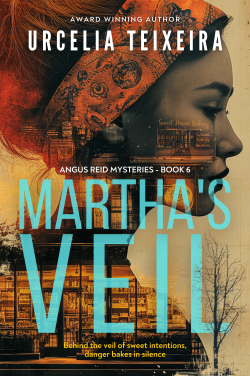 Martha’s Veil by Urcelia Teixeira — In the fog-shrouded coastal town of Weyport, head baker Martha Porter lives a life of quiet control—perfect cakes, polite smiles, and a heart safely tucked behind emotional walls. But when a charming man begins messaging her through an online Christian forum, Martha dares to hope again… until she vanishes on the very night she agrees to meet him.
The missing-person case falls to Sheriff Angus Reid, whose investigation takes a dark turn when another woman’s body washes ashore—another victim who’d been speaking to a mysterious online suitor. As Angus uncovers a chilling network of digital manipulation, stolen identities, and religious deceit, the race to find Martha becomes more urgent.
Can Angus unmask the predator before Martha becomes his next victim? Or will the fog that shrouds Weyport’s coast hide another tragedy forever? (Crime Suspense, Independently Published)
Romantic Suspense
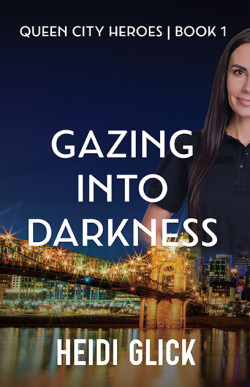 Gazing into Darkness by Heidi Glick — Instead of moving closer to his girlfriend, Chance McPherson gets dumped and relocated to Cincinnati—farther from his dreams and closer to his shameful past. Stacey Sanderson is excited to finally secure a role in law enforcement, like the rest of her family, especially as an EPA CID agent, where she can protect God’s creation.
On the job, Stacey’s perfectionism and faith rub Chance the wrong way, while his antics and wisecracks irritate Stacey. When federal employees who worked an old case with Stacey start dying, Chance becomes concerned, and not just because Stacey is his partner. Can Chance and Stacey stop the person who is out to kill her before it’s too late? (Romantic Suspense from Scrivenings Press)
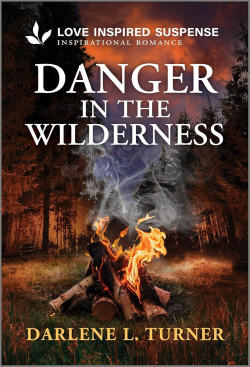 Danger in the Wilderness by Darlene L Turner — Park warden Dekker Hoyt’s father-son camping trip turns into a nightmare when a serial killer abducts his father. With just seventy-two hours to find him, Dekker turns to criminal investigative analyst Blaire Tremblay to identify the Park Campfire Killer.
As they follow his taunting clues and face increasingly violent threats, Dekker and Blaire know that one wrong step could be fatal. With the ruthless criminal following their every move, can they stop a killer in hiding…waiting to complete his deadly plan? (Romantic Suspense from Love Inspired [Harlequin])
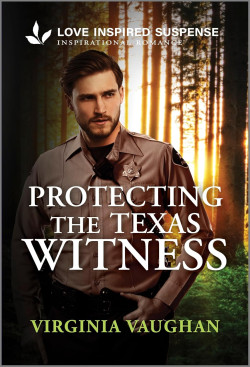 Protecting the Texas Witness by Virginia Vaughan — Deputy Drake Shaw rescues single mom Isabelle Morris from an assailant’s attack, only to be mistaken for her late husband. After exposing the corruption at her health-care company, Isabelle fears danger has followed her and her daughter all the way to their remote cabin.
Now Drake must keep them safe long enough for Isabelle to testify against her former boss. But when her child is taken, the stakes are raised. Can they survive to unravel the truth about the present…and the past? (Romantic Suspense from Love Inspired [Harlequin])
Speculative Fiction/Fantasy
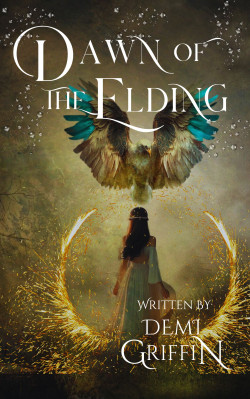 Dawn of the Elding by Demi Griffin — The new Age unfolds with the sight of crumbling foundations in Everlasting, echoing with the deafening sounds of conflict and upheaval. The air thickens with the smell of tension and fear as history is misunderstood and old grudges resurface, disintegrating the bond holding the Realms together.
Only the Realm Keeper possesses the power to unite them once more and bring back harmony to Everlasting. However, he cannot accomplish this task single-handedly. His alliance with the Timebender grants them both access to the only weapon that can combat death. Restoring balance, ending the perpetual chill, and returning the Elding to Everlasting all depend on each fulfilling their destinies. (Speculative Fiction/Fantasy, Independently Published)
Plus check out these recent additions to Fiction Finder published within the past month
Chasing Time by Pamela G Baker — After embracing life in the 21st century, Lydia is catapulted to the 1870s of her youth to prevent unscrupulous scientists from disrupting the timeline—again. (Speculative Fiction/Time Travel)
On the Brink by Michael E Cafferky — A life-threatening illness leads corporate executive Gabriel Oliver to an epiphany about his faith; he adjusts the priorities of his life, but the change he makes increases his vulnerability by endangering his career and upsetting his relationship with his wife Sandra (Contemporary General)
Morning on the Mesa by Jenny Fulton — Navajo princess sisters Lillian and Zoe learn about God and Creation while herding sheep on their family’s mesa. (Children’s Picture Book)
Take The Sea by Jenny Powell — Follow modern-day Hope Gerard & 18th-century Anglican priest John Wesley as they battle their fears through their faith. (Contemporary General)
Forged by Fire by Melanie D Snitker — Firefighter Leslie Granger and Police Officer Clint Baker stumble upon a motive that will test their courage and force them to confront not only the danger, but also the unexpected attraction growing between them (Romantic Suspense)
BondKeeper by Colleen K Snyder — Canna and Gentry are running for their lives from dragon hunters, slave traders, renegade dragons, and the Widow Swansworth who wants Gentry as a bride for her son Brody. Can Gentry learn to trust the Master? Or will she go her own way, and lose the best friend she’ll ever have? (Young Adult)
What Brings Us Joy by Teresa Wells — Though Clarence Parker doesn’t regret testifying against the outlaws in his former gang, he fears his future with Delia Truitt is in jeopardy. Clarence will protect her from the killers, even if it means risking their future together. Can Clarence keep her safe? And will Delia love him after she finds out about his past? (Historical Romance)


 Roseanna M. White pens her novels beneath her Betsy Ross flag, with her Jane Austen action figure watching over her. When not writing fiction, she’s homeschooling her two children, editing and designing, and pretending her house will clean itself. Roseanna has a slew of historical novels available, ranging from biblical fiction to American-set romances to her new British series. She lives with her family in West Virginia.