Author: Iola Goulton

Thunderbirds Are Go!

During the Christmas holidays, our family visited Weta Workshop in Wellington. As well as being the home of hobbits and all things Lord of the Rings, it is also the studio for the reimagined Thunderbirds TV series, which combines traditional model sets with digital animation.

For those of you who have suffered a deprived upbringing, Thunderbirds was a 1960’s TV show brought to the screens by husband and wife team Gerry and Sylvia Anderson, using their original puppets and the wonders of Supermarionation. The Thunderbirds are the Tracy brothers, Scott, John, Virgil, Gordon, and Alan, who travel the world in their high-tech machines, saving the lives of those caught in disasters.

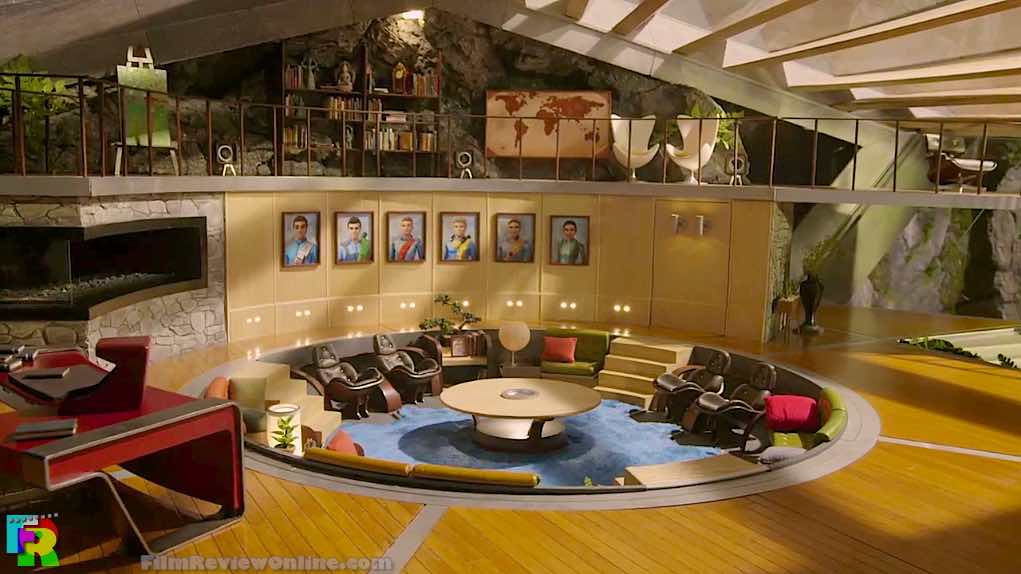
The 1960’s series has now been reimagined by Richard Taylor of Weta Worskhops, and we were privileged to be able to see inside the magic of Tracy Island. Unfortunately, we weren’t allowed to take any photographs because the images are all copyright (and because we actually got a sneak peek at some of the as-yet-unseen sets from the upcoming second series). However, I did find some cool images on Google from various promotions for the show:

Thunderbirds Are Go 1

Thunderbirds Are Go - Tracy Island ©2015 ITV Studois/ Pukeko Pictures
Thunderbirds Are Go – Tracy Island ©2015 ITV Studios/ Pukeko Pictures

There were two things about Thunderbirds Are Go! which surprised me.

The first was that Thunderbirds Are Go! is more than just a Weta Workshops production. It’s actually a joint production between Pukeko Pictures (part-owned by Richard Taylor of Weta Workshops) and ITV Studios. Weta Workshops has constructed the sets, including two different versions of Tracy Island (as an aside,the books on the shelf are all real current books. Our guide made them, using book covers she downloaded from the internet).

But it’s not solely a Kiwi production. This version has digitised characters, not puppets, and the animation is done offshore. As are the scripts. And the voices. The New Zealand end of the show brings everything together, but it’s a global effort (kind of like writing a book).

The second thing was even more surprising. It was the sets. They looked great even under the standard lighting. I could see they’d look even better under proper studio lighting.

But they were made of junk.

Not everything was junk, but there was a lot of junk, and our guide took a lot of pleasure in pointing out all the junk.

For example, The Hood is the main evildoer in Thunderbirds. He’s got longstanding issues with the Tracy family. And because he’s a bad guy, he has a lair that’s largely decorated in shades of black and grey.

It’s junk.

The Hood’s lair includes the insides of two washing machines, the casings of old desktop computers (from back when computer screens were as deep as they were wide), razor blades, fans, the leftover plastic bits from after you’ve constructed a model airplane . . . junk.

But add a fair dose of creativity, a few dozen cans of spray paint and some clever lighting, and you’ve got an ultra-cool lair fit for an evildoer. All from junk I’d have chucked out years ago.

It made me think of us. And God.

Sometimes we think we’re junk. That there’s nothing useful in us. That we’re only good for the rubbish tip.

But we’re God’s junk. He redesigns us, repurposes us, redirects us. Shines His light into us.

And turn us into ultra-cool sons and daughters fit for the King.

The Department of Lies

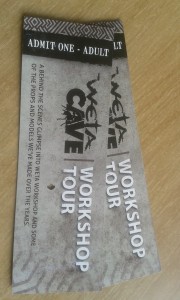
Christmas in NewTickets to the Weta Cave Zealand is in the summer, so it’s the time the kids have their long summer holiday, and the time businesses reduce or close their operations and we all go off on our summer holidays.

This year, we went to Wellington for Christmas. While we were there, we couldn’t pass up the opportunity to visit Weta Workshops, the world-famous home of hobbits, trolls, and all things Lord of the Rings.


While Weta Workshops is most famous for their work on the Hobbit and Lord of the Rings trilogies, they actually make physical movie props for a range of movies, from District 12 to Avatar (although that was largely the work of their associated organisation, Weta Digital, who do all the computer animation).

Our guide took us through the design process, showing us how it could take dozens or hundreds of sketches before a design was approved. How a plastic mould was then created—over 80% of the props, from the firearms to the swords to the vehicles, are made of plastic.

She then told us how the plastic models were turned over to the painting department: The Department of Lies.

Why the Department of Lies?

Because they take shaped white plastic and turn it into something it isn’t: a wooden gun, a leather shield, a metal sword. They can make it look new, or they can make it look old. It’s all just spray paint and plastic.

Plastic looks good, but lacks any functionality. A plastic sword won’t cut anything. Won’t hurt anyone. A plastic shield won’t protect an actor from anything other than plastic sword.

The plastic looks good, but it’s not perfect. Modern digital cameras are so powerful, they still need to use real props for the close-up shots. Real swords. Real knives. Real shields.

It struck me that the Father of Lies takes the same approach. He takes the real thing, and substitutes it for a fake. We can only tell the difference if we look carefully, and if we know what the real thing looks like.

And only the real thing will protect us.

That means spending time with God, in His Word, ensuring we know the real thing so we can see the lie. It means spending time with other Christians, learning from them, as iron sharpens iron.

Because we don’t want to be stuck with a plastic sword when the Father of Lies comes against us with the real thing.

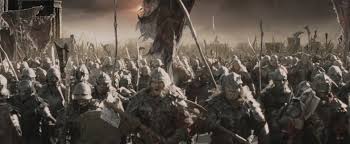
Orc Army

Meanwhile, now I know it’s all makeup and plastic swords, it’s going to be difficult to be afraid of those orcs!

Be Thou My Vision

Book Cover - The Wonder of YouI’ve recently finished reading The Wonder of You by Susan May Warren, in which the heroine was influenced by the old Celtic hymn, Be Thou My Vision. By some strange coincidence (or God-incidence), three of the novels I read over the next two weeks also referenced this same hymn.

It struck me that now, at the beginning of the year, is a good time to reconsider this hymn and what it has to say to me. To us.

Be Thou My Vision

What is my vision for 2016? What is God’s vision for me? And what am I going to do to achieve that vision?

I’ve been reminded that I need to plan in order to achieve. Things don’t just happen. Well, they do. But ‘things that just happen’ usually take us off the planned path. Without a planned path, we have no way of knowing if we are heading in the right direction. And without a planned path, we have no way of getting back on that path when ‘things’ take us off.

I need that vision, and I need a plan for getting there. And planning TO do one thing may well mean I have to give up something else.

Be Thou my Wisdom

Along with vision, I need wisdom. Wisdom to show me the right path. Wisdom to show me the way back to the path. Wisdom to prevent me going down the wrong path. Wisdom to listen to the warnings of others.

Riches I Heed Not, Nor Man’s Empty Praise

Remind me that the focus is on God and His Vision, His reward. Success is defined by God and His vision for me, not by my family, friends, acquaintances . . . or the people who don’t know me.

Remind me that my success will be based on my obedience to God and His vision, that if I am obedient to God, I will have exactly the level of success He desires for me.

Remind me that God alone defines success, and while it might be riches and the praise of men, it may not. Remind me that God’s riches and praise are worth an infinite amount more than the riches and praise of men. And women.

Amen.

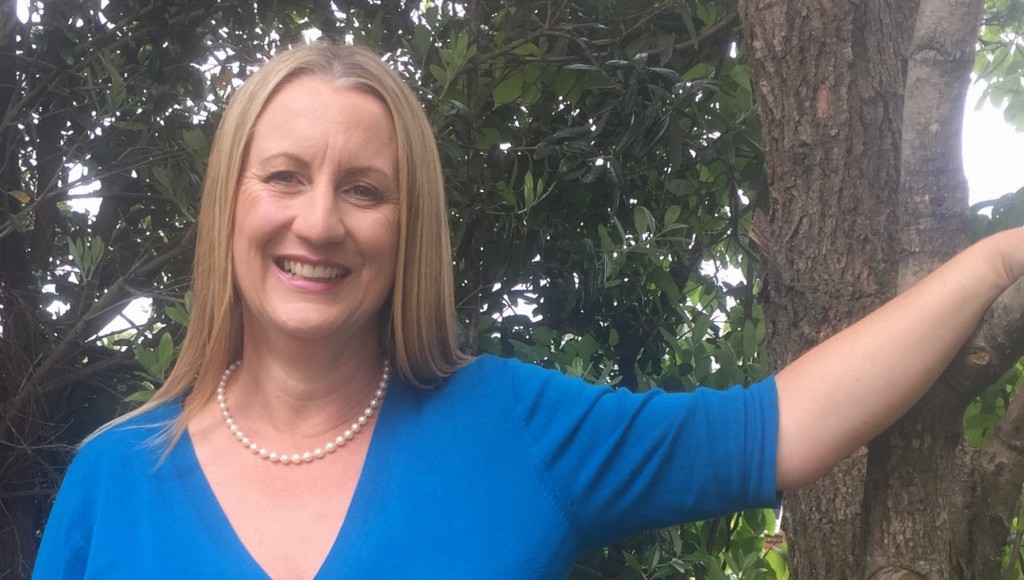
Iola Goulton

Introducing Iola Goulton . . .

My name is Iola Goulton, and I am a writer.

Specifically, I write Contemporary Christian romance with a Kiwi twist.

Part of me is exhilarated by the prospect of this new journey. Part of me is petrified.

It’s not just the “normal” new author nerves about putting my writing out into the world. I’ve been doing that in a small way for years, first with my book review blog, Iola’s Christian Reads, and then with my freelance editing website, Christian Editing Services. And I regularly contribute to two group blogs, Australasian Christian Writers and Suspense Sisters Reviews, so it’s not that I’m uncomfortable with sharing my opinions.

What I am apprehensive about is some of the opinions I’ve expressed in the past, and how they might impact on or influence my fiction writing. As a reviewer, I’ve often been blunt about what I have or haven’t liked in the novels I’ve read—if I’m honest, that bluntness comes across more often in what I don’t like.

As a freelance editor, I’ve often been blunt about the writing issues I’ve found in novels I’ve read. And I’ve given a lot of advice on various writing topics, including genre, and point of view. I’ve also been less than impressed when authors have committed the very writing crimes they preach against.

And that’s what I’m most nervous about.

I don’t want to commit the crimes I’ve preached against. Of course, this doesn’t mean my novels will be perfect, rather, that I’ll make different mistakes.

Logic says there is no such thing as a perfect novel. Apart from anything else, all readers are different and looking for different things in their fiction. I’m not going to please all of the readers all of the time. My best hope is to please some of the readers most of the time.

And who are those “some readers”?

Readers who are looking for contemporary Christian romance that’s a little different: something slightly edgy, with a little humour, and a unique setting—the Kiwi twist.

If that’s you, welcome. It’s lovely to meet you. Have a seat, introduce yourself, and I’ll be back next week to introduce you to some of my favourite places.