Category: Bookish Question

Do you like to read retellings of famous novels?

Bookish Question #348 | Do you like to read retellings of famous novels?

Retellings of famous novels, fairytale retellings, and allegory all have the same challenges for authors: ensuring the story sticks closely enough to the original plot to satisfy readers without becoming predictable (or, worse, without having the characters act out of character in order to fit the prescribed plot elements).

The other challenge with retellings of famous novels is that readers are unlikely to read a retelling of a novel they didn’t enjoy.

Perhaps that’s why Jane Austen retellings are so popular: most romance readers enjoy Austen’s stories. The flip side is that makes many of Austen’s tropes overused, and it makes it harder for authors to find that unique twist.

I don’t read a lot of novels that are specifically signaled as retellings.

One I remember reading and enjoying was Dear Mr. Knightley by Katherine Reay, a retelling of Daddy Long Legs by Jean Webster, which I read and loved as a teen.

I think this book illustrated one secret to a good retelling: choose a story that has stood the test of time, but not one that is so well known that the author can’t find the original twist. I picked up the story was Daddy Long Legs early on, but read a number of reviews commenting on the “original” plot and the unexpected plot twist at the end, which suggests I was in the minority for knowing the story.
What about you? Do you like to read retellings of famous novels? Which stories do you recommend?

Do you like to read fairytale retellings?

Bookish Question #347 | Do you like to read fairytale retellings?

I haven’t read a lot of fairytale retellings.

I don’t have anything against the genre: it’s just they rarely catch my eye.

There are a couple of exceptions:

I have read Unnoticed by Australian author Amanda Deed, and Unhinged is on my to-read pile. Unhinged is an Australian historical retelling of the Beauty of the Beast, and Unnoticed is a twist on the classic Cinderella story.

I have also read Calor and Lumen by JJ Fischer, and am eagerly awaiting Memoria, which will be released in December 2024. This trilogy is described as a fantasy transformation of The Nightingale by Hans Christian Anderson, with echoes of the myths of Hades and Persephone. I don’t know the story of The Nightingale, so I don’t have any expectations about the story.

That is one of the challenges for authors writing a fairytale retelling: when readers know the original story, the author has to find a way of telling the story in a way that readers recognise as familiar, but with enough of an original twist that it is still interesting.

What about you? Do you like to read fairytale retellings? Do you have any good Christian retellings you can recommend?

What's your favourite non-bookmark bookmark?

Bookish Question #346 | What’s your favourite non-bookmark bookmark?

I don’t read a lot of physical books—I mostly read ebooks.

I’m reading more physical books now I’ve moved to Wellington and joined the local library (which I walk past on my way home from work).

So I don’t have a favourite bookmark or a favourite non-bookmark bookmark.

What I do have is the non-bookmark bookmark I use most often … which is the receipt for the books I’ve just borrowed from the library.

What about you? Do you read physical books? If so, what’s your favourite non-bookmark bookmark?

Do you use physical bookmarks?

Bookish Question #345 | Do you use physical bookmarks?

Since moving to Wellington I’ve been making use of the local library. Borrowing and reading physical books means using physical bookmarks again.

I do have a collection of “real” bookmarks, including souvenirs from writing conferences and bookmarks I’ve bought or been given over the years.

However, I don’t have any of my “real” bookmarks in the apartment, so I’m mostly using either library checkout receipts (which make handy bookmarks because they serve the added function of reminding me of the due date), or junk mail flyers.

So I guess that’s a yes … kind of.

What about you? Do you use physical bookmarks?

Have you ever been disappointed by a book everyone else seemed to love?

Bookish Question #344 | Have you ever been disappointed by a book everyone else seemed to love?

There have been a few books from authors I’ve previously read and enjoyed that just haven’t captured my attention.

For example, I bought and Her Mother’s Hope and Her Daughter’s Dream by Francine Rivers. I read the first and while it was well-written, I found the story depressing (which shouldn’t be a surprise: it was set in the 1930s Depression, and ended just as the USA entered World War II). I never even read the second book.

I loaned both books to a friend who loved them, as did most online reviewers.

I’m glad she enjoyed them, even if I didn’t.

There are other authors (more than a few)I’ve tried to read based on reviews and the recommendations of multiple other Christian readers, but I haven’t been able to get into their stories.

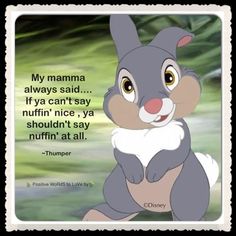
One of the culprits might be the attitude of Christians toward book reviews. There’s a view that if reviewers can’t give a glowing five-star review, then they shouldn’t review the book at all (a variation of Thumper’s rule, perhaps?).

So perhaps I’m not the only person disappointed by certain books. Perhaps we’re all ignoring Matthew 7:5, John 8:32, and similar verses because we’re following the Bambi rule, not the Bible.

What about you? Have you ever been disappointed by a book everyone else seemed to love?

What was you favourite teenage read?

Bookish Question #343 | What was your favourite teenage read?

I read prolifically as a teenager (surprise!).

I spent most afternoons in the school library (not least because it was a warm and dry place to wait for the school bus), and the librarian would often recommend titles to me.

But I didn’t track what I read back then, so don’t remember a lot of what I read.

A lot of the books I read were library books, so I didn’t get the opportunity to re-read them.

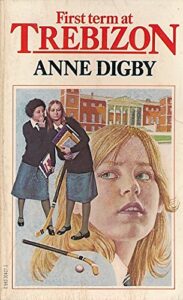
One series I read and re-read was the Trebizon series by Anne Digby, which were set in a girls’ boarding school in England but which were new books so were contemporary to my era (unlike the Mallory towers books by Enid Blyton, which were written and set in the 1950s).

I’d always been fascinated by Enid Blyton’s English boarding school stories, and thoroughly enjoyed reading about Rebecca, Tish, and Sue and their adventures in Cornwall.

What about you? What was your favourite teenage read?

What was your favourite childhood read?

Bookish Question #342 | What was your favourite childhood read?

When I was at primary school, we had Bible in Schools every Thursday morning for an hour. Bible in Schools is how I first learned about Jesus and became a Christian, so big shout-out to all the dedicated Bible in Schools teachers over the generations!

One year, our teacher used the Maori Postal Sunday School (now Maori Postal Aotearoa) curriculum. If we completed a full year of lessons, we got a prize.

I won a paperback “Story of Jesus” written in cartoon format.

I loved that book, and read it over and over again. It was actually part of a six-book series, but I never found any of the other books. Never mind: if a child was only going to have one book in the series, the story of Jesus was the best choice.

What about you? What’s your favourite childhood read?

What was your last five-star read?

Bookish Question #341 | What was your last five-star read?

This question was harder to answer than it should have been.

I read a lot of books. And the more books I read, the harder it is to find stories that stick in my memory after I’ve closed the book (or switched off the Kindle.

The title that sprang to mind for this question isn’t a book I’d normally read, but I’ve seen it mentioned online and have been waiting for it to come on sale on Kindle. Then I saw it at my local library, so checked it out.

It’s not fiction.
It’s not Christian (although the author is a Christian).
It’s nothing like the books I usually read and review.

It’s Jesus and John Wayne by Kristen Kobes Du Mez

(which I did recently feature in a First Line Friday post).

Jesus and John Wayne is probably best described as a history textbook, showing how the modern church has, step by tiny step, morphed the collective understanding of Jesus from the man who healed the sick and ate with sinners to some kind of nationalistic patriarchal authoritarian who was the opposite of politically correct.

Like John Wayne.

Yet Jesus was nothing like John Wayne. Jesus stood up for women, for widows (the single parents of his day), for orphans, for the oppressed, for the immigrants, the refugees (Jesus himself was a refugee in Egypt).

Du Mez makes a compelling argument for how the US Christian church has come to misinterpret Jesus by conflating him with people like John Wayne, and how that has hurt the church in the USA (I would add that it’s hurt the church globally).

You might not agree with everything she says, but it’s a well-researched and strongly written case, and well worth taking the time to read.

It might just make you think.

What about you? What’s your most recent five-star read?

Bookish Question #340 | What’s the best novel you’ve read based on a true story?

I tend not to read novels based on true stories. I think that’s because I like to not know what’s going to happen during the story (even if I can guess how the novel is going to end, which is pretty much the case with every romance novel ever published).

If a novel is based on a true story, then I might know (or can Google) what’s going to happen.

(And I have done so.)

So if I do read novels based on true stories, I’d rather not know until I finish reading.

(Which might have been why I stopped reading stories set in Tudor England.)

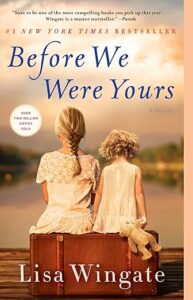
I knew nothing about the history behind Before We Were Yours by Lisa Wingate until I read the book.

I’d never heard of Georgia Tann or the Tennessee Children’s Home Society orphanage scandal, which made the story a powerful read.

Here’s the Amazon description:

Memphis, 1939. Twelve-year-old Rill Foss and her four younger siblings live a magical life aboard their family’s Mississippi River shantyboat. But when their father must rush their mother to the hospital one stormy night, Rill is left in charge—until strangers arrive in force. Wrenched from all that is familiar and thrown into a Tennessee Children’s Home Society orphanage, the Foss children are assured that they will soon be returned to their parents—but they quickly realize the dark truth. At the mercy of the facility’s cruel director, Rill fights to keep her sisters and brother together in a world of danger and uncertainty.

Aiken, South Carolina, present day. Born into wealth and privilege, Avery Stafford seems to have it all: a successful career as a federal prosecutor, a handsome fiancé, and a lavish wedding on the horizon. But when Avery returns home to help her father weather a health crisis, a chance encounter leaves her with uncomfortable questions and compels her to take a journey through her family’s long-hidden history, on a path that will ultimately lead either to devastation or to redemption.

Based on one of America’s most notorious real-life scandals—in which Georgia Tann, director of a Memphis-based adoption organization, kidnapped and sold poor children to wealthy families all over the country—Lisa Wingate’s riveting, wrenching, and ultimately uplifting tale reminds us how, even though the paths we take can lead to many places, the heart never forgets where we belong.

Find Before We Were Yours online at:

Amazon | BookBub | Goodreads

What about you? What’s the best novel you’ve read based on a true story?


What's your favourite novel based on a real-life person?

Bookish Question #339 | What’s your favourite novel based on a real-life person?

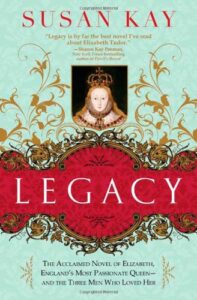
Mine is Legacy by Susan Kay.

It’s an older book, first published in the 1980s, and I haven’t read it in more than thirty years …

On that basis, I should probably re-read it to see if it lives up to my memories.

It’s my favourite book because it’s about the life of Queen Elizabeth I. We studied Tudor England in my final year of high school, and Elizabeth I was obviously a key figure in the Tudor period.

The novel brought Elizabeth to life for me (and several of my classmates) in a way that the textbooks didn’t, and we were all convinced that helped us pass our final exam.

What about you? What’s your favourite novel based on a real-life person?